
Business mobile application handles highly sensitive financial and personal information, making security a business imperative. In fintech and similar sectors, a breach can have serious consequences. According to IBM, the average cost of a data breach in financial services is approximately $6.08 million.
Breaches often expose customers' data, including a huge amount of personal data, and lead to regulatory fines and reputational damage. Once an app security incident occurs, customer trust declines rapidly and drives them to competitors. Besides, there are hefty fines for non-compliance with regulations such as GDPR, RBI or SEBI.
Embedding a strong business application security from design to deployment helps prevent these outcomes by mitigating exploitable weaknesses.
Common mobile app security oversights
Developers often overlook certain vulnerabilities that attackers exploit. A small mistake means insecure data handling: the app might store user credentials or financial data in plain text on the device or cache sensitive files without encryption.
Other oversights include weak or missing authentication, such as no multi-factor protection and failing to sanitise input. Research into real-world app flaws found issues such as “insecure data storage, insufficient data transmission protection, and backend endpoints that did not adequately enforce authorisation”. In plain terms, problems like trusting client data without server-side checks or leaving APIs unprotected create easy paths for attackers.
Logic and authorisation errors in the app or server code are surprisingly common and often cause breaches even when basic cryptography is present. Addressing these gaps with secure coding practices, such as validating all inputs, enforcing access controls, avoiding hard-coded secrets, and implementing runtime protection, greatly reduces risk.
Best practices for business application security
1. Encrypt and obfuscate sensitive data: Use platform-provided secure storage and strong algorithms for data at rest. Beyond encryption, Bugsmirror Shield does code obfuscation and code transformation specific to the app tech stack, which makes it resilient to decryption, reverse engineering, and IP theft.
2. Enforce strong and multi-layer authentication: Implement MFA or biometric login for users handling money or sensitive info. With strong password rules, automatic session expiration must be implemented.
3. Validate inputs and secure APIs: Implement server-side checks and input validation to prevent injection or parameter-tampering attacks.
4. Comprehensive Security testing: Security testing begins along with the development of the app. Security testing involves static application security testing (SAST), dynamic application security testing (DAST), API security testing, and runtime testing. With this, periodic penetration testing to catch logic flows or misconfiguration is also important. Consistent testing helps find hidden client and server-side vulnerabilities.
5. Keep dependencies and permissions in check: Use only trusted, up-to-date libraries and SDKs. Audit third-party code for vulnerabilities. Limit app permissions to the minimum needed, following the principle of least privilege.
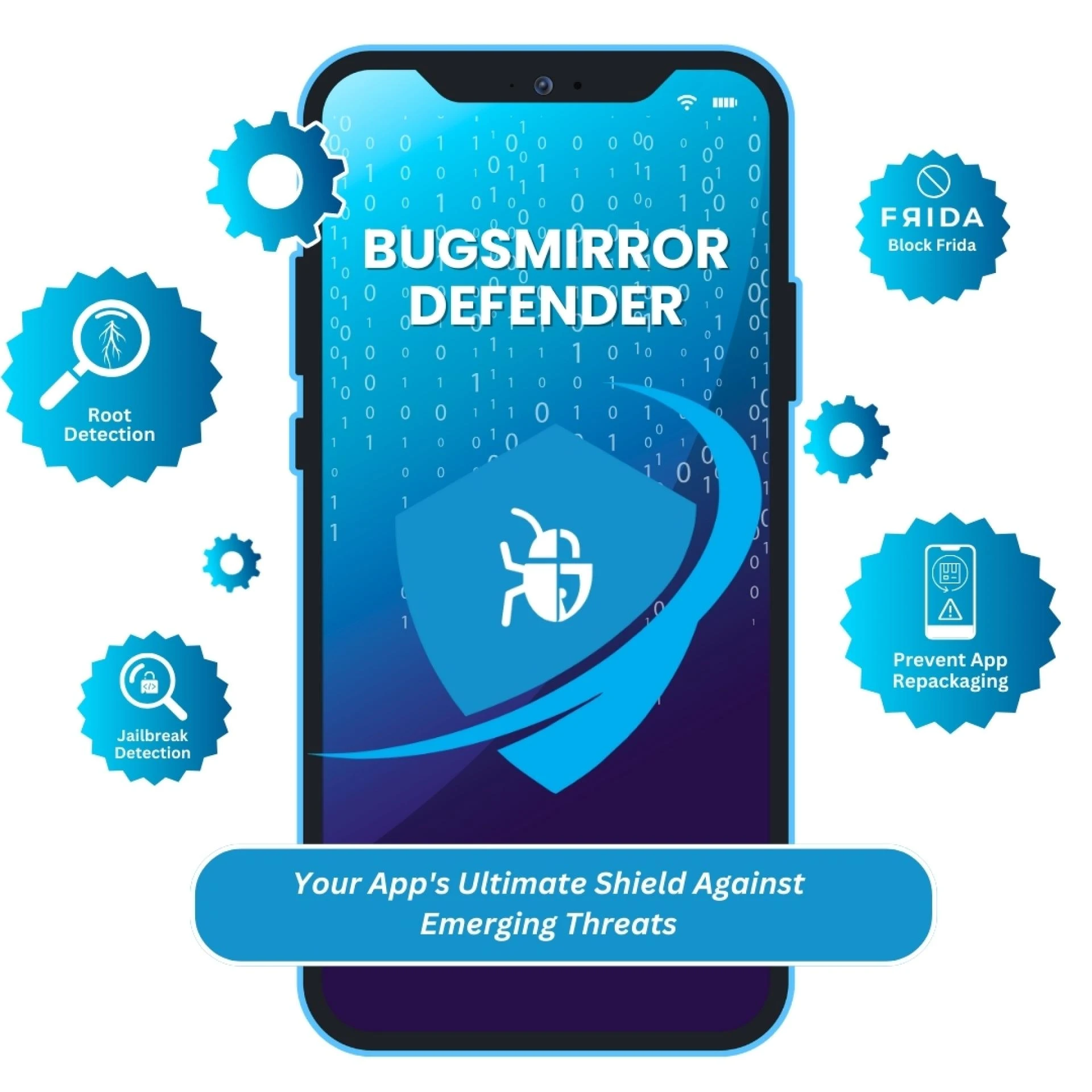
6. Runtime application security and threat monitoring: Implement app shielding solutions to detect and prevent threats when the app is running on a device. A RASP solution like Bugsmirror Defender always runs with the running app to detect and mitigate threats, thus protecting the app. With this, threat intelligence with Bugsmirror ThreatLens provides real-time threat insights and allows teams to work on those weaknesses.
Conclusion
Strong business application security is a competitive advantage for mobile apps in finance and beyond. It prevents data exfiltration, fraud, and non-compliance costs by eliminating common vulnerabilities. For organisations, investing in security early means fewer breaches, lower remediation costs, and preserved user confidence.
Regular runtime audits can identify vulnerabilities before attackers do. Take the Bugsmirror free audit and get a report on your app security within 24 hours.










Sign in to leave a comment.