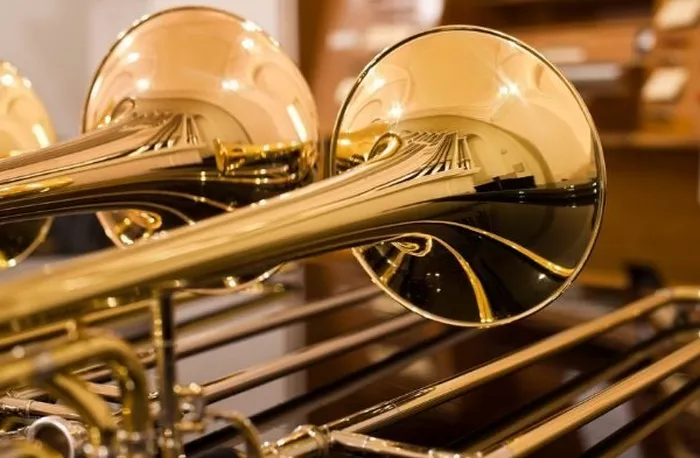

The trombone is one of the most versatile and historically rich instruments in the brass family. Recognized for its unique sliding mechanism, the trombone can produce a wide range of notes, from powerful low tones to bright, high pitches. But beyond its musical capabilities, the instrument carries a fascinating history reflected in its very name. Understanding how the trombone got its name requires us to look back at its origins, linguistic roots, and evolution across centuries.
The Early History of the Trombone
The trombone emerged in Europe during the 15th and 16th centuries. Its direct predecessor was the sackbut, a brass instrument with a similar slide mechanism used in Renaissance and Baroque music. The sackbut’s design was revolutionary for its time, allowing musicians to play chromatic scales more easily than with other brass instruments. As the instrument evolved and spread across Europe, so did the terminology associated with it.
The Term ‘Trombone’ Appears
The word “trombone” first appeared in Italy in the mid-16th century. It is derived from the Italian words “tromba” meaning trumpet, and the augmentative suffix “-one”, which indicates something large. Therefore, “trombone” literally translates to “large trumpet.” This nomenclature reflected both the instrument’s sonic power and its physical resemblance to the trumpet, yet with a distinct and innovative slide mechanism.
Why Italian Influence Was Crucial
During the Renaissance, Italy was a major center of musical innovation. Composers, instrument makers, and theorists often collaborated, leading to standardization of instrument design and terminology. The Italian naming convention for musical instruments frequently used descriptive suffixes, such as “-one” for large or “-ino” for small. Thus, the trombone’s name naturally followed this linguistic pattern. Italian musicians and composers were among the first to write music specifically for trombones, cementing the term in musical literature.
The Sackbut and Its Role in Naming
The sackbut, an earlier version of the trombone, influenced the instrument’s evolution and nomenclature. Unlike modern trombones, early sackbuts were smaller and had a more delicate sound. The transition from sackbut to trombone involved not only physical changes, such as a wider bell and improved slide, but also linguistic evolution. As the instrument gained prominence in Italian courts and churches, it was given a new name that emphasized its power and size: the trombone.
Linguistic Roots of ‘Tromba’
The Italian word “tromba” itself has a long and complex history. It is believed to have originated from the Latin “tuba”, which referred to a straight trumpet used in Roman military and ceremonial contexts. Over time, as musical instruments developed in medieval and Renaissance Europe, the term “tromba” evolved to describe a variety of brass instruments. Adding the suffix “-one” to create “trombone” marked the instrument as a larger, more powerful variant of the trumpet.
Adoption Across Europe
After its Italian origins, the term “trombone” spread throughout Europe. In German-speaking regions, the instrument was often referred to as “Posaune”, derived from the Latin word “buccina”. In French, it was called “trombone”, directly borrowing from Italian. Despite regional variations, the Italian term eventually became standard in many musical contexts, particularly in classical orchestral settings.
Historical References in Musical Scores
By the late 16th century, composers such as Giovanni Gabrieli were writing detailed parts for trombones in Venetian churches. These scores explicitly used the term “trombone,” helping to solidify its use in professional music circles. This period also marked the expansion of the trombone beyond religious and ceremonial music into secular compositions, further popularizing the name.
The Trombone in the Baroque and Classical Periods
During the Baroque era, the trombone began to appear in orchestral works alongside strings and woodwinds. Composers like Heinrich Schütz and Johann Sebastian Bach recognized its expressive potential. By the Classical period, the trombone was fully integrated into symphonic music, often used for both harmonic support and solo passages. The name “trombone” was universally recognized by this point, demonstrating how the instrument had moved from a regional novelty to an essential component of Western music.
Modern Interpretations of the Name
Today, the trombone continues to be celebrated for its distinctive sound and versatility. Musicians, educators, and composers recognize the historical significance of its name. Understanding that “trombone” means “large trumpet” not only gives insight into its Italian roots but also highlights the instrument’s intended role: powerful, expressive, and capable of both lyrical melodies and robust harmonies.
Influence on Other Instruments
The naming convention of the trombone has influenced how other brass instruments are named and classified. For example, the addition of suffixes like “-one” or “-ino” continues to appear in Italian instrument names, helping musicians quickly understand the size and pitch range of an instrument. The trombone serves as a model of how linguistic clarity can reflect both design and function in musical instruments.
Conclusion
The trombone’s name is a window into the rich history of musical innovation, linguistic development, and cultural exchange in Europe. From its roots in the sackbut and the Latin “tuba,” to its adoption in Italian musical courts and eventual spread across the continent, the term “trombone” reflects both the instrument’s physical characteristics and its sonic power. Understanding how the trombone got its name allows musicians and enthusiasts alike to appreciate not only its sound but also the centuries of history it embodies.
Sign in to leave a comment.