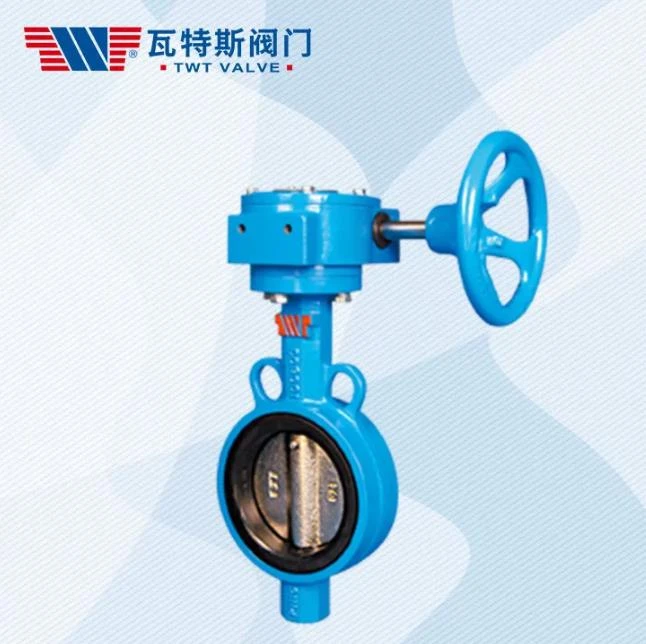

Calculating the required size of a wafer butterfly valve for a specific application involves considering the flow characteristics, system parameters, and valve specifications.
Here's a general approach:
Determine Flow Parameters:
Flow Rate (Q): Calculate or determine the expected flow rate of the fluid in the system. This could be in gallons per minute (GPM), liters per second (LPS), or any other suitable unit.Pressure Drop (∆P): Understand the acceptable pressure drop across the valve for the given application.Consult Valve Cv or Kv Values:
Obtain the valve's Cv (flow coefficient) or Kv (metric equivalent) values from the manufacturer's specifications or technical data for different valve sizes.These values represent the flow capacity of the valve at a given pressure drop and are used to compare the valve's performance at various sizes.Calculate Required Cv or Kv:
Use the formula: Cv=�Δ�Cv=ΔPQ or Kv=�Δ�Kv=ΔPQ to determine the required Cv or Kv for the given flow rate and pressure drop.Select Valve Size:
Compare the calculated Cv or Kv value with the Cv or Kv values provided by the manufacturer for different valve sizes.Choose the valve size that closely matches or slightly exceeds the calculated Cv or Kv value. It's often advisable to select the next available standard size if an exact match isn’t available.Consider Other Factors:
Check the physical space available for installation to ensure the selected valve size fits appropriately in the system without causing obstructions or constraints.Review any additional requirements or constraints specific to the application, such as temperature, fluid characteristics, or industry standards.Verify with Manufacturer or Engineering Guidelines:
Validate the selected valve size with the manufacturer's recommendations or consult engineering guidelines to ensure compatibility and performance in the intended application.Always refer to the specific manufacturer's datasheets, technical documents, or consult with experienced engineers to ensure accurate sizing and selection of wafer butterfly valves for your application. Factors like fluid properties, system dynamics, and operating conditions can significantly impact valve performance and should be considered during the selection process.
How does the sealing mechanism work in a wafer butterfly valve?
The sealing mechanism in a wafer butterfly valve primarily involves the interaction between the disc and the valve seat to create a seal, preventing or controlling the flow of fluids. Here's how it typically works:
Valve Design: A wafer butterfly valve consists of a disc that's mounted on a central shaft. When the valve is in the closed position, the disc is perpendicular to the flow direction, blocking the passage of fluid.
Valve Seat: Surrounding the circumference of the valve is the seat, which is a ring or liner made of resilient material (such as rubber, elastomer, or PTFE) that provides a sealing surface.
Sealing Action: When the valve is closed, the disc presses against the seat. The resilient material of the seat deforms slightly to accommodate the disc, creating a tight seal around the perimeter of the disc.
Compression and Tightness: The pressure exerted by the disc onto the seat causes the resilient material to compress against the disc's edges. china wafer butterfly valve This compression creates a secure seal that prevents or regulates the flow of fluid through the valve.
Seal Integrity: The sealing mechanism ensures that there's minimal to no leakage between the disc and the seat, maintaining the integrity of the seal even under varying pressures and flow conditions.
Bi-Directional Sealing: Wafer butterfly valves often have bidirectional sealing capabilities, allowing them to effectively block flow in both directions when closed.
Valve Operation: When the valve is opened, the disc rotates away from the seat, allowing fluid to pass through the open space created between the disc and the inner diameter of the valve body.
Repeatability and Durability: The sealing mechanism's design aims to provide repeatable and reliable sealing performance over the valve's operational lifespan, even after multiple cycles of opening and closing.
The effectiveness of the sealing mechanism in a wafer butterfly valve is crucial for maintaining system integrity, controlling flow, and preventing leakage in various industrial applications. Regular maintenance, proper installation, and selecting quality materials for the seat and disc contribute to optimal sealing performance in these valves.












Sign in to leave a comment.