
Introduction
Dental crowns are a common restorative option used when a tooth is too damaged or weakened to function effectively on its own. Knowing the signs that indicate a crown may be necessary can help you seek care early, protect your oral health, and avoid more extensive treatment later. While only a dentist can confirm the need for a crown, being aware of typical indicators can prepare you to ask the right questions at your next dental check-up.
Signs and Symptoms That May Indicate You Need a Dental Crown
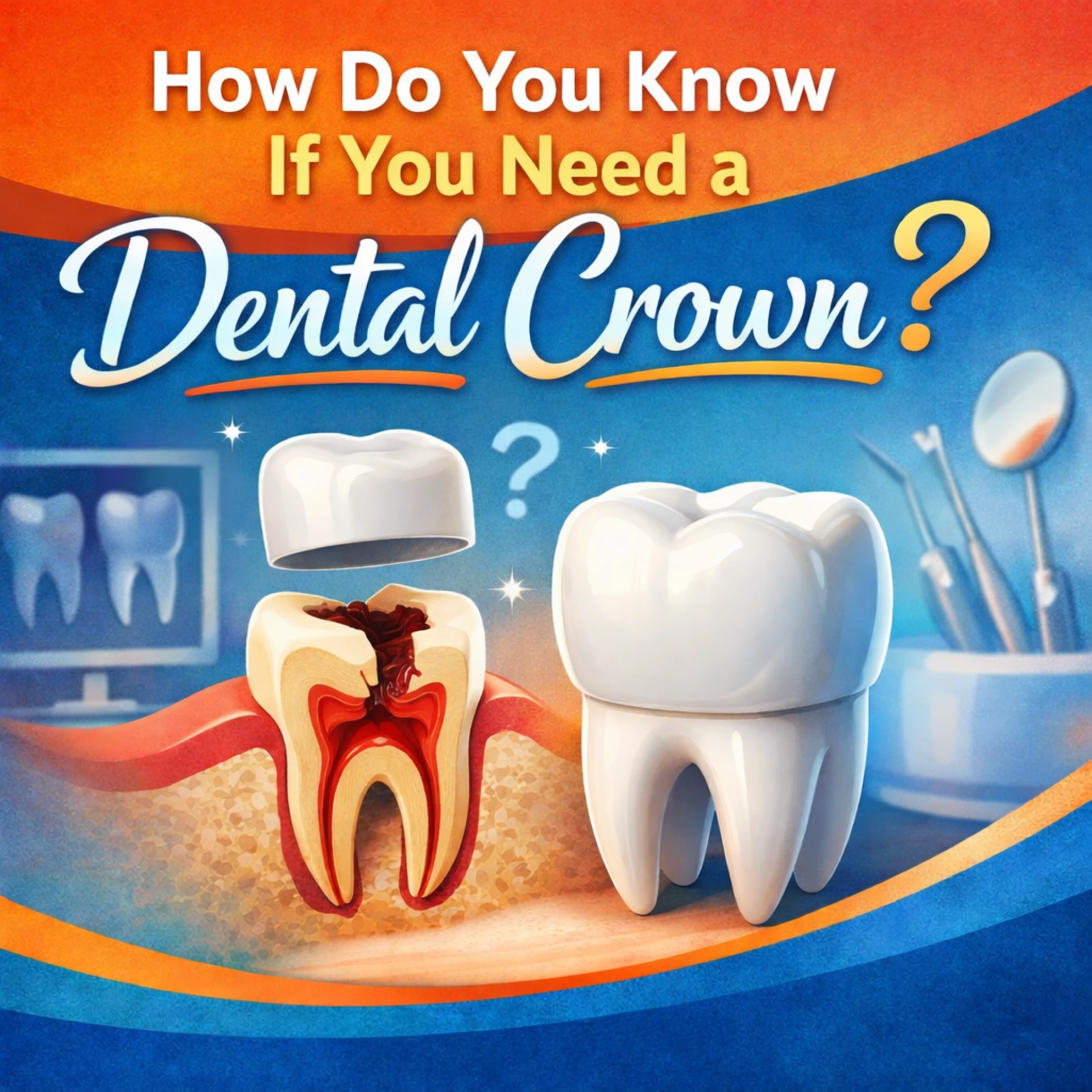
A dental crown is a cap placed over a tooth to restore its shape, size, strength, and appearance. It can be used for a range of situations where a tooth’s structure is compromised. Below are common signs and symptoms that suggest a crown could be beneficial.
1. Sensitivity to Temperature
Tooth sensitivity to hot or cold foods and drinks may occur when the protective outer layers of a tooth are worn away or damaged. While occasional mild sensitivity is common, severe or prolonged reactions could mean that the tooth requires full coverage protection with a crown.
2. Persistent Pain or Discomfort When Chewing
Pain when biting down or chewing can indicate internal stress or damage. While sensitivity can sometimes be temporary, persistent discomfort under pressure often suggests that the tooth’s structure is compromised. A crown can cushion and protect the tooth, reducing pain and preventing further injury.
3. Large Fillings and Weakened Tooth Structure
When a cavity is large or a tooth has been filled repeatedly, there may be less natural tooth tissue left. This reduced structure can make the tooth more susceptible to breaking. In these cases, a filling alone might not provide enough support. A crown covers the entire tooth and distributes pressure more evenly when you chew.
4. Severe Decay That Cannot Be Managed with a Filling
When decay becomes extensive, a filling may not be sufficient to restore the tooth’s function without risking further harm. A crown can restore the strength and integrity of a tooth that has been significantly weakened by decay.
5. Cracked, Chipped, or Broken Teeth
Teeth may crack or chip from biting down on hard foods, accidents, sport injuries, or long term habits such as grinding. Even seemingly minor cracks can grow over time, especially under normal chewing pressure. If you notice visible fractures or pieces breaking off your tooth, a crown can help hold the remaining structure together and protect it from further damage.
6. Teeth Worn Down by Grinding or Acid Erosion
People who grind their teeth or have long term exposure to acids such as from acidic foods and drinks can experience enamel wear that changes the shape and strength of their teeth. This wear can make teeth more prone to cracks and sensitivity. Crowns can restore worn teeth, improving function and reducing the risk of further damage.
7. Teeth After Root Canal Treatment
A tooth that has undergone root canal therapy can be more brittle because the inner pulp has been removed. This process can leave the tooth without the natural shock absorbing material that helps it withstand chewing forces. Dentists often recommend a crown after a root canal to protect and strengthen the treated tooth.
8. Discolouration with Structural Concerns
While discolouration on its own is usually cosmetic, when it accompanies structural issues such as cracks or decay, a crown may be a suitable solution that addresses both appearance and function.
How a Dentist Determines if You Need a Crown
Only a dental professional can diagnose whether a crown is necessary. The assessment usually includes several steps:
- Clinical examination: The dentist visually checks for cracks, decay, and structural weakness.
- X-rays: These reveal nderlying issues that are not visible to the naked eye, such as deep decay or root concerns.
- Bite evaluation: Assessing how your teeth come together can highlight areas under excessive pressure.
- Functional analysis: The dentist determines whether the remaining tooth structure is strong enough to support regular chewing without additional restoration.
Together, these assessments help your dentist decide whether a crown is the best option or whether other treatments such as fillings or onlays might suffice.
Conclusion
Dental crowns are widely used to protect teeth that are weakened, damaged, or structurally compromised. Recognising the signs from sensitivity and chewing pain to decay and fractures helps you seek timely care and prevent problems from worsening.
If you notice any of these symptoms, visiting a dental professional for an evaluation is a wise step. Consulting an experienced Chatswood dentist can help determine whether a crown or another treatment option is most appropriate for your situation. Early diagnosis often means simpler treatment, less discomfort, and a better chance of preserving your natural tooth.












Sign in to leave a comment.