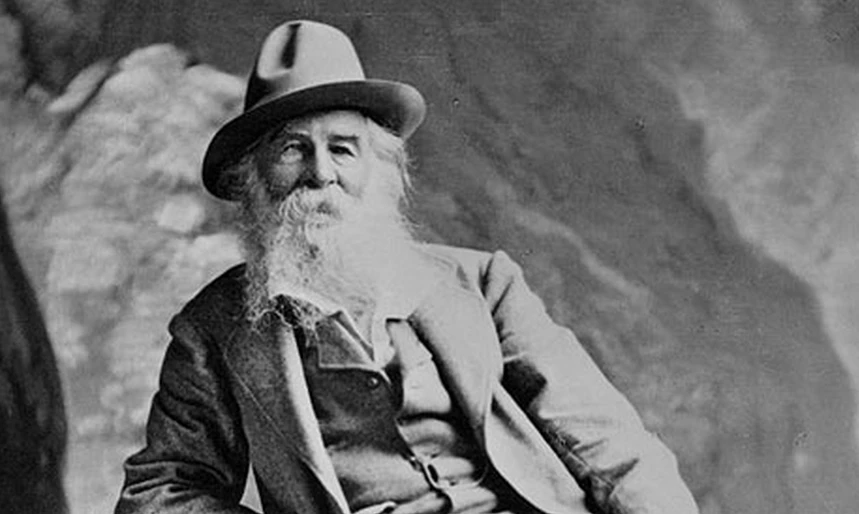

Walt Whitman occupies a singular place in American literature for his radical redefinition of poetic subject matter. At a time when poetry often focused on elevated themes, refined diction, and elite perspectives, Whitman turned his attention toward everyday individuals and common experiences. Through expansive language, free verse, and a democratic vision of humanity, he transformed ordinary people into worthy subjects of poetic celebration. His work affirms the dignity of laborers, the beauty of physical existence, and the spiritual significance of daily life, reshaping poetry into an inclusive and participatory art form.
Whitman’s Democratic Vision of Poetry
The celebration of ordinary people in Whitman’s work is inseparable from his democratic ideals. Living in a rapidly changing nineteenth-century America, he witnessed the growth of cities, the expansion of labor, and the tensions of social inequality. Rather than retreating from these realities, he embraced them as the core material of his poetry.
Poetry as a Mirror of the Nation
Whitman envisioned poetry as a reflection of the collective self. In his view, a poem should contain multitudes, just as the nation does. By including voices from diverse walks of life, he sought to create a literary space where no individual was excluded. This approach challenged traditional hierarchies of literary importance, asserting that the lives of farmers, mechanics, sailors, and domestic workers carried as much poetic weight as those of political leaders or classical heroes.
Rejection of Elite Poetic Traditions
Traditional poetic forms often emphasized elevated language and distant subjects. Walt Whitman rejected these conventions in favor of free verse and colloquial speech. This stylistic shift allowed him to speak directly about ordinary experiences without filtering them through artificial refinement. The accessibility of his language reinforced his belief that poetry belonged to everyone, not just the educated elite.
The Sacredness of the Common Individual
One of Whitman’s most profound contributions is his portrayal of ordinary people as inherently sacred. His poetry consistently dissolves the boundary between the spiritual and the everyday, suggesting that holiness resides within common existence.
Workers and Labor as Poetic Subjects
Celebrating Physical Labor
Whitman frequently portrays workers engaged in physical labor, presenting their actions as both meaningful and beautiful. In poems such as “I Hear America Singing,” various laborers are shown singing their unique songs as they work. These songs symbolize individual identity and collective harmony. By focusing on the act of work itself, Whitman elevates labor from mere necessity to a form of personal and national expression.
Equality Through Occupation
Rather than ranking professions by social status, Whitman presents them side by side, emphasizing their equal value. The carpenter, the mason, the boatman, and the mother all appear as contributors to the shared life of the nation. This egalitarian portrayal reinforces the idea that dignity arises from participation in life, not from social rank.
The Body and Everyday Experience
Affirmation of the Physical Self
Whitman’s celebration of ordinary people extends to their physical presence. He writes openly about bodies, sensations, and desires, insisting that the physical self is not separate from the spiritual. By doing so, he affirms the experiences of ordinary individuals whose lives are rooted in bodily labor and sensation.
This emphasis challenges moral and cultural attitudes that viewed the body as something to be restrained or hidden. For Whitman, the body of a laborer or passerby is as worthy of poetic attention as the soul of a philosopher. This radical inclusivity broadens the scope of poetry and validates everyday existence.
Daily Life as a Source of Meaning
Whitman’s poems frequently dwell on simple moments such as walking through streets, observing strangers, or sharing brief encounters. These moments are not treated as insignificant. Instead, they are presented as sites of connection and insight. Ordinary experiences become gateways to understanding the self and others, reinforcing the value of daily life.
Language as a Tool of Inclusion
Catalogs and Expansive Lists
One of Whitman’s most recognizable techniques is the use of catalogs, long lists of people, actions, and places. These catalogs function as democratic structures, allowing many individuals to occupy the same poetic space. By naming a wide range of ordinary people, Whitman ensures that no single voice dominates.
The catalogs also mimic the rhythm of everyday life, where countless experiences coexist. This technique reinforces the idea that the ordinary is not monotonous but richly varied.
Direct Address and Shared Presence
Whitman often addresses the reader directly, collapsing the distance between poet and audience. This directness invites readers to see themselves as participants in the poem rather than passive observers. By doing so, he extends his celebration of ordinary people to include those who engage with his work, blurring the line between art and life.
Ordinary People in Times of Crisis
Compassion During the Civil War
Whitman’s celebration of ordinary individuals deepened during the American Civil War. In poems such as those later collected in Drum-Taps, he focuses on wounded soldiers, nurses, and grieving families rather than generals or victories. These poems emphasize human vulnerability and compassion, highlighting the quiet heroism of those who endure suffering.
By attending to the experiences of common soldiers and caregivers, Walt Whitman affirms that historical significance resides not only in grand events but in individual acts of endurance and care.
Shared Humanity Amid Suffering
Whitman’s war poetry underscores the idea that ordinary people carry the emotional weight of national conflict. His attention to their pain and resilience reinforces his broader belief in shared humanity. Even in moments of profound crisis, the dignity of the individual remains central.
Nature and the Common Person
Accessibility of the Natural World
Whitman frequently connects ordinary people with nature, presenting the natural world as accessible rather than distant or idealized. Grass, roads, rivers, and cityscapes appear alongside human figures, suggesting continuity between people and their environment. This connection reinforces the idea that ordinary life is part of a larger, meaningful whole.
Symbolism Rooted in the Everyday
In works such as “Song of Myself,” common natural elements become symbols of universal experience. Grass, for example, is linked to shared origins and equality. By choosing familiar imagery, Whitman ensures that symbolic meaning remains grounded in everyday observation.
Lasting Impact of Whitman’s Celebration of the Ordinary
Influence on Modern Poetry
Whitman’s focus on ordinary people reshaped the direction of modern poetry. His free verse, inclusive subjects, and conversational tone opened the door for later poets to explore everyday life without apology. Many twentieth-century poets drew inspiration from his willingness to find beauty in the commonplace.
Redefining Cultural Value
By consistently affirming the worth of ordinary individuals, Walt Whitman challenged cultural assumptions about whose lives matter. His poetry suggests that meaning arises from shared existence rather than exceptional status. This vision continues to resonate in contemporary discussions of representation and inclusivity.
Conclusion
Walt Whitman celebrates ordinary people by transforming their lives, labor, and experiences into the very substance of poetry. Through democratic vision, inclusive language, and a profound respect for physical and emotional reality, he elevates the everyday without idealizing it. His work insists that beauty, dignity, and spiritual significance are not reserved for the extraordinary but are present in the lives of all people. By doing so, he redefines poetry as a shared space where every individual has a voice and a place, ensuring that the ordinary is recognized as both meaningful and essential.










Sign in to leave a comment.