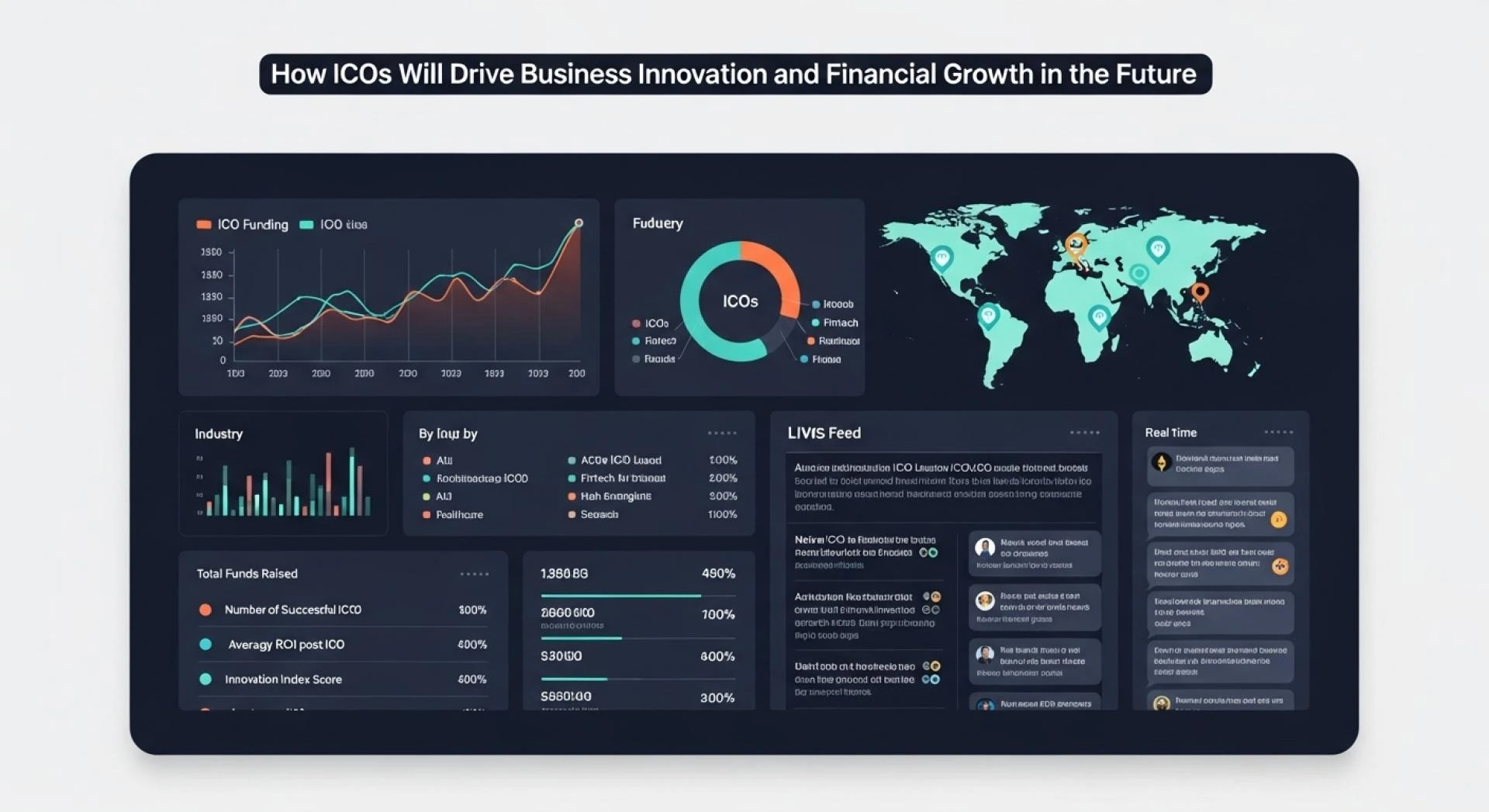

In a rapidly evolving digital economy, innovation is no longer just about developing new products — it’s about reimagining how capital flows, how communities engage, and how businesses sustain growth.
At the center of this transformation stands the Initial Coin Offering (ICO) — a blockchain-powered fundraising model that is redefining how enterprises innovate, scale, and build trust in a decentralized world.
What began as an experimental fundraising approach in the early crypto era has now matured into a legitimate financial strategy driving the next wave of business evolution. From startups to large enterprises, organizations are increasingly turning to ICOs to unlock liquidity, fuel innovation, and create global ecosystems of value.
The New Financial Paradigm: Why ICOs Matter
Traditional fundraising models — venture capital, private equity, or IPOs — often come with limitations: slow approval processes, geographic restrictions, and dilution of founder control. ICOs challenge this old system by offering a borderless, fast, and transparent alternative.
Through blockchain technology, enterprises can issue digital tokens that represent utility, ownership, or governance rights within their ecosystem. These tokens enable direct participation from investors worldwide, transforming the traditional investor–business relationship into a community-driven partnership.
This paradigm shift is not merely financial — it’s structural. It’s changing how businesses conceptualize value, ownership, and collaboration.
How ICOs Fuel Business Innovation
ICOs do more than raise capital — they incentivize innovation across every layer of business operations.
1. Decentralized Product Development
ICOs give companies the resources to innovate faster. By raising funds through a token sale, projects can finance R&D initiatives, develop blockchain infrastructure, or launch new applications without relying on traditional banks or VCs.
Moreover, token holders often participate in governance decisions, giving valuable feedback and direction. This co-creation model drives user-aligned innovation — products built not for users but with them.
2. Tokenized Business Models
ICOs encourage companies to rethink how they deliver value. Instead of selling products or services, businesses create ecosystems where tokens act as a medium of exchange, incentive, or access.
For instance, a logistics company could launch a token that rewards efficient shipping data sharing, or a green energy startup could tokenize carbon credits, allowing global investors to fund sustainability initiatives.
3. Global Access to Funding
By bypassing traditional financial intermediaries, ICOs open doors to a global pool of investors. Startups in emerging economies now have access to capital that was once beyond reach, accelerating innovation and competition in developing markets.
Driving Financial Growth Through Tokenization
ICOs are not only an innovation tool — they are a growth engine. The tokenization model brings liquidity, inclusivity, and scalability into business finance.
1. Liquidity and Market Expansion
Unlike equity shares that often remain illiquid, tokens can be traded on decentralized or centralized exchanges shortly after issuance. This liquidity benefits both investors and businesses, fostering continuous engagement and increasing market visibility.
2. Continuous Revenue Models
Through staking, governance voting, and transaction fees, companies can generate ongoing revenue from their token ecosystem. These mechanisms create sustainable economic models that evolve with market demand.
3. Lower Capital Barriers
ICO development companies build fundraising infrastructures that significantly reduce entry barriers. Startups no longer need to spend months pitching investors — instead, they can launch a compliant ICO and reach a ready, global investor base.
Technological Backbone: The Role of Blockchain
At the core of every successful ICO lies a robust blockchain infrastructure. Professional ICO development services ensure seamless integration between smart contracts, tokenomics, and user experience.
Key Blockchain Features Powering Innovation
- Smart Contracts: Automate token issuance, vesting, and compliance processes.
- Transparency: All transactions are verifiable on-chain, enhancing investor trust.
- Security: Immutable ledgers safeguard against fraud and manipulation.
- Interoperability: Cross-chain compatibility expands usability across ecosystems.
Emerging blockchain technologies — such as Layer 2 scaling, AI-driven analytics, and multi-chain deployment — are making ICO platforms more efficient, sustainable, and accessible than ever before.
Regulatory Evolution: Building Trust in the ICO Ecosystem
Early ICOs suffered from poor regulation and investor protection. Today, the landscape has matured.
Global jurisdictions — from the EU’s MiCA framework to Singapore’s MAS guidelines — now provide clear compliance standards for ICOs. This regulatory clarity encourages institutional participation, allowing enterprises to launch token offerings with confidence and legitimacy.
Modern ICO development agencies incorporate built-in KYC/AML verification, smart contract audits, and jurisdiction-specific compliance tools to ensure every project operates within legal boundaries. This not only protects investors but also strengthens the credibility of blockchain fundraising as a whole.
Sustainability and Long-Term Value Creation
One of the most exciting aspects of ICO evolution is its focus on sustainability — not just environmental, but economic and social sustainability.
Projects that emphasize transparent governance, community incentives, and ethical tokenomics are setting new benchmarks for responsible innovation. Sustainable ICOs are designed for long-term growth, not short-term hype — aligning incentives between founders, investors, and users.
Real-World Examples of ICO-Driven Transformation
ICOs have already proven their transformative power:
- Fintech enterprises have used token offerings to launch decentralized payment and lending platforms.
- Energy startups have leveraged ICOs to fund renewable energy grids and incentivize carbon-neutral behavior.
- Gaming and entertainment platforms have built token economies that empower players and creators with true digital ownership.
Each of these examples demonstrates how ICOs merge financial accessibility with technological innovation, creating business models that are adaptive, inclusive, and scalable.
The Future: Institutional Adoption and Hybrid Models
As institutional investors grow comfortable with blockchain-based assets, the future of ICOs will likely see hybrid models — blending traditional finance with decentralized mechanisms.
We’re already witnessing enterprises adopt Security Token Offerings (STOs) and Initial DEX Offerings (IDOs), signaling the rise of a more compliant, secure, and institutional-grade fundraising era.
In the coming years, expect to see:
- AI-powered investor analytics for data-driven decision-making.
- Cross-chain token issuance for global accessibility.
- Decentralized governance as a standard business model.
ICOs will evolve into fully integrated financial ecosystems, where fundraising, trading, and governance coexist seamlessly on blockchain networks.
Final Thoughts
ICOs are not just a fundraising mechanism — they’re a blueprint for the future of digital finance and innovation. By combining transparency, inclusivity, and decentralization, ICOs empower enterprises to think beyond borders and build economies that are fair, fluid, and future-ready.
In the next decade, businesses that harness the full potential of ICO development will not only secure funding but also shape the financial and technological landscape of the Web3 economy.
The future of growth is tokenized — and it’s already here.













Sign in to leave a comment.