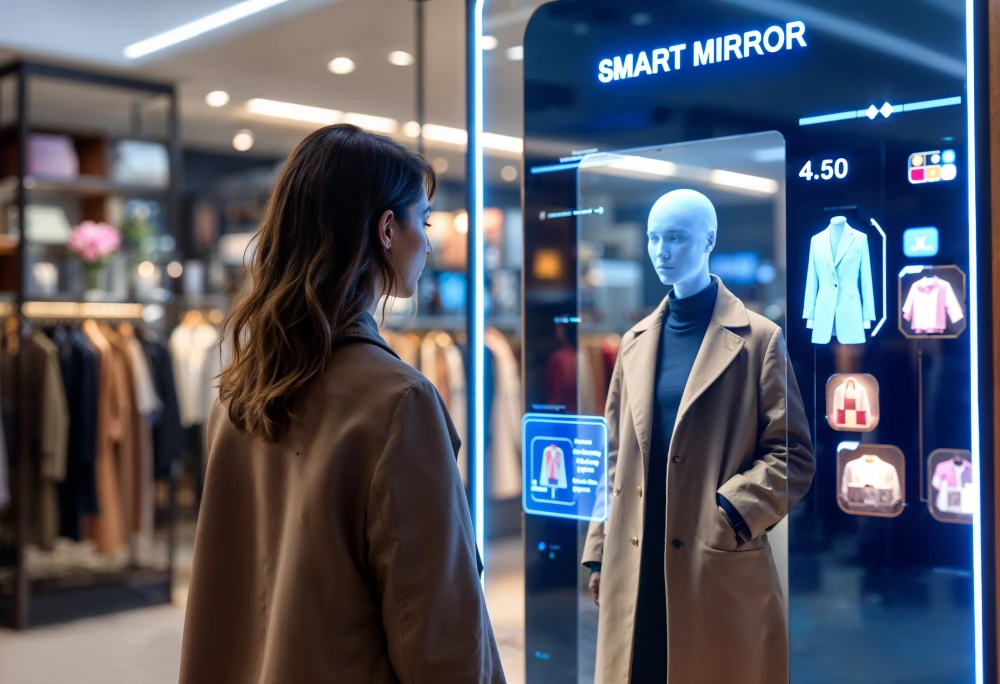

Do you think online retail stores can truly understand what customers want? It is possible with image annotation. Product images that once sat passively in catalogs now power online retail stores to understand customer preferences at a deeper level.
Retail image annotation refers to the process of incorporating labels to product images in online retail stores with specific details like color, material, category, pattern, or size. When a retailer labels thousands of product images on their websites with tags, they're training websites to understand their inventory just like a seasoned sales associate would.
Quality image annotation dramatically improves how accurately products are categorized. When products are annotated and tagged, shoppers discover required products easily without endless scrolling. This is especially important for online stores with thousands of items. Rather than typing vague descriptions, shoppers simply upload photos to find similar products in seconds.
How Dedicated Image Annotation Services Providers Help Retailers
Most retailers struggle with a common problem: they need high-quality image annotation but lack the specialized teams to produce it in-house. Creating properly labeled product images requires expertise that goes beyond basic tagging. When in-house teams in retail firms manage annotation work, it impacts both sales productivity and customer satisfaction.
When retailers outsource annotation work to dedicated image annotation services providers, they free their core teams to focus on merchandising, customer service, and sales strategies. Some other gains of leveraging image annotation services are:
- Cost Saving - Building an internal annotation team means significant investments, hiring specialists, developing training programs, and purchasing annotation tools. External providers distribute these costs across multiple clients, making professional annotation affordable without the overhead of maintaining full-time teams.
- Industry Expertise - Professional image annotation outsourcing firms possess retail-specific knowledge that general staff simply don't have. They understand the nuances of product categorization, fashion labeling, and visual attribute identification. This specialized expertise ensures annotations accurately capture product characteristics like style, color, material, and design elements; details that make AI recommendations truly useful to shoppers.
- Scalability - The scalability offered by experts from a reputable image annotation company proves particularly valuable for retailers with varying annotation needs. Experts adjust annotation workloads during seasonal catalog updates and handle large backlogs without disruptions.
Four Key Use Cases of Retail Image Annotation
Smart retailers want to outperform competitors with exceptional online shopping experiences. When these businesses partner with image annotation outsourcing companies, they transform basic online stores into intelligent shopping platforms that truly understand what customers want. Here are the key online retail operations modernized by image annotation experts.
1. Personalizing Shopping Experiences
The most significant advancement comes through personalization. Image annotation creates the foundation for online retail stores that learn individual preferences at a detailed level. Professional annotation enables AI models in online retail stores to recognize subtle image preferences unique to each customer. As shoppers interact with products, annotated data helps algorithms identify patterns in their image preferences, like colors, fabrics, and design elements. The resulting recommendations feel genuinely personal rather than mechanically generated, resulting in better customer satisfaction.
The personalized retail experiences make shoppers feel valued. A shopper who consistently browses gold jewelry with minimalist designs might see suggestions for similar aesthetic pieces they haven't discovered yet, creating moments of delight that build long-term customer loyalty.
2. Product Recognition
Product recognition models in online retail stores fail without proper training data. Professional annotators from image annotation outsourcing firms create meticulously labeled datasets that teach recognition models to identify products from any angle or background. This detailed tagging goes beyond basic labels; experts mark brand identifiers, style variations, and even subtle fabric textures.
What separates professional annotation from basic in-house tagging? Context. Expert annotators create relationships between products, teaching recognition models that a particular retail product pairs well with specific accessories or belongs in a seasonal collection. This contextual awareness helps shoppers discover required products from online retail stores, even when they can't input keywords.
3. Visual Search Capabilities
Have you ever spotted something you liked but couldn't describe in words? Visual search solves this problem. Through precise annotation work, shoppers simply snap photos of products they like and instantly find similar items in an online retail store's inventory.
This capability requires meticulous boundary annotations that show AI models in online retail stores exactly where products begin and end in images. Professional annotators from an image annotation company also create detailed attribute tags that identify what makes each item unique. These tags make visual search truly useful instead of frustratingly general.
4. Customer Behavior Analysis
Discovering customer behavior patterns and insights becomes easier with annotated image data. When browsing products online, customers leave digital footprints that tell a story about their preferences and shopping habits.
Professional image annotation services providers help retailers decode this behavior by tagging which product features attract attention, how long customers examine certain items, and which visual elements lead to purchases. Instead of guessing why a product sells well, retailers gain concrete insights into exactly which visual attributes drive customer decisions. This knowledge shapes product marketing strategies.
Key Challenges in Retail Image Annotation Solved by Dedicated Experts
Retail image annotation projects face major hurdles that can derail even the most promising AI initiatives. What happens when retailers try to handle complex annotation projects without specialized expertise? Security risks increase, data quality suffers, and AI systems fail to deliver accurate results. Professionals from an image annotation company address these challenges head-on through specialized approaches to privacy protection and quality control.
Data Privacy Concerns
The image annotation for online retail stores often involves processing customer information, resulting in major privacy risks. Addressing privacy risks is challenging for retail businesses. General data protection regulation specifically requires extensive transparency about data utilization and requires explicit consent before customer data processing.
With the help of annotation experts, retailers can navigate privacy challenges. These experts leverage robust security measures and follow clear privacy-focused workflows that ensure all annotation processes stay compliant with regional regulations.
Professional annotation partners also establish comprehensive data handling agreements that spell out confidentiality requirements and data deletion procedures after project completion. This structured approach protects retailers from potential legal problems while maintaining customer trust, essential in today's privacy-conscious market.
Maintaining Annotation Quality
Poor quality annotations directly impact how AI models perform. When product images are inconsistently labeled, even sophisticated retail AI systems struggle to work properly in real-world situations. Experts from an Image annotation company solve this challenge through comprehensive quality frameworks that include:
- Detailed annotation guidelines with standardized vocabulary
- Multi-level verification systems that catch errors before they affect model training
- Regular quality reviews using "honeypot" datasets with known correct labels
What makes professional annotators particularly valuable is their understanding of retail-specific edge cases—situations like products photographed from unusual angles, items with changing packaging, or products partially hidden by shopping lists or customer hands. This domain expertise helps them maintain consistency across diverse retail environments.
Through these specialized approaches, professional annotation services deliver reliable training data that powers truly effective retail AI systems. When retailers partner with annotation experts, they avoid the technical pitfalls that often derail AI implementation while ensuring customer privacy remains protected.
Final Words
Image annotation isn't just another tech trend; it's reshaping how retailers connect with shoppers at a fundamental level. Throughout this guide, we've seen how annotation empowers stores to organize products intelligently, enable visual searches, and create recommendations that truly match what customers want.
Working with dedicated annotation experts offers retailers advantages that go beyond just saving time. These specialists bring retail-specific knowledge that helps them understand product categories, seasonal trends, and fashion terminology. They maintain strict quality standards that ensure consistency even across thousands of product images in online retail stores.











Sign in to leave a comment.