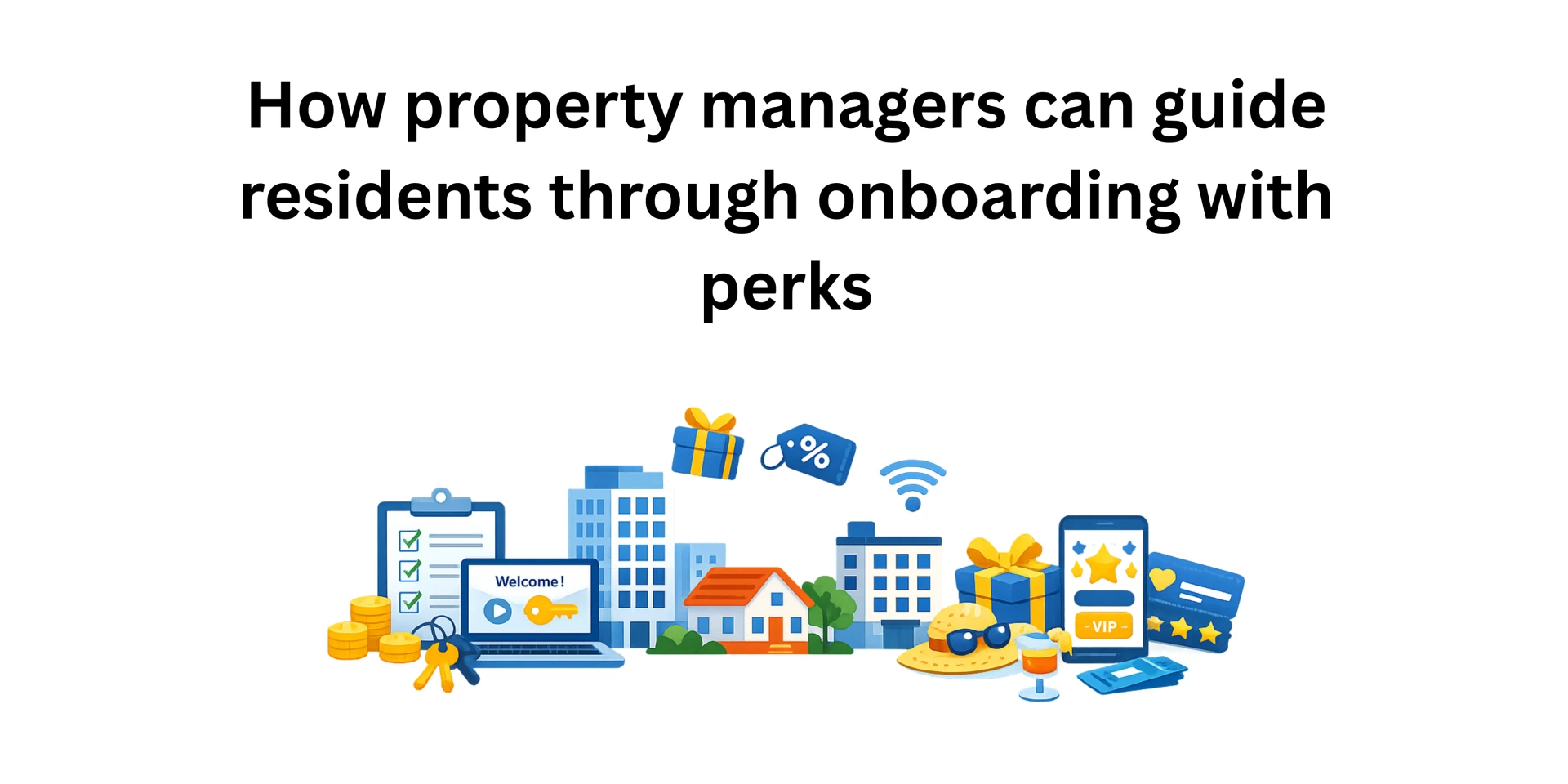

Resident onboarding sets the tone for the entire leasing relationship. When the first few weeks are smooth, residents feel confident about their choice and are more likely to stay longer.
However, onboarding often overwhelms new renters. They must set up utilities, complete paperwork, learn community rules, and navigate new services. Property managers can simplify this journey using rewards for renter onboarding and renewal.
Perks turn routine tasks into positive experiences. Instead of chasing residents for forms or payments, managers can motivate engagement with small incentives.
A detailed example of this strategy can be seen in rewards that improve renter onboarding and renewals, where incentives are used to guide renters through key onboarding milestones while strengthening long-term loyalty.
When implemented thoughtfully, perks help property managers create a structured onboarding path that improves engagement, satisfaction, and retention.
Why onboarding matters more than most property managers realize
The first 30–60 days of a lease are critical. During this period, residents form their lasting perception of the property and management team.
If onboarding feels confusing or slow, residents may already begin considering other options for the next lease cycle.
Strong onboarding programs achieve several goals:
- Reduce resident confusion during move-in
- Encourage early engagement with property services
- Build trust with management teams
- Increase the likelihood of lease renewal
- Improve overall resident satisfaction
This is where rewards for renter onboarding and renewal become powerful. Incentives encourage residents to complete tasks quickly while reinforcing positive experiences with the property.
The role of perks in renter onboarding
Perks work because they create a sense of value. Even small incentives make residents feel recognized and appreciated.
Instead of presenting onboarding as a checklist of obligations, property managers can frame it as a series of rewarding steps.
Common onboarding milestones that can be incentivized include:
- Completing lease documentation
- Setting up automatic rent payments
- Registering on the resident portal
- Submitting maintenance preferences
- Reviewing community policies
- Attending welcome events
Each completed step moves residents closer to becoming fully integrated members of the community.
This approach transforms onboarding into an interactive experience rather than a passive process.
Creating a structured onboarding journey with perks
Property managers can guide residents more effectively when onboarding follows a clear structure. Perks help reinforce each stage of the journey.
Step 1: Welcome residents with immediate value
The onboarding experience should begin the moment a lease is signed.
A welcome perk helps create excitement around the move-in process.
Examples include:
- Local service discounts
- Streaming service trials
- Food delivery credits
- Moving assistance offers
These perks communicate that the property values its residents from day one.
They also establish early engagement with the property’s resident experience platform.
Step 2: Incentivize important setup tasks
Many onboarding tasks are administrative but necessary.
Instead of sending repeated reminders, property managers can reward completion.
Tasks commonly tied to rewards for renter onboarding and renewal include:
- Setting up autopay
- Uploading required documentation
- Completing resident profiles
- Enabling maintenance request tools
A simple reward system encourages residents to finish these steps quickly.
This reduces operational workload while improving the onboarding flow.
Step 3: Encourage early community participation
Engaged residents are more likely to renew their leases. Early participation helps build that connection.
Perks can encourage residents to explore the community and its services.
Examples include:
- Points for attending welcome events
- Rewards for joining resident groups
- Discounts for local partner businesses
- Bonuses for using community amenities
This stage helps residents feel integrated into the neighborhood rather than simply occupying a unit.
Step 4: Reinforce digital adoption
Modern property management relies heavily on digital tools.
Resident portals, maintenance systems, and payment platforms streamline operations. But adoption is not always immediate.
Perks can accelerate usage by rewarding residents who:
- Download the resident app
- Submit their first service request online
- Enable digital communication preferences
- Opt into paperless billing
Encouraging digital engagement early improves operational efficiency for property teams.
Step 5: Transition onboarding into long-term loyalty
Onboarding should not end after move-in.
The most effective programs extend the journey toward retention and renewal.
Property managers can gradually shift incentives toward long-term engagement, including:
- Rewards for consistent on-time payments
- Perks for renewing leases early
- Incentives for resident referrals
- Benefits for participating in community feedback programs
This ensures that rewards for renter onboarding and renewal remain connected across the entire resident lifecycle.
Operational benefits for property managers
Beyond improving resident satisfaction, perks deliver measurable operational benefits.
Faster task completion
Residents are more likely to complete onboarding requirements when a reward is attached.
This reduces administrative follow-ups and delays.
Higher platform adoption
Digital resident portals and apps become more widely used when incentives encourage early interaction.
Improved retention
Residents who experience structured onboarding and ongoing engagement feel more connected to the property.
This increases the likelihood of lease renewals.
Stronger resident relationships
Perks show that management values resident experience.
This helps create positive long-term relationships between residents and property teams.
Examples of perks that work well in onboarding programs
Successful onboarding programs focus on perks that provide immediate usefulness.
Popular categories include
Lifestyle perks
- Food delivery discounts
- Fitness memberships
- Streaming service offers
Local partnerships
- Discounts with nearby restaurants
- Retail promotions
- Transportation services
Home services
- Cleaning services
- Furniture rental discounts
- Moving assistance perks
These perks support residents during the move-in transition while reinforcing the value of living in the community.
Best practices for implementing onboarding rewards
For property managers considering onboarding incentives, several strategies improve success.
Keep the journey simple
Residents should clearly understand:
- Which actions earn rewards
- How to redeem perks
- When incentives are delivered
Complex programs reduce engagement.
Focus on meaningful milestones
Tie perks to tasks that matter operationally, such as:
- Autopay enrollment
- Portal registration
- Maintenance onboarding
This ensures incentives align with property management goals.
Automate the reward system
Manual reward distribution can create administrative overhead.
Using automated platforms helps deliver perks instantly when residents complete actions.
Automation ensures consistency and scalability across large portfolios.
Track engagement metrics
Property managers should measure:
- Onboarding completion rates
- Resident portal adoption
- Participation in perk programs
- Lease renewal improvements
These metrics help refine the program over time.
Turning onboarding into a strategic retention tool
For many property managers, onboarding is treated as a one-time operational task. In reality, it is the foundation of long-term resident relationships.
When onboarding includes meaningful perks, residents feel supported during a major life transition. That positive first impression carries forward throughout the lease.
By integrating rewards for renter onboarding and renewal, property managers can:
- Simplify resident experiences
- Increase engagement with property services
- Strengthen community connections
- Improve retention and renewal rates
In today’s competitive rental market, resident experience matters as much as location and amenities.
Perks provide a practical, scalable way to deliver that experience.
Conclusion: make onboarding rewarding for residents and managers
Resident onboarding should feel welcoming, not administrative.
Perks transform onboarding from a checklist into an engaging journey that benefits both residents and property teams.
When implemented thoughtfully, rewards for renter onboarding and renewal guide residents through critical tasks while building stronger community relationships.
Platforms that automate perk distribution make this strategy easy to scale across properties and portfolios.
Explore how Paylode can help you build better resident engagement through rewards.









Sign in to leave a comment.