
Proper attic ventilation is essential for maintaining a comfortable, energy-efficient, and structurally sound home. Many homeowners overlook the attic when addressing ventilation issues, yet it plays a major role in regulating indoor temperature and preventing moisture buildup. One of the most effective solutions for improving airflow in this space is installing roof mounted attic fans. These ventilation systems actively remove hot air and moisture from the attic, helping protect the home and improve overall comfort.
This article explains how roof mounted attic fans work, their benefits, and why they are an effective solution for improving home ventilation.
Understanding Attic Ventilation
Attics naturally accumulate heat and moisture because warm air rises from the living spaces below. During hot weather, sunlight heats the roof surface, which can raise attic temperatures to 120–150°F (49–65°C). Without proper ventilation, this trapped heat radiates downward into the home, making cooling systems work harder.
Poor attic ventilation can lead to several problems, including:
- Increased indoor temperatures
- Higher energy bills
- Roof material deterioration
- Mold and mildew growth
- Moisture damage to insulation and wooden structures
An efficient ventilation system helps remove excess heat and moisture while allowing fresh air to circulate.
What Are Roof Mounted Attic Fans?
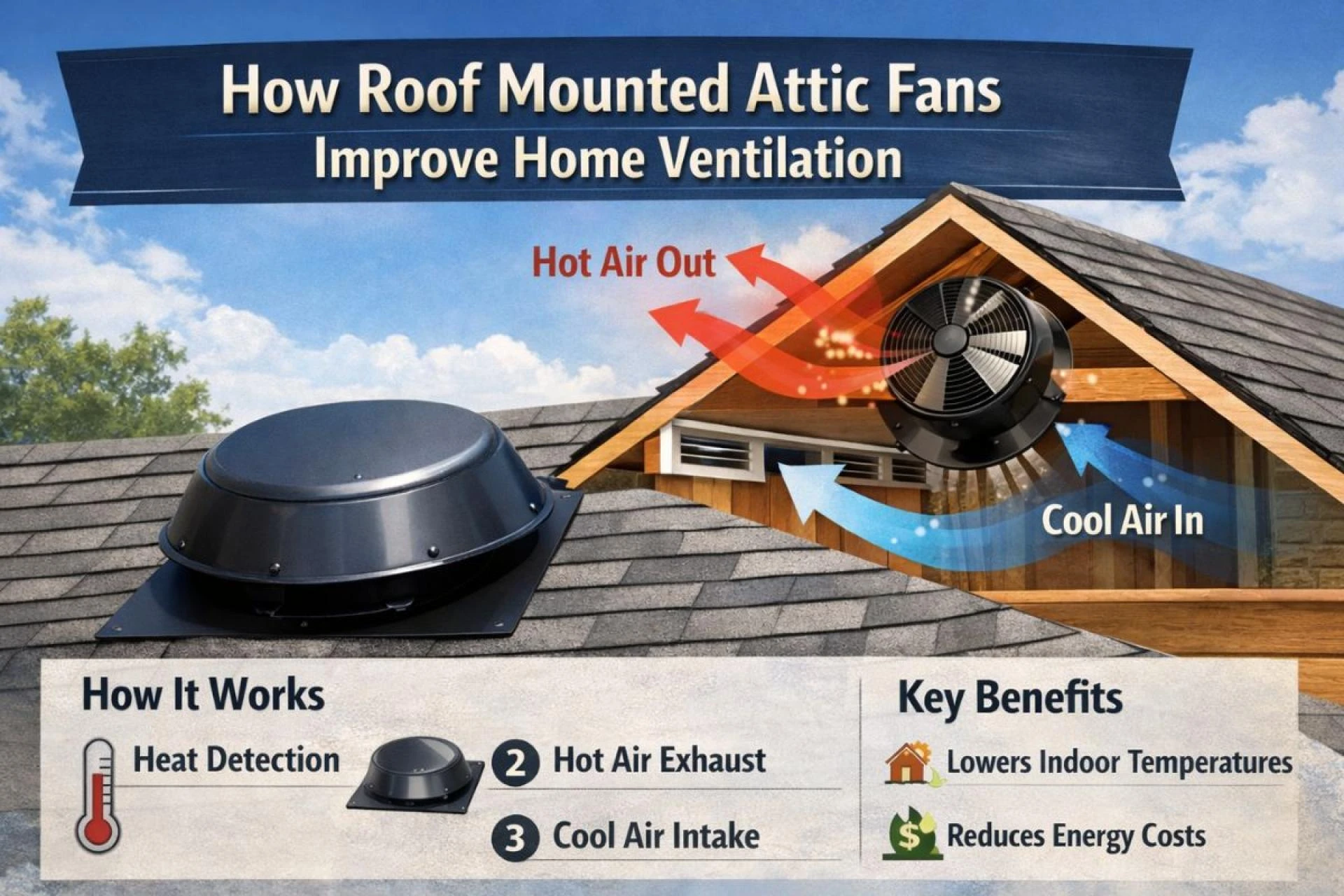
Roof mounted attic fans are mechanical ventilation devices installed directly on the roof surface. They are designed to pull hot, stagnant air out of the attic and replace it with cooler outside air entering through soffit or intake vents.
These fans are typically powered by:
- Electricity
- Solar energy
- Thermostat or humidity controls
When attic temperatures exceed a certain level, the fan activates and expels hot air through the roof, creating a continuous airflow cycle.
How Roof Mounted Attic Fans Work
The operation of roof mounted attic fans is based on a simple airflow principle. As the fan pulls hot air out of the attic, it creates negative pressure inside the space. This pressure difference allows cooler air to enter through intake vents, improving ventilation.
The process generally works in three stages:
- Heat Detection
A thermostat or humidistat monitors attic conditions. When temperatures or humidity levels rise above the set limit, the fan automatically turns on. - Hot Air Extraction
The fan pulls hot, stagnant air from the attic and expels it outside through the roof-mounted vent. - Fresh Air Intake
Cooler outdoor air enters the attic through soffit vents or other intake openings, replacing the expelled hot air.
This continuous airflow helps regulate attic temperature and moisture levels.
Key Benefits of Roof Mounted Attic Fans
1. Improved Indoor Comfort
By removing excessive heat from the attic, roof mounted attic fans reduce the amount of heat that radiates into living spaces. This helps keep indoor temperatures more comfortable, especially during summer months.
2. Lower Energy Consumption
When attic temperatures are controlled, air conditioning systems do not have to work as hard to cool the home. This can lead to noticeable reductions in energy usage and utility bills.
3. Protection for Roofing Materials
Extreme attic heat can damage roofing materials such as shingles, underlayment, and wooden structures. Proper ventilation helps maintain stable temperatures, extending the lifespan of the roof.
4. Moisture Control
Moisture buildup in attics can occur due to humidity, condensation, or household activities like cooking and bathing. Roof mounted attic fans help remove excess moisture, reducing the risk of mold growth and wood rot.
5. Better Insulation Performance
When insulation becomes damp due to trapped moisture, it loses effectiveness. Proper ventilation ensures insulation remains dry and maintains its thermal performance.
Similar Link: The Many Benefits Of Whole House Fan
Types of Roof Mounted Attic Fans
Homeowners can choose from several types depending on their needs and energy preferences.
Electric Attic Fans
These fans are connected to the home’s electrical system and provide powerful ventilation. They often include thermostats and humidity controls for automatic operation.
Solar Powered Attic Fans
Solar attic fans use solar panels to generate electricity from sunlight. They are energy-efficient and reduce electricity costs while improving ventilation.
Smart Attic Fans
Some modern systems include smart controls that allow homeowners to monitor attic conditions and adjust fan settings using mobile apps.
Installation Considerations
Proper installation is important for attic fans to function efficiently. Several factors must be evaluated before installing a roof mounted attic fan:
- Attic size and ventilation requirements
- Existing intake vents such as soffits
- Roof structure and material
- Electrical or solar power access
- Local building codes and climate conditions
Professional installation ensures the fan is correctly positioned and sealed to prevent roof leaks.
When Should You Install a Roof Mounted Attic Fan?
You may benefit from installing a roof mounted attic fan if you notice:
- Extremely hot attic temperatures
- High cooling costs in summer
- Uneven indoor temperatures
- Moisture or mold in the attic
- Ice dams forming in colder climates
These signs often indicate poor attic ventilation and airflow imbalance.
Maintenance Tips for Attic Fans
Roof mounted attic fans require minimal maintenance but should be inspected periodically to ensure optimal performance.
Recommended maintenance includes:
- Cleaning dust and debris from fan blades
- Checking thermostat settings
- Inspecting electrical connections
- Ensuring vents remain unobstructed
- Verifying roof seals around the fan unit
Regular inspection helps extend the life of the fan and ensures consistent ventilation.
Read More: Know the Basics of Whole House Fans With These FAQs
Conclusion
Roof mounted attic fans are an effective solution for improving attic ventilation and maintaining a healthier home environment. By actively removing hot air and moisture, these fans help regulate attic temperatures, reduce energy consumption, and protect roofing materials.
When combined with proper intake ventilation, roof mounted attic fans create a balanced airflow system that enhances overall home comfort and structural durability. For homeowners dealing with excessive attic heat or humidity, installing an attic fan can be a practical and long-term investment in better home ventilation.














Sign in to leave a comment.