
Climate change is one of the biggest threats facing global agriculture today. Rising temperatures, erratic rainfall, prolonged droughts, and extreme weather events are already affecting crop yields and livestock production. According to the Food and Agriculture Organization (FAO), climate change could reduce global crop yields by up to 25% by 2050 if no action is taken. Smallholder farmers, who produce over 80% of the world's food, are especially vulnerable.
To face these challenges, farmers worldwide are turning to Smart Farming Solutions—technology-driven systems that enhance productivity, reduce environmental impact, and improve resilience against climate risks. These solutions, developed and implemented by forward-thinking Smart Agriculture Solution Companies, are transforming traditional farming into data-powered, climate-resilient operations.
This guide explores how smart farming technologies are helping farmers adapt to changing climate conditions, highlighting key features, use cases, technical advantages, and sector-specific impacts.
What Are Smart Farming Solutions?
Smart farming solutions use digital technologies to collect, analyze, and act on data in real-time. These technologies include IoT sensors, drones, satellite imaging, AI-powered analytics, and automated irrigation systems. Together, they help farmers monitor field conditions, optimize resource use, and make informed decisions based on real-time data.
The goal is to boost productivity while reducing inputs like water, fertilizer, and pesticides. More importantly, smart farming helps farmers respond to unpredictable weather patterns, manage risks, and sustain their livelihoods in the face of climate stress.
Core Components of Smart Farming Solutions
- IoT-based sensors for soil moisture, temperature, humidity, and nutrient levels
- GPS and drone mapping for land monitoring and precision application
- AI and machine learning for crop modeling and disease prediction
- Automated irrigation systems for optimized water usage
- Weather forecasting tools integrated with farm management platforms
Key Features That Address Climate Challenges
1. Real-Time Monitoring of Weather and Soil
Smart sensors can track microclimate conditions at the farm level. They provide updates on rainfall, temperature, wind speed, soil moisture, and more. Unlike generic weather forecasts, this localized data gives farmers accurate insights to decide when to irrigate, plant, or harvest.
Benefits:
- Prevents crop damage from sudden weather shifts
- Reduces water waste during irrigation
- Enhances yield stability in unpredictable climates
2. Precision Irrigation Systems
Climate change leads to increased droughts and irregular rainfall. Smart irrigation systems, powered by real-time soil moisture data and AI algorithms, deliver the right amount of water at the right time. They automatically adjust water delivery based on crop needs and current soil conditions.
Benefits:
- Reduces water usage by up to 50%
- Minimizes overwatering and nutrient leaching
- Ensures crops stay hydrated during dry periods
3. AI-Powered Crop Health and Pest Monitoring
Warmer climates encourage the spread of new pests and diseases. Smart farming solutions integrate drone imagery, AI, and satellite data to detect early signs of crop stress, pest outbreaks, or nutrient deficiencies. This enables proactive treatment before the damage spreads.
Benefits:
- Reduces crop losses due to pests or disease
- Limits pesticide use, supporting environmental health
- Increases farm profitability and food security
4. Climate-Adapted Crop Planning
Smart agriculture platforms use historical data, satellite imagery, and predictive analytics to recommend the best crops for a given season based on climate trends. They also help farmers schedule planting and harvesting to avoid extreme weather risks.
Benefits:
- Enhances resilience through informed crop selection
- Reduces economic losses from failed harvests
- Optimizes land use efficiency
Use Cases: Smart Farming in Action
India: Smart Irrigation in Drought-Prone Regions
In India’s Maharashtra state, where rainfall is unreliable, farmers have adopted smart drip irrigation systems connected to IoT soil sensors. These systems monitor soil moisture in real-time and deliver precise water amounts. According to local authorities, water use decreased by 45%, and crop yields improved by 30% during dry seasons.
Netherlands: Precision Greenhouses and Climate Control
Dutch greenhouse farmers use automated climate control systems powered by AI. These systems adjust temperature, humidity, and light based on crop growth stages and external weather conditions. The result is stable, high-yield production even in unpredictable weather.
Kenya: Mobile Platforms for Smallholder Farmers
In Kenya, small-scale farmers use mobile-based platforms offering weather forecasts, crop advice, and pest alerts. These smart agriculture solutions help farmers plan their activities around climate patterns. Reports show up to 20% yield improvements due to timely interventions.
Technical Advantages of Smart Farming Technologies
Smart farming solutions offer clear technical benefits that help mitigate the effects of climate change on agriculture.
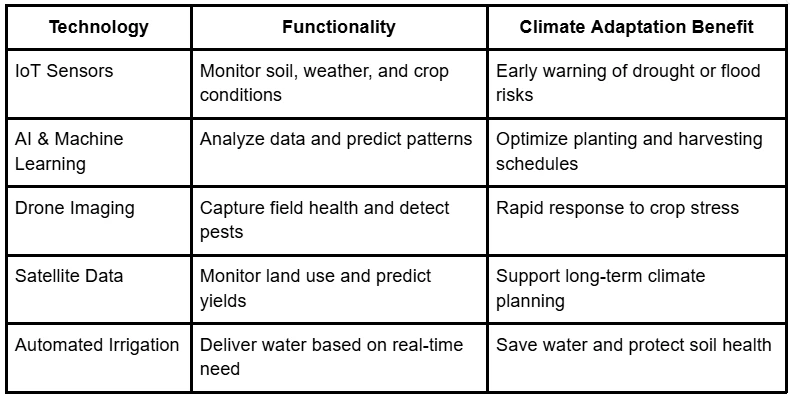
These technologies give farmers better control over variables that are increasingly influenced by climate instability.
Industry-Specific Applications
1. Horticulture and Greenhouse Farming
Horticulture crops are sensitive to temperature and humidity. Smart farming tools offer real-time climate monitoring, automated greenhouse controls, and AI-based disease prediction. Farmers can manage growing conditions with precision, even during extreme external weather events.
2. Livestock Management
Climate stress affects animal health and productivity. Smart farming includes sensors that track animal body temperatures, movement, and feeding patterns. These systems can identify signs of heat stress or disease early, helping farmers take timely action.
3. Large-Scale Grain Farming
For cereal crops, changing rainfall patterns and heat waves impact yield. Smart farming platforms help schedule irrigation, detect pest outbreaks, and guide planting based on weather forecasts. This supports stable production and minimizes climate risks.
4. Smallholder Farms in Developing Countries
Low-cost smart farming solutions, like mobile advisory services and solar-powered sensors, are tailored for smallholder farmers. They enable even resource-constrained farmers to make informed decisions based on climate conditions.
Choosing the Right Smart Agriculture Solution Company
Selecting the right Smart Agriculture Solution Company is critical to successful implementation. Enterprises and governments should evaluate providers based on:
Key Evaluation Criteria:
- Proven expertise in climate-resilient agriculture
- Scalable technology suited for small and large farms
- Data security and privacy policies
- Local support and training
- Interoperability with existing tools and machinery
A trusted technology partner should offer long-term support, user-friendly platforms, and customization for regional farming needs. Look for companies that demonstrate field experience, scientific credibility, and a track record of results in similar environments.
Challenges and Considerations
1. High Initial Costs
While smart farming reduces long-term costs, the upfront investment in hardware and software can be high. Governments and NGOs can help by offering subsidies and micro-loans for adoption.
2. Connectivity Issues in Rural Areas
IoT devices and cloud platforms need reliable internet. In rural regions, this can be a barrier. However, companies are developing offline-compatible tools and low-bandwidth solutions.
3. Data Literacy and Training
Farmers must understand how to interpret and act on data. Successful adoption requires ongoing training programs, demo fields, and support hotlines.
4. Customization for Local Conditions
Generic solutions may not fit every farm. Companies must adapt tools to specific soil types, crops, and regional climates to ensure effectiveness.
Environmental and Economic Impact
Environmental Gains
- Reduced water consumption: Smart irrigation cuts waste.
- Lower chemical use: Precision spraying minimizes pesticide use.
- Soil health preservation: Avoids over-farming and erosion.
- Carbon footprint reduction: Optimized machinery use cuts emissions.
Economic Gains
- Higher yields: Data-backed decisions improve output.
- Lower input costs: Efficient resource use saves money.
- Improved market access: Better quality and traceability help with exports.
Future of Climate-Smart Agriculture
By 2030, experts predict that over 70% of farms globally will use some form of smart agriculture technology. As climate risks increase, so does the need for adaptive tools that provide resilience and security to farmers.
Emerging Trends:
- Blockchain for transparent supply chains
- 5G connectivity in remote agricultural zones
- AI-powered agronomy advice personalized for every farm
- Climate-smart insurance linked to real-time data
These developments will further enhance the ability of smart farming to buffer the effects of a changing climate.
Conclusion
Smart farming solutions offer farmers the tools they need to survive and thrive in a world shaped by climate change. By combining real-time monitoring, AI-driven analytics, and automated systems, smart agriculture enables better decision-making, efficient resource use, and increased resilience.
Whether you're a smallholder or managing a large agribusiness, adopting these technologies can mean the difference between loss and sustainability. Partnering with a reliable Smart Agriculture Solution Company ensures access to the latest innovations, expert support, and scalable infrastructure.
As climate pressures grow, the transition to smart farming isn’t just beneficial—it’s essential.













Sign in to leave a comment.