
https://www.youtube.com/watch?v=9WpOmPnjF-A
Walk through a school hallway at 8:59 AM and there’s this almost electric hush. Students glance at the wall clocks, teachers eye the time, and then—bang—the bell rings, footsteps echo, lockers slam, and in less than sixty seconds the entire rhythm of the building shifts. Who keeps that rhythm? Not a single teacher, not the PA system—it’s those synchronised digital clocks humming quietly in the background. They never get applause, but without them, things fall apart fast.
Across two decades of watching operations in factories, airports, and even a few cramped middle school offices with coffee-stained walls, one truth keeps resurfacing: clocks aren’t just clocks. They’re part of the plumbing of culture. Some facilities swear by synchronised wall clocks with traditional faces, others rely on giant red LED digits, and some mix and match both. Either way, they’re part of that invisible infrastructure nobody brags about—until it fails. And then? Chaos.

The Unsung Hero in Schools
Back in 2020, American Time published a story on Trinity Lutheran School, a campus stretching roughly 200,000 square feet. The place had been running on mismatched clocks—some fast, some slow, none talking to each other. Students were constantly late, teachers complained, even the janitor joked about having to guess which clock was “right.” When they finally upgraded to a unified wireless and wired system, every digital and analog wall clock showed the same time down to the second. Suddenly, bells aligned, transitions smoothed out, and daylight-saving didn’t throw the building into confusion anymore. The funny part? Nobody noticed it was fixed. That’s how you know it worked.
And if you’ve ever been in a school hallway when two different clocks are three minutes apart, you know exactly how fast students sniff out loopholes. It’s a mess. Synchronised clocks closed that loophole. For schools debating upgrades, it’s not just about the hardware—it’s about restoring rhythm to learning.

Hospitals: Where Seconds Count
Hospitals have their own soundtrack: heart monitors beeping, intercoms crackling, nurses wheeling carts with squeaky wheels. Timing isn’t just convenience—it’s survival. American Time highlighted Essentia Healthcare in 2020. After installing wireless clocks accurate to within a tenth of a second, they not only synced procedures but shaved off thousands in maintenance. About $15,000 a year in labor and repair savings, to be exact. That’s not small change for a healthcare system stretched thin.
But the story’s not just about money. Imagine logging medication times when one room clock drifts by two minutes. That’s the kind of detail that snowballs into lawsuits. Synchronised digital wall clocks are boring on the surface, but in the ICU, boring equals safe.
Airports: The Symphony of Seconds
Airports feel almost cinematic when you think about it. Screens flicker with departures, luggage belts hum, flight attendants stride with practiced urgency. In 2024, Mobatime published an article on why synchronised clocks are the linchpin of air traffic systems. A late pushback at Gate C4? It can ripple through ten flights, hundreds of passengers, and miles of taxiways. Without precise synchronous clocks, you’d see delays stack like dominos.
Ever notice how airport announcements feel both frantic and perfectly timed? That’s not luck—it’s a central time system pulling strings. Most travelers never think about the synchronised digital clocks behind those operations, but the control tower sure does. And if those clocks drift? Good luck explaining why one flight took off early while another sat waiting for clearance.
Factories and Construction Sites: The Gritty Side of Precision
Walk into a plant at shift change and it’s sensory overload—machines winding down, boots scuffing, maybe the faint smell of welding smoke. Timing matters. If half the crew’s clock says 3:58 and the other half’s says 4:05, you’ve got arguments over overtime before anyone’s even clocked out. Same goes for construction sites where subcontractors fight over crane schedules. Analog and digital wall clocks that tick in unison solve problems nobody wants to mediate.

Wireless transmitters can blanket 250,000 square feet, covering everything from warehouses to multi-floor offices. For bigger or more complex spaces, toss in an extra transmitter or two and you’re golden. PoE systems? They’re unlimited, no coverage headaches. And if your facility isn’t PoE-ready, plug in a simple Ethernet PoE Port Injector and keep moving. It’s practical, not glamorous—but practical keeps the lights on.
Digital or Analog: Which One Belongs on Your Wall?
Some managers swear by the glow of a wireless digital sync clock—big, clear digits you can see across a warehouse. Others lean on the traditional charm of a wireless 13-inch analog sync clock, especially in classrooms or offices where aesthetics matter. There’s no wrong answer. The real power comes when both types run in harmony, all synced to the same master time. Different faces, same mission.
Maybe the unpopular take? Analog still has a certain authority. Digital screams efficiency, sure, but the sweep of an analog second hand feels alive. In an age of hyper-precision, maybe we need both—the efficiency of digital and the trust of analog. What do you think?
The Backbone You Never Notice
Think of synchronised clocks like plumbing or Wi-Fi—you don’t brag about it at staff meetings. You just notice when it’s broken. That’s what makes them the invisible backbone of workplaces. And unlike Wi-Fi, a clock never buffers.
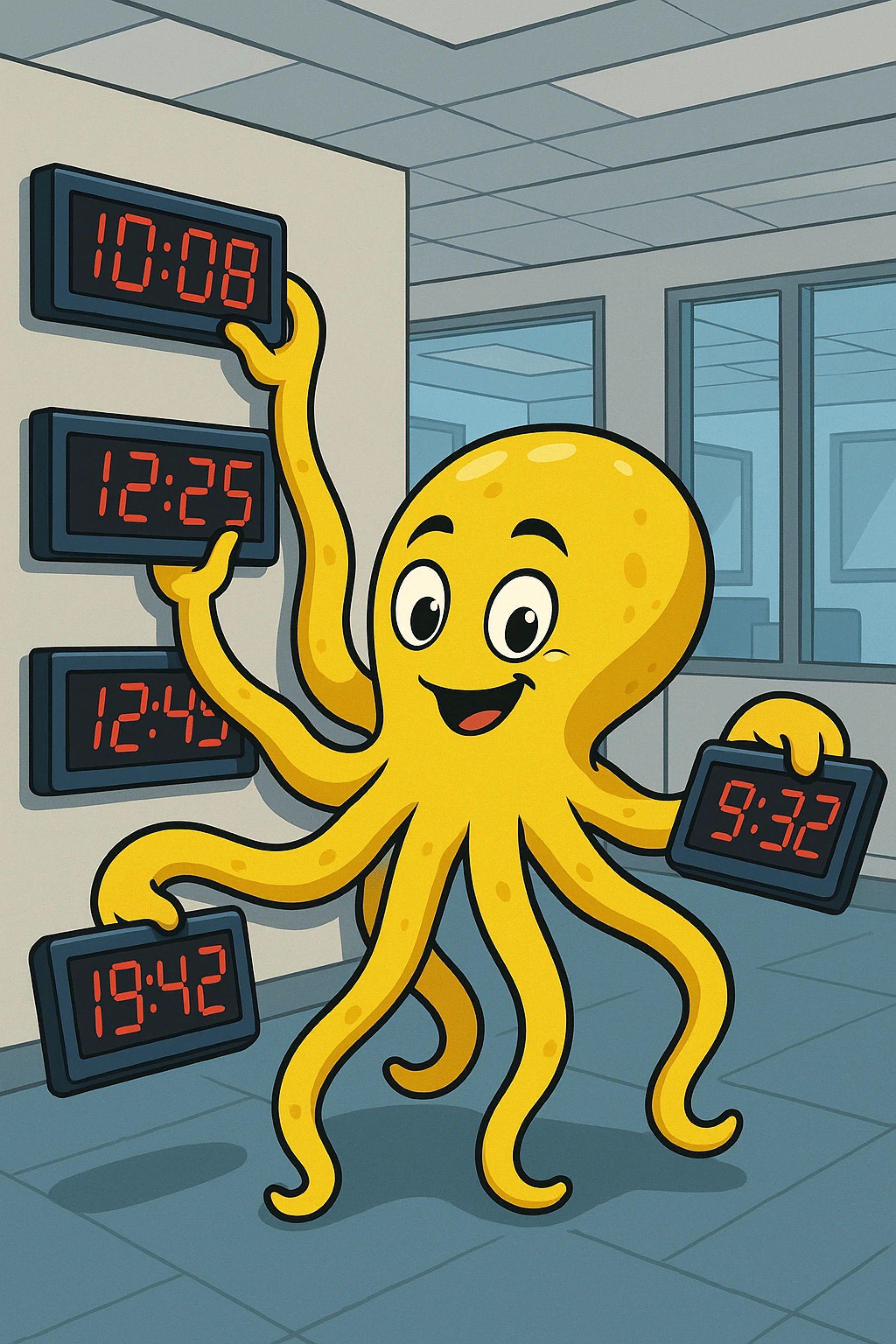
Every facility manager weighing upgrades eventually hits the same fork in the road: stick with mismatched wall clocks and accept inefficiency, or invest in synchronised systems and let everyone literally work on the same second. The cost isn’t just financial—it’s cultural. Time drift erodes trust, coordination, and momentum. A synchronised digital clock system restores it.
What People Are Saying
★★★★★ Facility Manager: “Our warehouse used to run on a mix of wall clocks. Now that every clock matches, shift changes and payroll logs are finally stress-free.”
★★★★★ School Principal: “The synchronised wall clock system has been a game-changer. No more excuses from students or teachers about different times in different classrooms.”
Frequently Asked Questions
- Why are synchronised digital clocks essential in schools? They keep every classroom on the same schedule, preventing chaos during class changes, exams, and events.
- How do wireless synchronised wall clocks operate? A transmitter pushes signals across up to 250,000 sq. ft, updating unlimited clocks. Add transmitters for tricky layouts.
- What if my building isn’t PoE-ready? A simple Ethernet PoE Port Injector lets you run digital and analog wall clocks with the same accuracy—no need to rewire your facility.
A Thought to Ponder
If seconds can cost lives in hospitals, millions in aviation, or trust in classrooms, isn’t it strange that so many workplaces still gamble on mismatched wall clocks? Synchronised digital clocks aren’t luxuries—they’re insurance. And unlike insurance, you see the benefit every single day.
Fact Source Reference Summary
Supporting evidence for synchronised time systems in education, healthcare, and aviation—presented without URLs for clean citation.
- Source: American Time — Trinity Lutheran School Wireless Clock Case Study — Publication Date: 2020
- Source: American Time — Essentia Healthcare Wireless Clock Case Study — Publication Date: 2020
- Source: Mobatime — Time Precision in Aviation — Publication Date: 2024
Note: Citations align with the discussed case studies and industry context for schools, hospitals, and airport operations.
Facebook LinkedIn Twitter (X) YouTube
--------------------------------------------------------------------------------------------------------------------------
Disclaimer
This article is provided for general information and discussion only. It is not technical, legal, safety, or facilities-design advice.
- Performance details (e.g., coverage areas, accuracy, cost savings) reflect manufacturer information and cited case studies; actual outcomes vary by site conditions, building materials, and installation quality.
- Product specifications, features, and availability may change without notice. Verify requirements before purchase or installation.
- Always consult a qualified electrician or IT professional for PoE equipment, injectors, and wireless transmitter placement, and follow applicable codes and safety policies.
- References to schools, hospitals, airports, or other organizations are illustrative; trademarks and brand names belong to their respective owners.
- Clocktopus™ is a brand mascot used for educational and branding purposes; it does not imply performance guarantees.
--------------------------------------------------------------------------------------------------------------------------
About the Author

Anatoli Schwartz is the Founder and Time Tracking Specialist at TimeClockExperts.com. Since 2001, Anatoli has worked with businesses to simplify the way they manage time and attendance, moving teams away from outdated punch cards and toward smarter, compliant solutions built for modern workplaces.
Alongside expertise in workforce management, Anatoli also brings 20+ years of aviation aftermarket support experience across the EMEA region. This dual background—timekeeping technology and aviation operations—offers a practical perspective on precision, efficiency, and reliability in mission-critical environments.
The mission remains straightforward: help organizations of every size keep time accurately, manage compliance effortlessly, and focus on growth without getting lost in the paperwork.

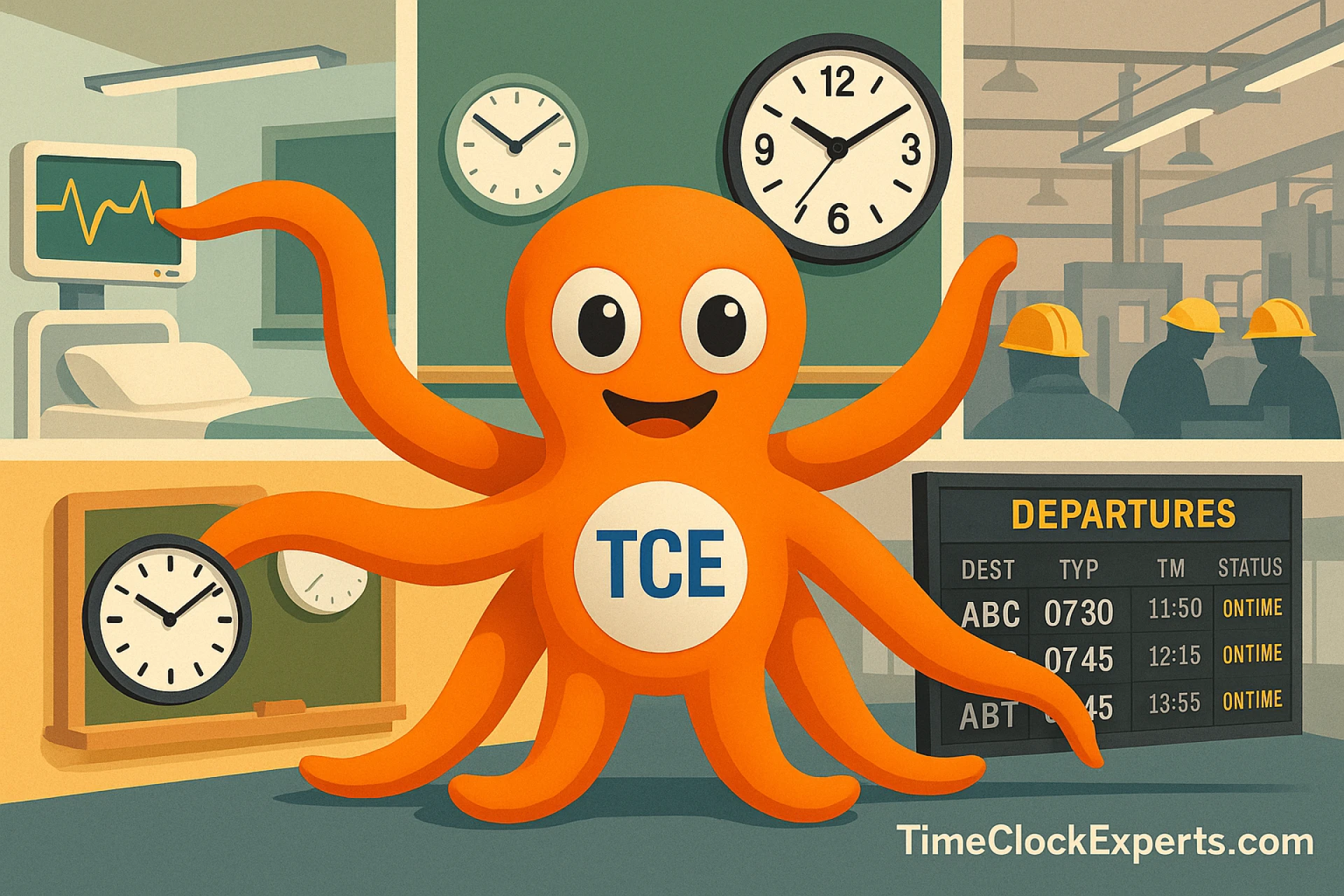
Contributor — Clocktopus™ (Brand Personality)
Clocktopus™ is our orange, eight-armed collaborator who knows time and attendance inside out—part coach, part checklist whisperer. Expect quick, plain-English pointers on punch windows, placement, and simple SOPs that make busy Mondays feel a little less noisy.
He turns shop-floor realities—late punches, overlapping shifts, missing supplies—into clear, repeatable steps anyone can follow. The vibe stays friendly and practical: help first, pitch later.
- Translates shop-floor realities into clear, repeatable steps.
- Keeps things friendly and practical — guidance first, sales second.
- Reminds teams about the small stuff (fresh ribbons, bold signage) that prevents big hassles.
In short, Clocktopus™ is the steady voice on the wall—nudging teams toward smoother shifts and fewer “oops” moments.
--------------------------------------------------------------------------------------------------------------------------
👋 Don’t Leave Without This!
Whether you're exploring better time tracking or streamlining team attendance, we’ve got tools, tips, and exclusive offers ready for you.
- ✅ Free Time Clock Buying Guide for HR teams
- ✅ 1-on-1 Demo with a TimeClock Expert
- ✅ Early access to product promos and bundles
👉 Click here to request your free guide or schedule a call
📬 No spam. Just smart, time-saving advice.
--------------------------------------------------------------------------------------------------------------------------











Sign in to leave a comment.