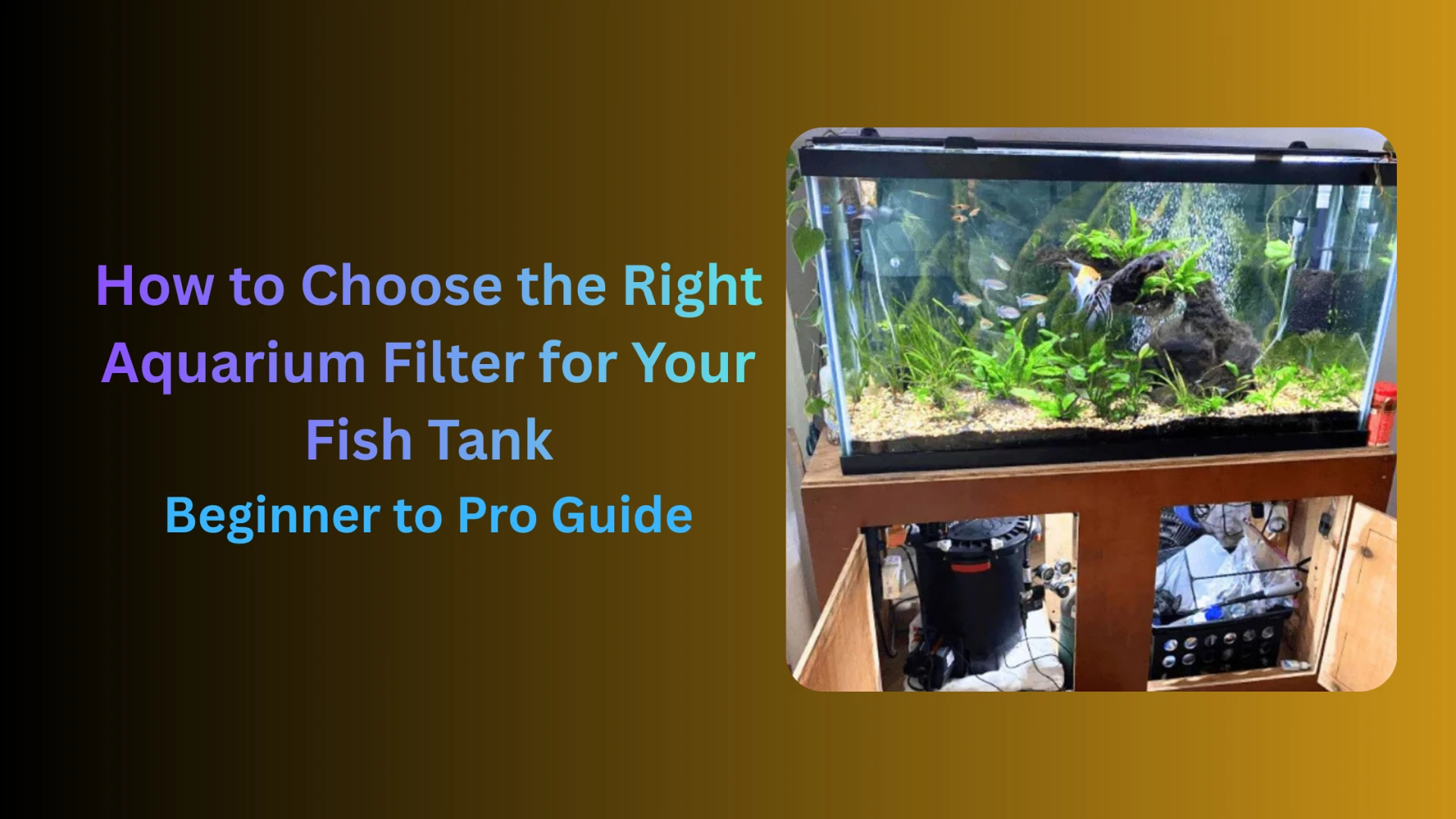

If you are setting up an aquarium or planning to upgrade your existing fish tank, one of the most important decisions you’ll make is choosing the right aquarium filter. A good filter is not just equipment — it’s the heart of a healthy aquarium.
In this blog, we’ll explain what aquarium filters do, why they matter, types of filters, and how to choose the best one for your tank size and fish type.
Why Aquarium Filters Are So Important
Fish live in water 24/7, and even small changes in water quality can stress them. A filter helps by:
- Removing fish waste and leftover food
- Keeping water crystal clear
- Supporting beneficial bacteria
- Reducing harmful ammonia and toxins
- Improving oxygen circulation
Without a proper filter, fish can fall sick, water can smell bad, and algae can grow quickly.
How Aquarium Filters Work
Most aquarium filters perform three types of filtration:
1. Mechanical Filtration
Removes visible dirt, debris, and uneaten food using sponge or filter pads.
2. Biological Filtration (Most Important)
Good bacteria grow inside the filter media and break down toxic ammonia into safer compounds.
3. Chemical Filtration
Uses activated carbon or special media to remove odors, chemicals, and discoloration.
Types of Aquarium Filters (Explained Simply)
1. Sponge Filters
Best for:
- Small tanks
- Betta fish
- Shrimp tanks
- Breeding tanks
✔ Gentle flow ✔ Affordable ✖ Not ideal for large tanks
2. Hang-On-Back (HOB) Filters
Best for:
- Beginner aquariums
- Small to medium tanks
✔ Easy to install ✔ Good mechanical & biological filtration ✖ Slight noise in some models
3. Canister Filters (Pro Choice)
Best for:
- Medium to large aquariums
- Aquascaping tanks
- Heavily stocked tanks
✔ Powerful filtration ✔ Silent operation ✔ Crystal-clear water ✖ Higher cost
4. Internal Filters
Best for:
- Compact tanks
- Temporary setups
✔ Space-saving ✔ Easy maintenance ✖ Limited filtration capacity
How to Choose the Right Filter for Your Tank
Step 1: Tank Size Matters
Always check the filter flow rate (LPH – Liters Per Hour).
A general rule: Filter capacity = 5–10x tank water volume per hour
Example:
- 50L tank → 250–500 LPH filter
Step 2: Fish Type & Stocking
- Goldfish → High waste → Strong filter needed
- Betta → Low flow preferred
- Shrimp → Sponge filter recommended
Step 3: Aquascape or Planted Tank
Planted tanks benefit from canister filters because they:
- Don’t disturb plants
- Keep water parameters stable
- Improve CO₂ circulation
Common Filter Mistakes to Avoid
- Choosing a filter only based on price
- Over-cleaning filter media
- Replacing all media at once
- Ignoring flow rate requirements
Tip: Never wash filter media with tap water — it kills beneficial bacteria.
Maintenance Tips for Long Filter Life
- Clean mechanical media every 2–3 weeks
- Rinse biological media in tank water only
- Replace carbon media monthly (if used)
- Check pipes & impeller regularly
Final Thoughts
A good aquarium filter means healthy fish, clear water, and less maintenance stress for you. Whether you are a beginner or an experienced aquarist, investing in the right filtration system will save you money and effort in the long run.
If you’re confused about which filter suits your tank, always choose quality over shortcuts.
Happy Fishkeeping!



Sign in to leave a comment.