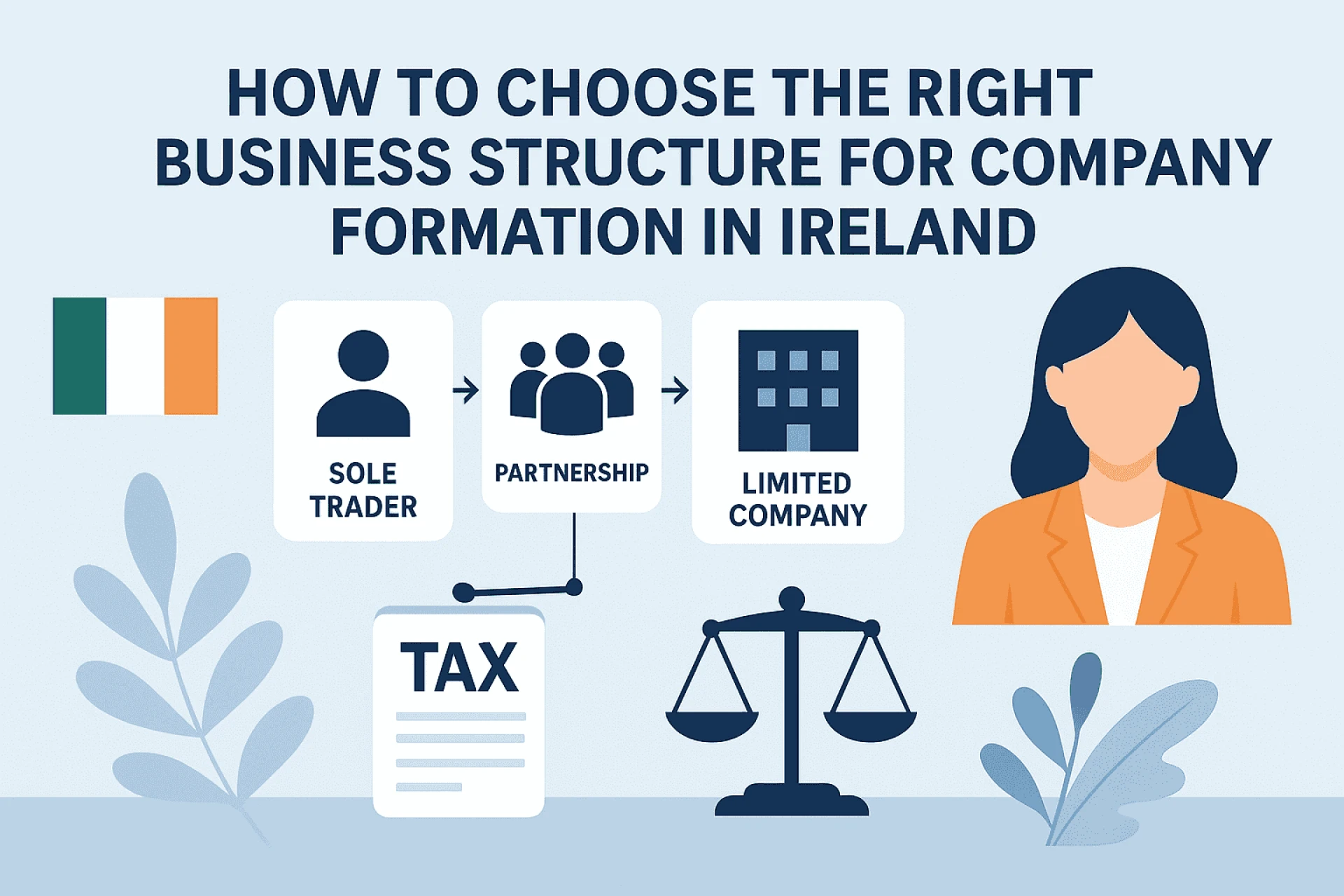

tarting a new business in Ireland is an exciting journey, but one of the most important decisions you’ll face early on is choosing the right business structure. This choice affects your taxes, liability, administrative responsibilities, and even your company’s ability to raise capital. Understanding the different options available for company formation in Ireland will help you set a strong foundation for your business’s growth and success.
Common Business Structures in Ireland
Ireland offers several business structures, each with its own advantages and challenges. The main types are:
Sole Trader
A sole trader is the simplest structure, where one individual owns and runs the business. It’s easy to set up and involves minimal administrative work. However, the owner has unlimited liability, meaning personal assets are at risk if the business incurs debts.
Partnership
A partnership involves two or more people sharing ownership and profits. There are general partnerships, where all partners have unlimited liability, and limited partnerships, where some partners’ liability is restricted. Partnerships require a formal agreement and shared decision-making.
Private Company Limited by Shares (LTD)
This is the most common structure for company formation in Ireland. It is a separate legal entity from its owners, limiting shareholders’ liability to their investment. An LTD company can raise capital by issuing shares and benefits from tax efficiencies. However, it requires more administrative work, including filing annual returns and maintaining statutory records.
Designated Activity Company (DAC)
This type of company has a specific activity defined in its constitution and is often used for businesses with regulatory or sector-specific requirements.
Public Limited Company (PLC)
A PLC can offer shares to the public and is suitable for larger businesses looking to raise significant capital. It has stricter regulatory requirements.
Factors to Consider When Choosing Your Business Structure
When deciding which structure to adopt for your company formation in Ireland, consider these key factors:
- Liability: How much personal risk are you willing to take? If limiting your personal liability is important, forming a limited company is usually the best option.
- Taxation: Different structures are taxed differently. Sole traders and partnerships are taxed on personal income, while companies pay corporation tax on profits.
- Funding Needs: If you plan to raise external capital, a limited company structure is more attractive to investors.
- Administrative Burden: Sole traders and partnerships have fewer reporting requirements, while companies must comply with strict filing and governance rules.
- Future Growth: Consider your long-term goals. A limited company structure is often better suited for growth and expansion.
Understanding Tax Implications: Corporation Tax Guide
Taxation is a critical consideration in choosing your business structure. Limited companies in Ireland are subject to corporation tax, which is currently one of the most competitive rates in Europe at 12.5% for trading income. This favorable rate has made Ireland a popular destination for company formation.
For sole traders and partnerships, profits are taxed as personal income, which can be at higher rates depending on your earnings. It’s important to familiarize yourself with the corporation tax guide to understand how these taxes apply and plan accordingly.
Using a professional service like Company Setup can help you navigate these complexities, ensuring you choose a structure that maximizes tax efficiency while maintaining compliance.
Why Use a Professional Service for Company Formation?
Choosing the right business structure is just the beginning. The process of registering your company, filing necessary documents, and maintaining compliance can be complicated for first-time entrepreneurs. Company Setup specializes in guiding business owners through every step of company formation in Ireland, offering expert advice tailored to your needs.
With Company Setup, you benefit from a seamless registration process, professional support for choosing the right structure, and ongoing assistance with regulatory requirements. This allows you to focus on growing your business while ensuring all legal and administrative tasks are handled correctly.
Conclusion
Selecting the right business structure for your company formation in Ireland is a vital decision that impacts your liability, taxation, and overall business operations. Whether you opt for a sole trader, partnership, or limited company, understanding the pros and cons of each option will help you make an informed choice that aligns with your goals.
For expert guidance and a hassle-free company formation experience, trust Company Setup to support you throughout the process. If you’re ready to start your business journey or need personalized advice, don’t hesitate to contact us today and take the first step toward a successful business in Ireland.












Sign in to leave a comment.