Construction is a complex dance of precision, timing, and communication. Before a single brick is laid or a beam is hoisted, a crucial step must occur: the translation of architectural intent into actionable reality.
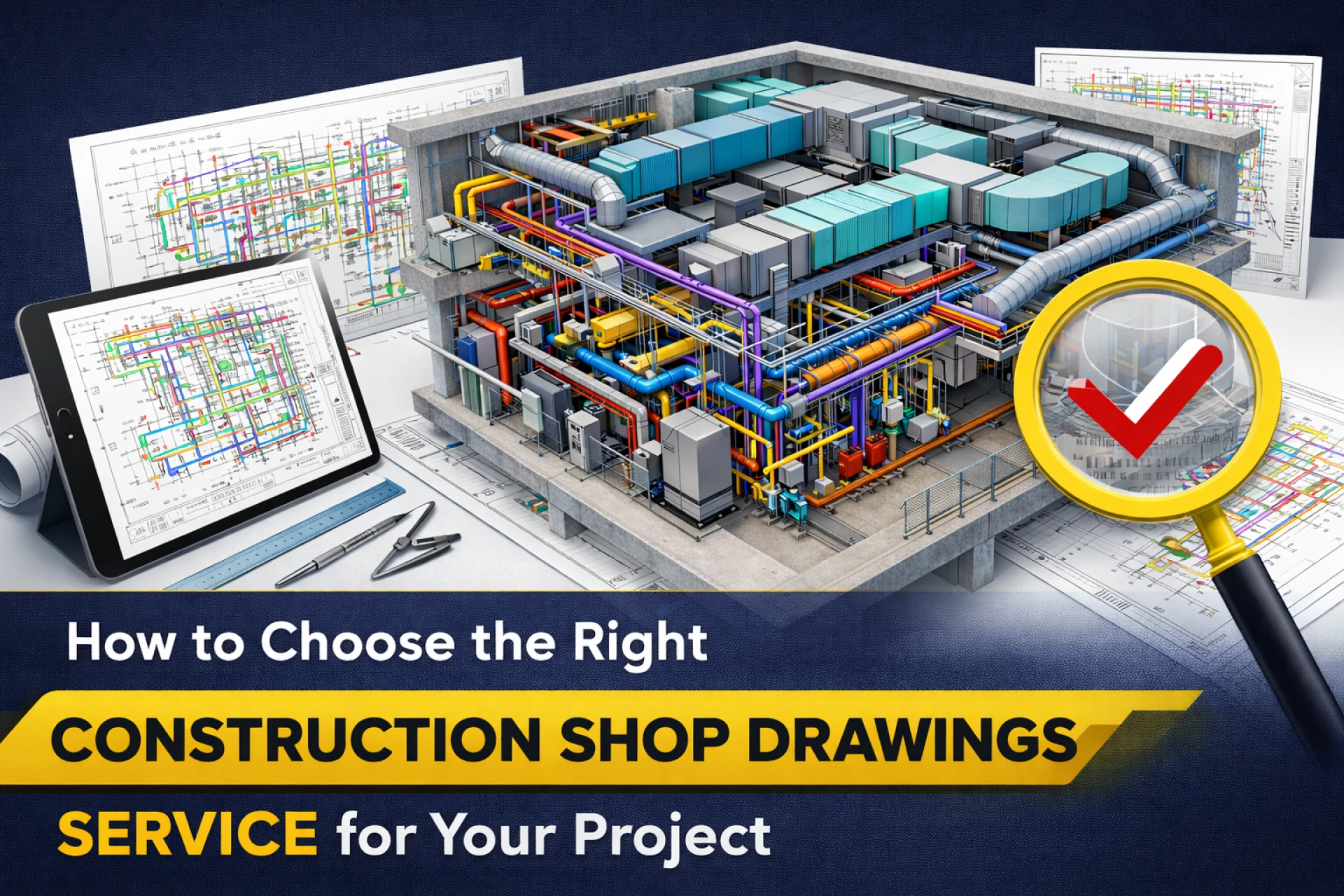
This is where construction shop drawings come into play. They are the bridge between the grand design and the fabrication floor, ensuring that every component fits perfectly within the larger puzzle.
Choosing the right partner to produce these drawings is not just a matter of procurement; it's a strategic decision that can dictate the success or failure of your timeline and budget.
A poor choice can lead to costly rework, delays, and onsite conflicts. Conversely, the right Construction shop drawings service acts as a safety net, catching errors before they become expensive problems.
In this guide, we will walk you through exactly what you need to look for when selecting a service provider, ensuring your project moves from the drawing board to the job site seamlessly.
What Are Construction Shop Drawings?
Before diving into how to choose a provider, it is essential to understand exactly what you are asking for. Shop drawings are not the same as the initial architectural or engineering drawings. Architectural drawings show the "what" and the "where"—the overall design intent. Shop drawings show the "how."
They are extremely detailed diagrams, schedules, and data sheets created by the contractor, subcontractor, or a specialist outsourcing firm. They illustrate the specific fabrication, assembly, and installation details of components like steel beams, precast concrete, cabinetry, HVAC ductwork, or electrical panels.
The primary purpose is twofold:
- Approval: They allow the architect and engineer to verify that the fabricator’s interpretation of the design is correct and meets all specifications.
- Instruction: They provide the factory or job site crew with the exact measurements and instructions needed to build and install the component.
Without accurate shop drawings, the construction process is essentially flying blind, relying on guesswork rather than engineering precision.
Key Considerations When Selecting a Partner
The market is flooded with drafting services, but not all are created equal. When vetting a potential partner, you need to look beyond the price tag. Here are the four pillars of a high-quality service provider.
1. Accuracy and Detailing
The margin for error in construction is vanishingly small. A discrepancy of half an inch in a steel column shop drawing can result in a beam that doesn't fit, halting erection and costing thousands in crane time and labor.
When evaluating a provider, look at their portfolio. Do their drawings show clear, legible dimensions? Do they include necessary sections and connection details?
A top-tier Construction shop drawings service does not just copy the architectural plans; they interrogate them. They should be able to spot conflicts—like a duct running through a structural beam—during the drafting phase, not after fabrication has begun.
2. Adherence to Industry Standards and Codes
Building codes and industry standards (such as AISC for steel or ACI for concrete) are non-negotiable. Your shop drawings must comply with these rigorous regulations to pass review by the Engineer of Record.
An inexperienced drafter might produce a visually appealing drawing that is technically illegal or structurally unsound. Ensure your chosen provider has a team familiar with the specific codes relevant to your location and your specific trade. They should understand the nuances of formatting, symbols, and notations used in your region.
3. Turnaround Time and Reliability
In construction, time is money. A delay in getting shop drawings approved means a delay in fabrication, which means a delay in delivery to the site. This domino effect can push a project past its deadline, triggering liquidated damages.
You need a partner with the capacity to meet your schedule. This is where companies like Archdraw Outsourcing often excel, leveraging larger teams to handle volume without sacrificing speed. When discussing your project with a potential provider, be upfront about your deadlines. Ask about their current workload and how they handle rush requests. A provider who promises an impossible turnaround is just as dangerous as one who is perpetually late.
4. Communication and Collaboration
Shop drawings are rarely perfect on the first draft. There is almost always a back-and-forth process involving redlines (corrections) from the architect or engineer.
Your drafting partner needs to be responsive. Do they ask clarifying questions when the design documents are vague, or do they guess? How quickly do they turn around revisions? Effective communication prevents the "approval loop" from dragging on for months. You want a team that acts as an extension of your own, proactive in solving problems rather than passively waiting for instructions.
How to Evaluate a Shop Drawing Service
Knowing what to look for is one thing; verifying it is another. Here is a step-by-step approach to vetting potential providers effectively.
Check Their Portfolio and Case Studies
Review past work that is similar to your project scope. If you are building a high-rise steel structure, a firm that specializes in residential cabinetry won't be a good fit. Look for complexity in their past projects. Have they handled similar tonnage? Have they worked on projects with similar architectural constraints?
Ask About Software Proficiency
The construction industry relies on specific software ecosystems. Whether it is AutoCAD, Revit, Tekla, or SolidWorks, you need to ensure the service provider uses software compatible with your team's workflow. If you are running a BIM (Building Information Modeling) project, hiring a firm that only does 2D drafting will create a significant bottleneck.
Request References
Don't just rely on online testimonials. Ask for the contact information of previous clients, specifically project managers or engineers. Ask them about the provider’s responsiveness to redlines and their ability to hit deadlines. Did the drawings pass approval easily, or were there multiple rounds of rejections due to drafting errors?
Start with a Pilot Project
If you are considering a long-term partnership or have a massive project on the horizon, do not hand over the keys to the castle immediately. Start with a small, pilot project. This allows you to test their communication style, quality of work, and adherence to deadlines with minimal risk.
Securing the Foundation of Your Build
The success of a construction project is determined long before the ground is broken. It is determined in the planning, the detailing, and the documentation. Shop drawings are the DNA of the building process—if the code is wrong, the organism won't function.
By prioritizing accuracy, industry knowledge, and strong communication, you protect your project from the chaos of onsite errors. Whether you choose a specialized boutique firm or an established name like Archdraw Outsourcing, the goal remains the same: clarity, precision, and efficiency. Take the time to choose the right partner, and you will build not just a structure, but a reputation for excellence.










Sign in to leave a comment.