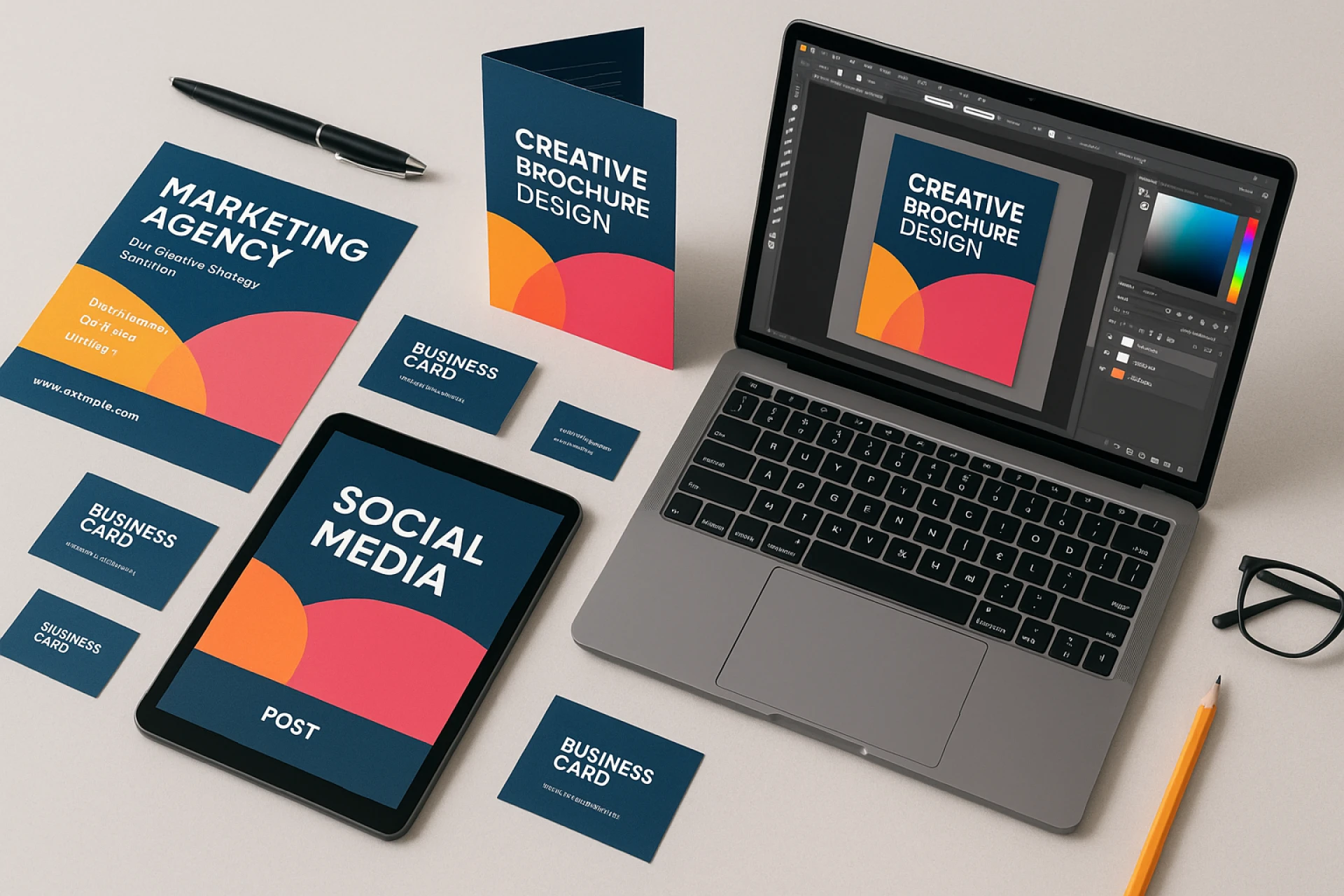

If I had a dollar for every time someone underestimated the power of well-designed marketing materials, I’d probably own a design studio on the beach by now.
I remember this one client — a local bakery named “Sarah’s Bakery” — who came to me in a bit of a panic. They’d just launched and printed 1,000 flyers using a free template. It looked okay… until they saw what their competitor was handing out: sleek, professionally designed materials that screamed “quality” at first glance. Needless to say, their flyers ended up in more bins than hands.
Design isn’t just about making things look pretty — it’s about communicating value, trust, and identity. In a world flooded with noise, your marketing materials are your brand’s visual handshake. And as a graphic designer who's spent years in the trenches, I’m here to show you how to create marketing materials that not only stand out — but make a real impact.
What Counts as Marketing Materials?
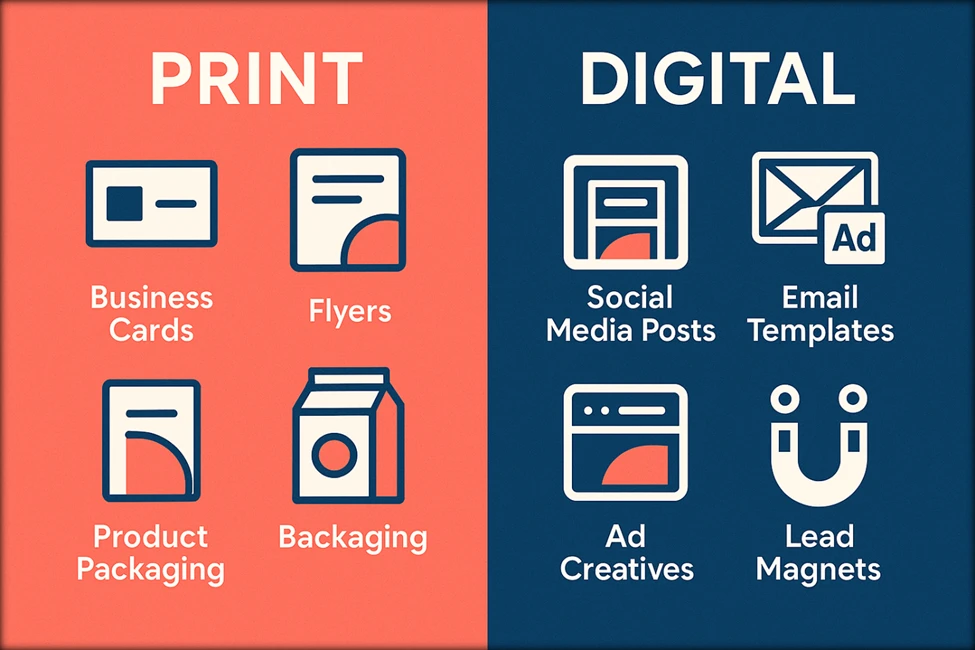
When people hear "marketing materials," they often think only of brochures and business cards. But in today’s world, marketing material design covers a wide spectrum of both print and digital assets.
Here’s my go-to list of essentials I often design for clients:
Print Materials:
- Business cards
- Brochures and flyers
- Posters and banners
- Product packaging
- Presentation folders
- Direct mailers
Digital Materials:
- Social media graphics
- Email templates
- Digital brochures
- Ad creatives (Google, Facebook, etc.)
- Slide decks
- Lead magnets (eBooks, checklists)
Each one of these plays a role in how your brand is perceived. The design needs to match the message — and that’s where things can go really right (or really wrong).
Why Design Matters More Than You Think
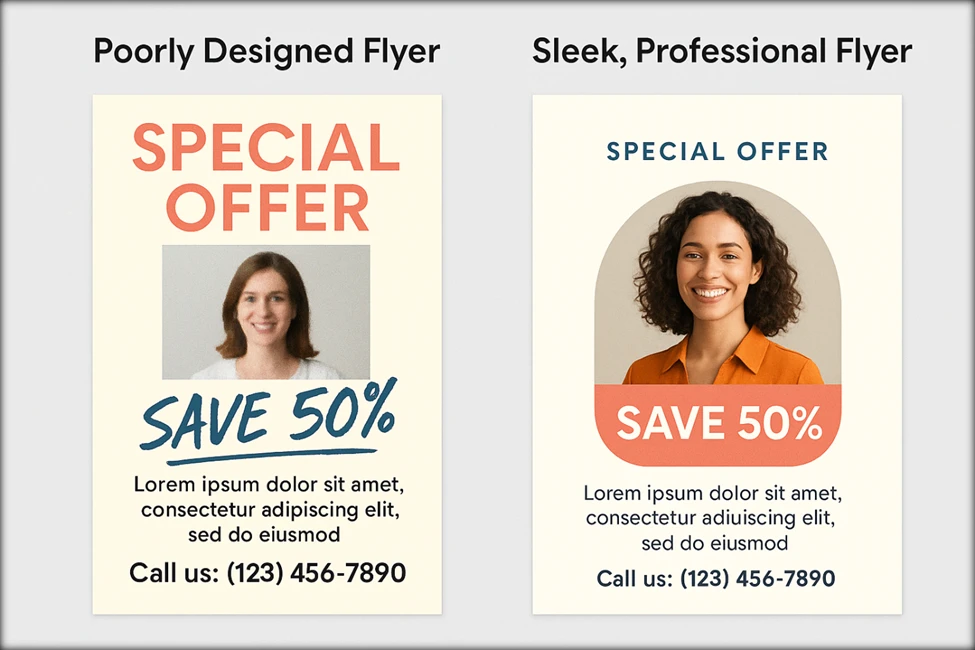
Let me be honest: poor design is costing businesses money.
I once worked with a tech startup whose pitch deck looked like it had been made in a rush using default PowerPoint templates. They were struggling to get investors interested. After a full rebrand and a polished deck redesign, they closed a round within three months. Seems like coincidence? But it’s not.
Design affects perception. A cluttered flyer, a logo stretched out of proportion, or colors that clash with your brand — these things chip away at trust.
Good marketing material design builds credibility, reinforces your brand identity, and improves engagement. That’s the kind of impact we’re aiming for.
The Psychology of High-Converting Marketing Materials
Great design isn’t just about aesthetics—it’s about human psychology. Here’s how to use it to your advantage.
1. Color Psychology -
· Blue = Trust (Used by Facebook, LinkedIn)
· Red = Urgency (Sales, McDonald’s)
· Green = Growth (Eco-friendly brands)
2. The Rule of Thirds -
· Divide your design into a 3x3 grid.
· Place key elements at intersection points for balance.
3. F-Pattern & Z-Pattern Reading
· Websites & Brochures: Users scan in an F-shape.
· Billboards & Posters: Eyes move in a Z-pattern.
4. The Power of Whitespace
· Cluttered designs = cognitive overload.
· Apple’s minimalist approach = luxury perception.
Key Takeaway:
Leverage psychology to guide attention, evoke emotions, and drive action.
How I Approach Designing Marketing Materials (Tips from a Designer)
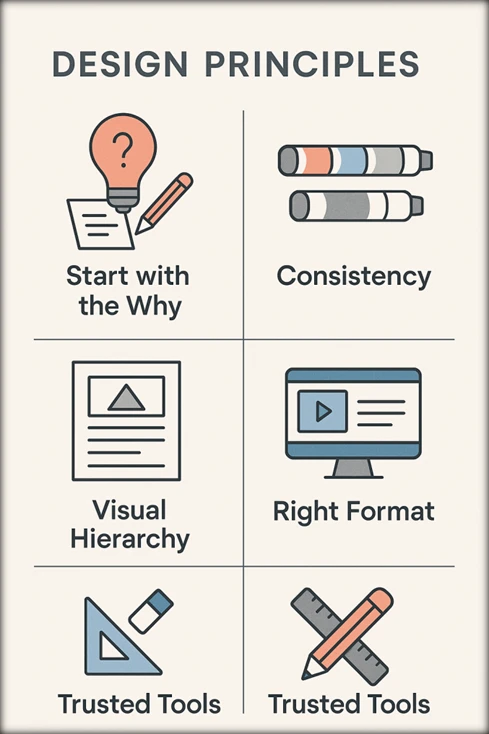
1. Start with the Why -
Before I even touch a design tool, I ask: What’s the goal of this material? Is it meant to attract, inform, convert, or retain? Every piece should have a clear purpose.
2. Consistency is Key -
Your marketing materials should look like they belong to the same family. That means consistent colors, typography, logos, and tone of voice. I always create or request brand guidelines before starting a new set.
3. Focus on Visual Hierarchy -
People don’t read everything. They scan. I design layouts that guide the eye — headlines first, key points second, CTA last. Strategic spacing, bold headers, and smart alignment make all the difference.
4. Choose the Right Format -
Print or digital? Square or vertical? Animated or static? The right format depends on the platform and purpose. I help clients pick formats that amplify their message and fit their audience.
5. Tools I Trust -
- Adobe Creative Suite – My go-to for pro-level design.
- Canva Pro – Great for mockups or empowering clients with editable templates.
- Figma – Ideal for collaborative and UI/UX-heavy projects.
Common Mistakes I See (And How to Avoid Them)
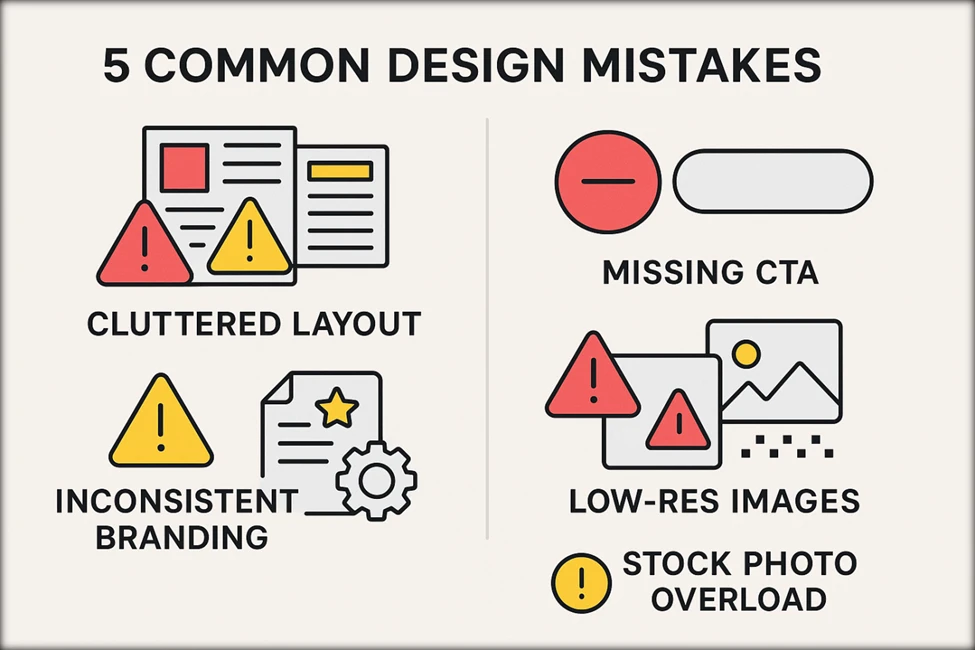
Here are some of the most common errors I see when people try to design marketing materials, and how to avoid them:
- Too much clutter – Don’t cram everything in. White space adds clarity and impact.
- Weak or missing CTAs – Your audience needs clear next steps.
- Inconsistent branding – Random fonts and colors break trust. Stick to your brand kit.
- Low-resolution or pixelated images – Always use high-quality visuals, especially for print.
- Stock photo overload – Generic imagery can make even the best content feel impersonal.
Current Trends in Marketing Material Design (2025 Edition)
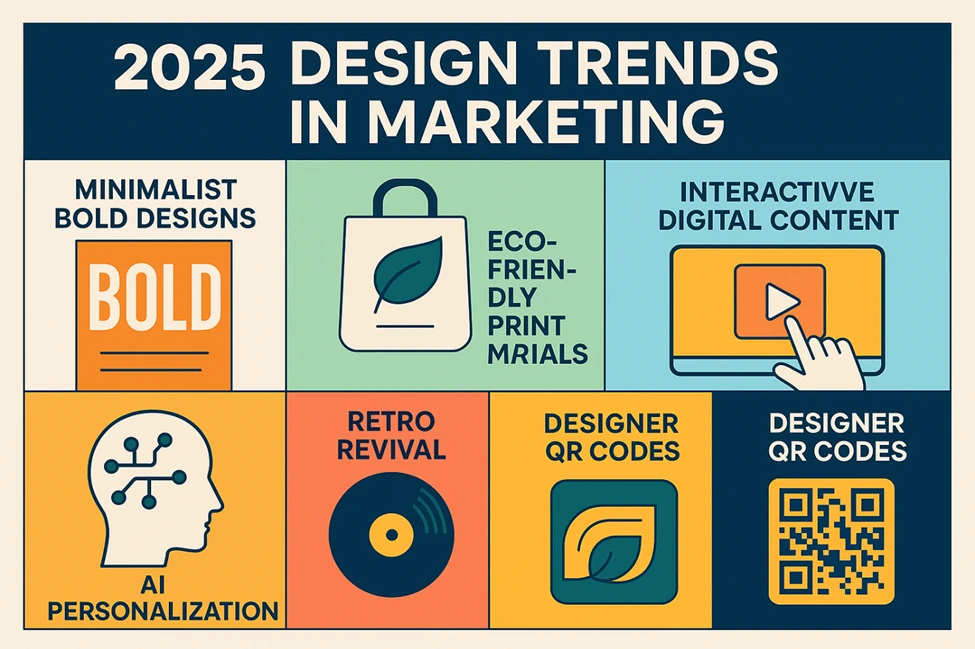
Staying updated with design trends doesn’t mean chasing every new style — it’s about knowing what’s resonating with modern audiences. Here are a few marketing material design trends I’m seeing in 2025 that are worth noting:
1. Minimalist Meets Bold -
Designs with clean space, sleek fonts, and pops of bold color are winning attention. It’s clarity meets confidence — perfect for brochures and social graphics alike.
2. Eco-Conscious Print Materials -
Clients are asking for recycled paper, sustainable inks, and minimal-waste formats. Green design isn’t just ethical — it’s becoming a selling point.
3. Interactive Digital Materials -
Pitch decks, digital brochures, and email lead magnets are getting interactive — with embedded videos, animations, and clickable CTAs that create deeper engagement.
4. AI-Assisted Personalization -
From dynamic QR codes to data-driven content blocks, AI is helping brands create semi-customized print and digital materials that feel more personal.
5. Retro Design Revival -
Grainy textures, serif fonts, and nostalgic color palettes are back — especially in boutique, fashion, and creative sectors. Used with intent, they add serious charm.
6. Designer QR Codes -
Gone are the boring black-and-white squares. We now design branded QR codes that blend seamlessly into layouts — sometimes even with logos inside.
These trends aren’t just about style — they’re about function, story, and emotional connection.
DIY v/s Professional Design: What You Should Know
Look, I’m not against DIY design. Tools like Canva have opened up a lot of doors for small business owners — and that’s a good thing.
But here’s the truth: templates can only take you so far.
If you're creating a one-off social post or testing early-stage ideas, go for it. But when you’re gearing up for a launch, sales pitch or public event? That’s when a professional can make all the difference.
A designer doesn't just decorate — we translate strategy into visuals. We bring in layout psychology, storytelling, print specs, brand continuity, and production knowledge — things DIY tools just don’t teach.
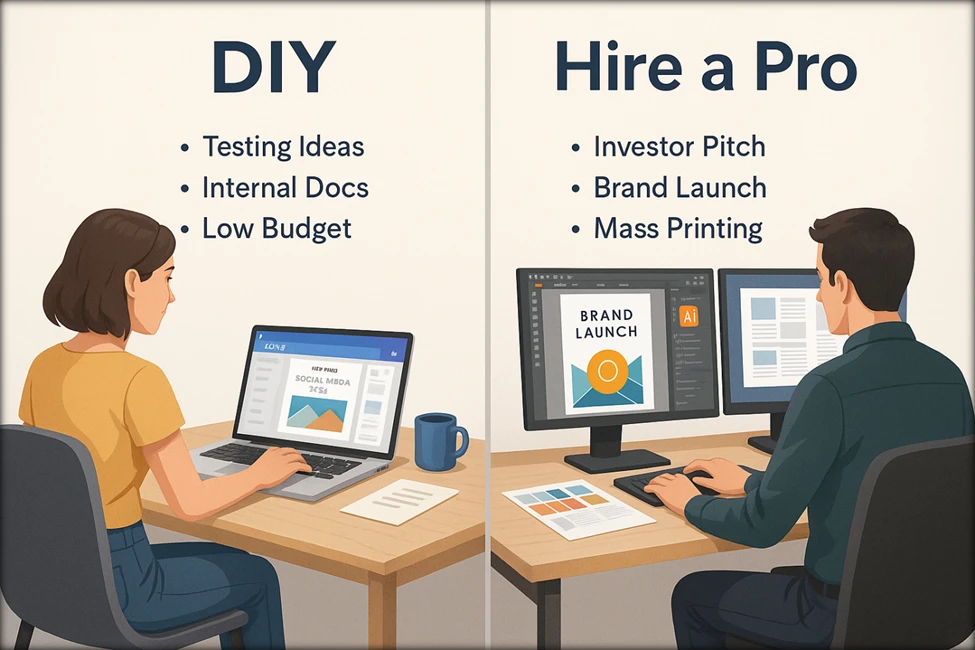
DIY vs. Hiring a Pro (When to Do What)
DIY If -
· Testing ideas
· Small-budget social posts.
· Internal documents
Hire a Pro If -
· Launching a product
· Pitching to investors
· Printing anything over 500 units
Designers don’t just ‘make things pretty’—we solve business problems with visuals.
Inspiring Examples of Standout Marketing Materials
Let’s look at real-world examples that nailed it.
1. Nike’s “Just Do It” Campaign
· Why It Works: Bold typography + emotional storytelling.
2. Airbnb’s Travel Brochures
· Why It Works: Stunning visuals + user-generated content.
3. Coca-Cola’s “Share a Coke”
· Why It Works: Personalization + nostalgia.
Key Takeaway:
Study brands you admire—reverse-engineer their success.
Final Thoughts (and a Friendly Nudge)
To conclude this, I’ll ask you that would you ever show up to a client meeting in pajamas? No Right!
Your marketing materials are your brand’s handshake, outfit, and sales pitch—all in one.
These are often the first impression people get of your brand. So make them count.
Want help creating high-impact marketing materials for your brand? Check out our Marketing Material Design Services — let's build something beautiful and effective together.
Whether you’re a startup getting your brand off the ground or a marketing team looking to level up, I’d love to help you bring your vision to life — with purpose, polish, and creativity.









Sign in to leave a comment.