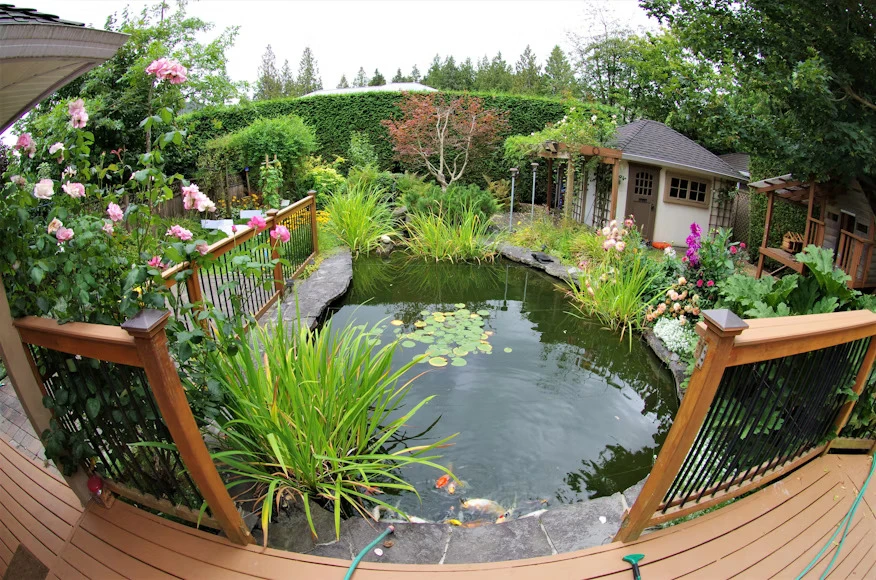

Making a pond in your backyard can really change how your yard feels. Everything is calm and peaceful. Many birds and animals come, which is fun. More importantly, what you can do is sit by your fish pond in Australia with your family or friends and just relax.
Do you also want to add a small water feature or a bigger fish pond outdoors?
It’s easier than you might think. Pick up the style you want, add fish, do decorations, and your backyard pond is ready.
This guide will show you all the steps in detail to design, build, and stock the perfect outdoor pond. Lets get started!
How to Choose the Right Fish Pond Style for Your Backyard?
A fish pond is more than just a water feature. It is a living ecosystem. Choosing the right fish pond style for your backyard requires considering the design you want, such as natural, formal, or structured.
Natural Ponds
Natural ponds mimic nature. They often feature irregular shapes, rocks, plants, and shallow edges for wildlife. Materials like EPDM rubber liners or pre-fabricated plastic ponds make installation easier for DIY enthusiasts. Natural ponds blend seamlessly into your backyard and can support a balanced ecosystem with fish, plants, and beneficial bacteria.
Formal Ponds
Formal ponds are geometric, such as square, circular, or rectangular. They often serve as a visual centerpiece and may include fountains or waterfalls. These ponds usually require more construction expertise, such as concrete or fiberglass, and mistakes can be costly. Prefabricated formal ponds are available, but professional guidance is often recommended.
| Pond Type | Pros | Cons | Best For |
| Natural Pond | Blends with garden, easy to DIY | Takes up more space | Garden with wildlife focus |
| Formal Pond | Visually striking, structured | Requires expert construction | Modern gardens, water features |
What Materials You’ll Need to Make Backyard Fish Ponds?
Materials are crucial for durability and ease of maintenance when building a pond in the backyard. Here are the most common options:
1. EPDM Rubber Liner
EPDM pond liners are flexible, UV-resistant, and can last for decades. They are patchable, which means small leaks won’t ruin your pond. EPDM is ideal for both natural and custom-shaped ponds. Avoid PVC liners because they break down quickly in sunlight.
2. Concrete or Fiberglass
These are strong, long-lasting materials suitable for formal ponds. Concrete allows custom shapes, while fiberglass comes pre-formed but can crack if handled roughly. Both require professional installation for best results.
3. Pre-Fabricated Plastic Ponds
These pre-fabricated plastic fish ponds for sale are perfect for DIY enthusiasts. Simply dig, level, and place the pond. They are strong, lightweight, and resistant to cracking. Plastic ponds are especially handy if you want a smaller backyard water feature.
Optional Extras
- Pond pumps and filters
- Waterfalls or fountains
- Rocks and aquatic plants

How to Build a Fish Pond? Step-by-Step
Building a backyardfish pond in Australia is easier than many think. However, planning and preparation are key. Here’s a simple step-by-step approach:
Step 1: Plan and Mark Your Pond
Choose the location carefully. Pick a spot with partial sunlight and away from overhanging trees to reduce debris. Sketch the shape and size on paper, then mark it in your yard using stakes and rope.
Step 2: Dig the Hole
Excavate the pond to your desired depth. Include shelves for plants and a deeper center for fish. Depth depends on the fish species you plan to stock.
Step 3: Install Liner or Pre-Fabricated Pond
If you buy EPDM pond liners, lay a sand or underlay base, then place the liner and shape it to the pond.
For pre-fabricated pond liners, level the hole and drop the pond into place.
Step 4: Add Rocks and Soil
Arrange rocks along the edges and on shelves. Add soil if you plan to plant aquatic vegetation. This looks natural and helps stabilize the liner.
Step 5: Fill with Water and Test Equipment
Fill the pond slowly. Check the fish pond pump and filter to ensure proper circulation. Good water movement keeps fish healthy and reduces algae buildup.
Step 6: Let the Water Settle
Wait a few days before adding fish. This allows chlorine to dissipate and water parameters to stabilize.

How to Stock Your Fish Pond in Australia?
Once your pond is ready, it is time to add fish. In Australia, popular options include koi, goldfish, and native species like gudgeons or rainbowfish. Keep in mind:
- Avoid overstocking because too many fish can lead to water quality issues.
- Choose species compatible with your climate and pond size.
- Introduce fish gradually to prevent stress.
Consider adding aquatic plants and only buy high quality fish food. They provide shade, reduce algae, and give fish places to hide.
| Fish Species | Minimum Pond Size | Notes |
| Koi fish | 1,000 L | Can grow large, need deep water |
| Goldfish | 500 L | Hardy and colorful |
| Native Rainbowfish | 300 L | Adapted to local conditions |
How to Maintain Your Fish Pond?
Maintaining your pond ensures healthy water, happy fish, and a stunning backyard feature. Regular care includes:
- Cleaning: Remove debris weekly using a net.
- Filter Maintenance: Clean pumps and filters monthly.
- Water Quality: Test pH, ammonia, and nitrate levels every few weeks. Use fish pond chemicals if necessary.
- Algae Control: Use aquatic plants and proper pond filtration to prevent overgrowth.
Why Fish Pond Australia Owners Love Their Ponds?
Fish ponds are more than decoration. They bring life to your backyard. Many Australians enjoy watching fish, hearing water features, and attracting birds and frogs. Whether you have a small pond in your backyard or a larger backyard fish pond, the benefits are clear:
- Adds a relaxing atmosphere
- Enhances property value
- Supports local wildlife
- Provides an educational space for kids
Tips for Designing the Perfect Outdoor Pond
Design matters as much as construction. Here are a few tips to make your pond a standout feature:
- Mix Materials: Combine rocks, pebbles, and aquatic plants for a natural feel.
- Consider Lighting: Buy LED pond lights that can highlight water features at night.
- Plan Circulation: Ensure the pump reaches all corners of the pond.
- Think Long-Term: Choose durable materials to avoid future repairs.
- Add Features: Waterfalls, fountains, or bridges make the pond more interesting.
Building a Fish Pond in Australia!
Creating a backyard pond is a rewarding project. From selecting the right style, materials, and fish to maintaining the ecosystem, every step matters. For those who want a hassle-free experience, consulting professionals can help build a pond with careful planning.
If you are dreaming about a backyard fish pond or wondering how to build a fish pond, start small, plan carefully, and enjoy the process. Your outdoor space will thank you with a peaceful, vibrant, and beautiful water feature.
This post originally appeared on thefishworks.com.au and has been republished with the author’s permission.








Sign in to leave a comment.