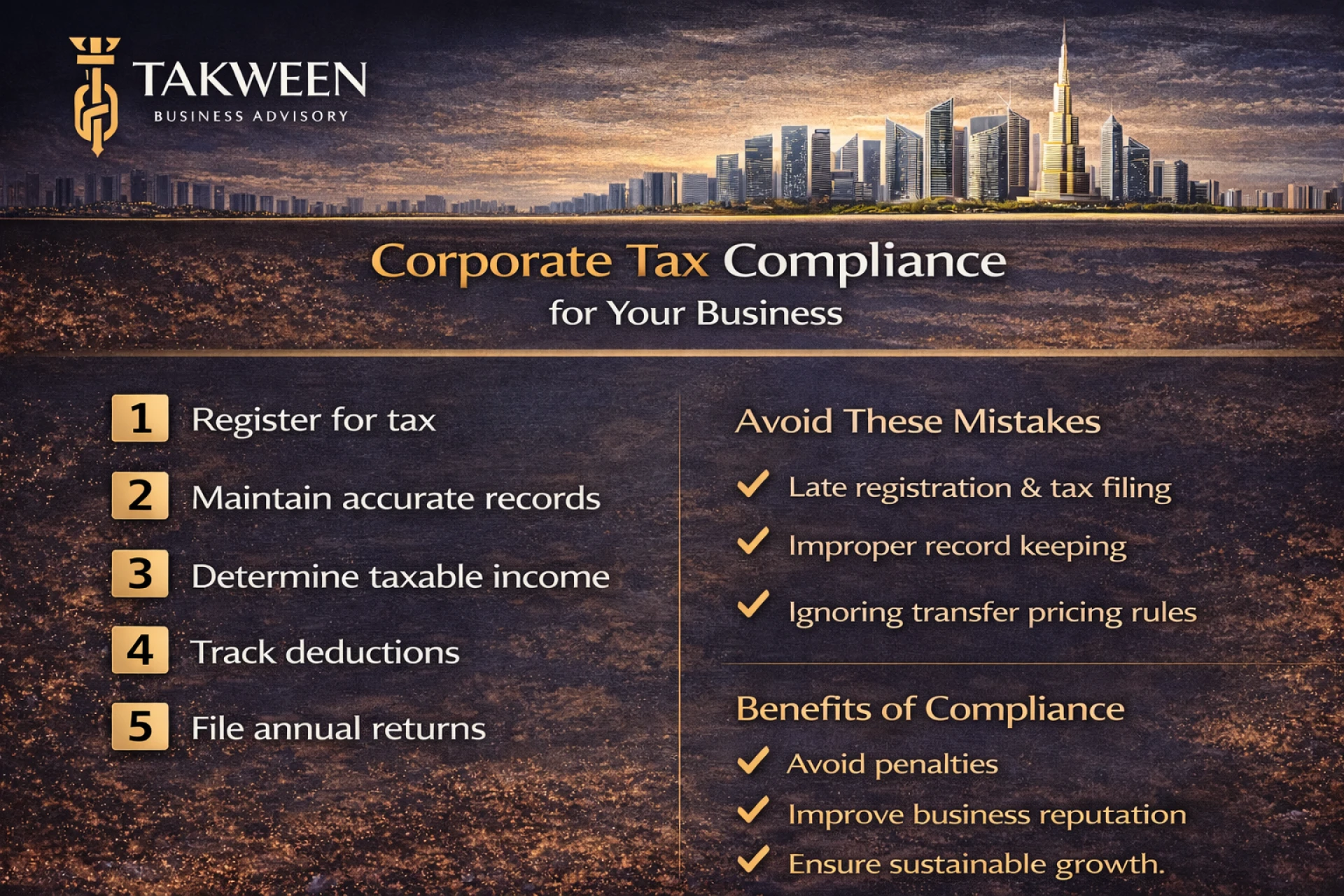

With the introduction of corporate taxation in the UAE, businesses must now adapt to a structured regulatory framework. While the tax rates remain competitive compared to many global markets, companies are required to meet clear registration, reporting, and record-keeping obligations.
Ensuring corporate tax compliance is not just about paying tax on time. It involves accurate accounting, timely registration, proper documentation, and adherence to government regulations. Businesses that fail to comply risk financial penalties, reputational damage, and legal consequences.
This guide explains how to ensure your company remains compliant and avoids unnecessary risks.
Understanding Corporate Tax Obligations
Corporate tax applies to the net profits of businesses operating in the UAE once taxable income exceeds the designated threshold. Companies must:
- Register with the Federal Tax Authority (FTA)
- Maintain proper financial records
- File annual tax returns
- Pay any tax due within the specified deadline
Even businesses that qualify for a 0% tax rate must still register and submit returns if required.
Step 1: Register on Time
The first step toward compliance is registering your business for corporate tax. Registration requires submitting:
- Trade license details
- Shareholder information
- Company financial data
- Contact details
Failure to register within the required timeframe may result in penalties.
Step 2: Maintain Accurate Financial Records
Accurate bookkeeping is the foundation of compliance. Companies must maintain detailed records, including:
- Revenue statements
- Expense documentation
- Payroll records
- Invoices and contracts
- Bank statements
Organized financial data ensures accurate tax calculation and simplifies audits.
Step 3: Understand Taxable Income
Businesses must clearly determine what qualifies as taxable income. This typically includes:
- Operating profits
- Service income
- Trading revenue
- Rental income related to business activities
Separating taxable income from non-taxable sources is critical for accurate reporting.
Step 4: Track Allowable Deductions
Certain business expenses can reduce taxable income. These may include:
- Employee salaries
- Office rent
- Utilities
- Marketing expenses
- Professional service fees
- Operational costs
Proper documentation of deductions prevents disputes during audits.
Step 5: File Corporate Tax Returns Annually
Corporate tax returns must be filed annually. The filing process includes:
- Calculating taxable income
- Applying the correct tax rate
- Declaring deductions
- Submitting financial statements
Late filing can result in fines and administrative penalties.
Step 6: Monitor Deadlines Carefully
Missing tax deadlines is one of the most common compliance mistakes. Businesses should:
- Set calendar reminders
- Monitor regulatory announcements
- Maintain communication with tax advisors
Timely action prevents avoidable fines.
Step 7: Follow Transfer Pricing Rules
Companies that conduct transactions with related parties must comply with transfer pricing regulations. This ensures that transactions are conducted at arm’s length pricing.
Businesses may need to:
- Maintain transfer pricing documentation
- Submit disclosures
- Justify pricing structures
Non-compliance can lead to penalties and additional scrutiny.
Step 8: Conduct Internal Reviews
Regular financial reviews help detect errors early. Businesses should:
- Reconcile accounts monthly
- Review financial statements quarterly
- Conduct internal compliance checks
Early detection reduces risk of non-compliance.
Step 9: Work with Qualified Tax Professionals
Tax regulations can be complex and subject to updates. Consulting with experienced tax advisors helps ensure accurate interpretation of rules and reduces compliance risks.
Professional guidance is particularly important for businesses with complex structures or cross-border transactions.
Common Corporate Tax Compliance Mistakes
Businesses often make avoidable errors such as:
- Failing to register on time
- Incomplete documentation
- Incorrect tax calculations
- Ignoring transfer pricing rules
- Missing filing deadlines
Avoiding these mistakes protects your company from penalties.
Penalties for Non-Compliance
Failure to comply with tax regulations may result in:
- Financial fines
- Administrative sanctions
- Increased audit scrutiny
- Legal consequences
Proactive compliance minimizes these risks.
The Importance of Record Retention
Companies are generally required to retain financial records for several years. Proper record retention ensures that supporting documents are available during inspections or audits.
Digital accounting systems can help organize and store records efficiently.
Corporate Tax Compliance Checklist
To stay compliant, businesses should:
- Register with tax authorities
- Maintain accurate bookkeeping
- Separate taxable income clearly
- Track deductible expenses
- File returns annually
- Monitor deadlines
- Retain documentation
- Seek professional advice when needed
Following this checklist ensures smooth compliance.
Long-Term Benefits of Compliance
Ensuring corporate tax compliance offers several advantages:
- Protects business reputation
- Builds investor confidence
- Prevents financial penalties
- Supports sustainable growth
- Enhances financial transparency
Compliance strengthens operational stability and credibility.
Final Thoughts
Corporate tax compliance is now a fundamental responsibility for businesses operating in the UAE. While the tax framework is relatively straightforward, careful attention to documentation, deadlines, and regulatory requirements is essential.
By maintaining accurate financial records, registering on time, filing annual returns, and seeking professional guidance when necessary, businesses can remain compliant and focus on growth without unnecessary legal or financial risks.
Proactive planning and organized financial management are the keys to long-term success in the evolving UAE tax landscape.
FAQ
- Who must register for corporate tax?
Businesses operating in the UAE that meet eligibility criteria must register. - How often must tax returns be filed?
Corporate tax returns are filed annually. - What happens if a company misses the filing deadline?
Late filing may result in financial penalties. - Are free zone companies required to comply?
Yes, they must register and comply with applicable regulations. - How long should financial records be kept?
Businesses are generally required to retain records for several years as per regulations.













Sign in to leave a comment.