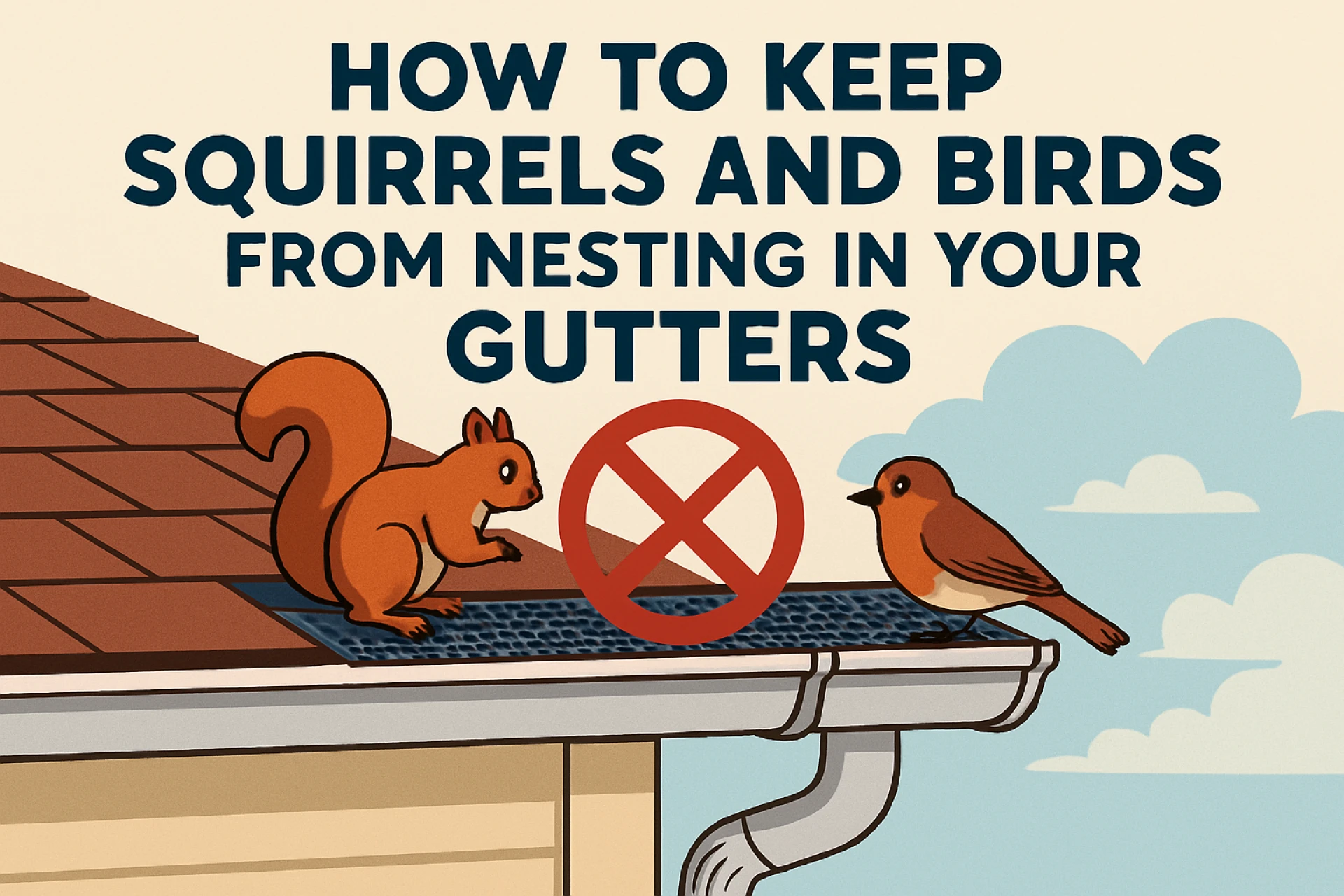

Your gutters are designed to carry rainwater safely away from your home, but for squirrels and birds, they can look like prime real estate. Once these little critters move in, they can cause clogged gutters, water damage, and even structural issues. The good news is that you can take simple steps to keep them out without harming them or your gutters.
1. Why Squirrels and Birds Love Gutters
Understanding why these animals choose gutters can help you prevent the problem in the first place. Gutters are high off the ground, making them safe from many predators. They offer shelter from rain, wind, and snow. Plus, if your gutters are full of leaves, twigs, or seeds, they provide free building materials and sometimes even food. By removing these attractions, you make your home less appealing to wildlife.
2. Clean Your Gutters Regularly
One of the most effective ways to deter nesting is to keep your gutters free of debris. Leaves, branches, and dirt not only block water flow but also create a cozy environment for birds and squirrels. Cleaning your gutters twice a year, ideally in spring and fall, can significantly reduce the chances of animals setting up a home there.
If climbing ladders is not your thing, you can hire a reliable exterior home remodeling company that offers gutter maintenance. They will not only clean your gutters but also check for damage and install preventative measures if needed.
3. Install Gutter Guards or Covers
Gutter guards are one of the best investments you can make to prevent unwanted guests. These covers create a physical barrier that stops animals and debris from entering your gutters while still allowing water to flow freely.
There are different types of guards to choose from:
- Mesh guards with tiny holes to block small pests
- Solid covers with a curved design that lets water slip in while keeping everything else out
- Foam inserts that sit inside your gutters and filter water while blocking debris
The right choice depends on your budget, the type of debris you deal with, and your personal preferences.
4. Trim Overhanging Branches
If squirrels have easy access to your roof via tree branches, your gutters are at risk. Trim back any limbs that hang within six to eight feet of your roofline. This makes it harder for squirrels to leap onto your gutters and reduces the number of leaves that fall into them.
Regular tree maintenance also improves your home’s curb appeal and prevents damage during storms.
5. Use Visual Deterrents
Birds in particular can be discouraged by visual distractions. Reflective tape, shiny pinwheels, or even predator decoys like plastic owls can make your gutters seem unsafe for nesting. Move these deterrents around occasionally so the animals do not get used to them.
6. Add Sound Repellents
Some homeowners have success with ultrasonic animal repellers. These devices emit sounds that are unpleasant for birds and squirrels but are generally not audible to humans. Motion-activated sprinklers can also work by startling animals before they settle in.
7. Seal Entry Points
Sometimes, animals are not just nesting in your gutters but also using them as a pathway to get into your attic or roof space. Inspect your roofline for gaps or holes and seal them with caulk, mesh, or steel wool. This prevents squirrels from chewing their way inside and keeps birds from roosting under your eaves.
8. Stay Consistent with Prevention
The key to keeping your gutters free of nests is consistent maintenance. Clean regularly, check for damage after storms, and replace broken gutter sections right away. Prevention is always easier and cheaper than dealing with the damage caused by animals and water overflow.
By taking these steps, you can enjoy a clean, functional gutter system and a home exterior that is safe from unwanted guests. Squirrels and birds may be cute in the park or garden, but they do not belong in your gutters. A little time and effort now will save you money and headaches later, while keeping both your home and the local wildlife safe.












Sign in to leave a comment.