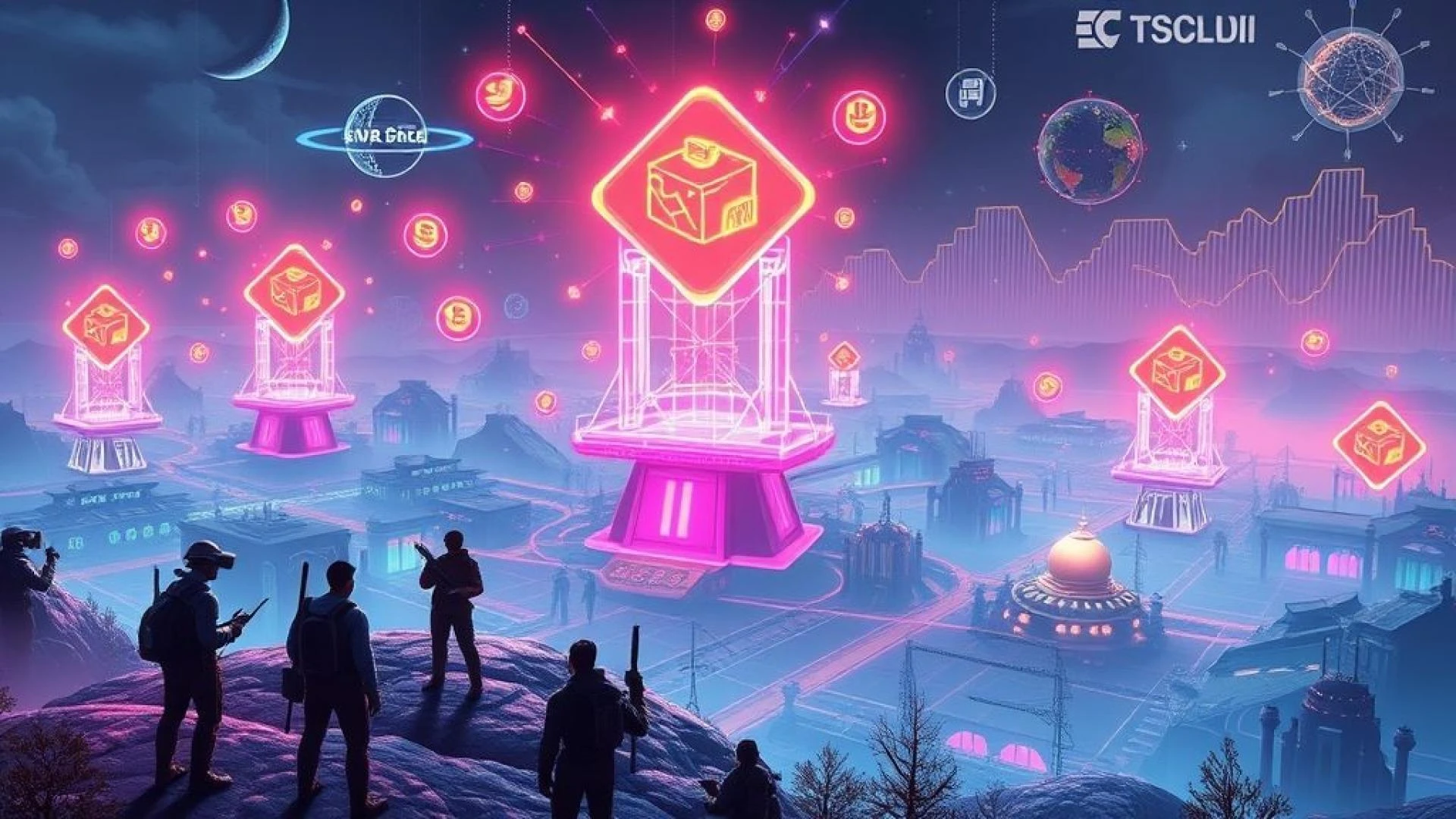

The gaming industry is undergoing one of its most profound transformations in decades, fueled by the rapid adoption of blockchain technology. At the core of this revolution lie token development services specialized solutions that enable developers to create, launch, and manage digital tokens that serve as the backbone of decentralized game ecosystems. These services are not just about code; they represent a fundamental shift towards games where players truly own their assets, participate in governance, and engage with virtual economies that have real-world value.
Understanding Token Development Services
Token development services encompass a broad range of offerings designed to build and maintain digital tokens on various blockchain networks. These tokens can represent in-game currency, assets, governance rights, or other utilities within gaming platforms. The process involves much more than simple coding; it includes:
- Tokenomics Design: This involves conceptualizing and structuring the economic model behind the token — deciding how many tokens will exist, how they will be distributed, what roles they serve, and how they encourage player participation and retention.
- Smart Contract Development: Smart contracts are self-executing programs on the blockchain that automate transactions and enforce game rules. Developers write these contracts to handle token minting, transfers, staking, and other game-related functions without intermediaries.
- Multi-Chain Deployment: To maximize accessibility and flexibility, tokens are often deployed across multiple blockchain platforms (like Ethereum, Binance Smart Chain, Solana, or Polygon). Token development services ensure seamless interoperability, allowing tokens and assets to move fluidly between ecosystems.
- Compliance and Security: Given the evolving regulatory landscape, token development services often include legal consultation to ensure that tokens comply with local laws and regulations. Security audits are also conducted to identify vulnerabilities in smart contracts and prevent hacks or exploits.
- Post-Launch Support and Upgrades: Token ecosystems are dynamic, requiring continuous monitoring, optimization, and upgrades. Developers provide ongoing support to enhance token functionality, address bugs, and adapt to player feedback.
These services collectively enable game creators to build robust, secure, and scalable token-based infrastructures that underpin the next generation of crypto games.
The Crucial Role of Tokens in Crypto Games
Tokens serve multiple vital functions within crypto games, fundamentally changing how players interact with virtual worlds:
- In-Game Currency: Tokens act as the medium of exchange for buying, selling, or trading items, upgrades, and services within the game. Unlike traditional game currencies, blockchain tokens can be traded outside the game ecosystem, creating a bridge between virtual and real-world economies.
- Digital Ownership Through NFTs: Non-Fungible Tokens (NFTs) represent unique digital assets like characters, skins, weapons, or land parcels. Players truly own these items, verifiable on the blockchain, and can trade or sell them on decentralized marketplaces, giving value and liquidity to digital possessions.
- Governance Participation: Many games incorporate decentralized governance models, allowing token holders to vote on game updates, new features, or community policies. This democratizes game development and aligns incentives between developers and players.
- Rewards and Incentives: Tokens are distributed as rewards for achievements, battles, or contributions to the game world. These rewards can be reinvested within the game or converted to fiat currency, fueling the burgeoning play-to-earn economy.
- Access Control: Certain tokens grant exclusive access to premium content, tournaments, or special in-game events, incentivizing engagement and providing additional monetization avenues for developers.
By integrating these multi-faceted roles, tokens create vibrant ecosystems where players feel empowered, engaged, and invested in the game's success.
How Token Development Services Enhance the Crypto Gaming Experience
Token development services dramatically improve the functionality and appeal of crypto games in several essential ways:
1. Enabling True Digital Ownership
Traditional gaming often involves “renting” assets controlled by developers, with limited or no ability to transfer or monetize them. Blockchain tokens change this by granting players undeniable ownership of their in-game assets. Thanks to the immutable nature of the blockchain, ownership records are transparent and tamper-proof, allowing players to freely trade or sell assets without dependence on centralized authorities. This empowers a new class of gamers who can monetize their skills and investments, transforming gaming into a viable income source.
2. Facilitating Cross-Platform Interoperability
Standardized token protocols like ERC-20, ERC-721, and BEP-20 ensure that tokens created on one blockchain are compatible with wallets, exchanges, and applications on other blockchains. Token development services focus on interoperability to break down the traditional barriers between different games and platforms, enabling a future where players can carry their assets and currencies across multiple gaming universes. This enhances player retention and opens up opportunities for collaborative gaming ecosystems.
3. Designing Balanced and Sustainable Economies
Creating a thriving in-game economy requires carefully balanced tokenomics to avoid inflation, market crashes, or player dissatisfaction. Token development services analyze player behavior, market dynamics, and incentive mechanisms to design sustainable token models. They ensure fair token distribution through mechanisms like staking, liquidity mining, or limited token supply. This balance maintains the game’s longevity and encourages continuous player engagement.
4. Enhancing Security and Transparency
Security is paramount in crypto gaming. Token development services employ rigorous smart contract audits and secure coding practices to minimize risks of hacks and exploits. Transparent token mechanics mean that players can verify transactions and token distributions on the blockchain themselves, building trust and credibility. Automated processes through smart contracts eliminate the need for intermediaries, reducing opportunities for fraud or cheating.
5. Empowering Community Governance
Decentralized governance models, enabled through tokens, allow players to vote on key decisions affecting the game's future. This fosters a stronger sense of community ownership and loyalty, as players have direct influence over development priorities, economic changes, or event scheduling. Token development services implement voting mechanisms and governance frameworks that are fair, scalable, and resistant to manipulation.
Real-World Examples of Token Development in Crypto Games
Several pioneering projects illustrate how token development services enable successful crypto gaming ecosystems:
- Axie Infinity: One of the most successful play-to-earn games, Axie Infinity employs a dual-token system — AXS (governance token) and SLP (in-game currency). Players breed, battle, and trade creatures called Axies, earning tokens that have real-world value. Token development services crafted the complex economic model and smart contracts that power Axie’s thriving ecosystem.
- Decentraland: A decentralized virtual reality platform where users can buy, develop, and trade virtual land parcels as NFTs. The MANA token facilitates in-game purchases and governance voting. Token development services ensured secure smart contract deployment and integrated governance mechanisms.
- The Sandbox: This voxel-based metaverse allows users to create, own, and monetize gaming experiences using the SAND token. With extensive support for user-generated content, token development services handled interoperability and tokenomics design to create a vibrant, player-driven economy.
- Illuvium: An upcoming blockchain RPG that leverages tokens for asset ownership and governance. Token development teams focus on balancing in-game economies and securing smart contracts to deliver a seamless experience.
These case studies demonstrate the critical role token development services play in shaping innovative gameplay, player economies, and decentralized governance.
The Road Ahead: The Future of Token Development in Gaming
As blockchain technology continues to mature, token development services will be at the forefront of the gaming industry's evolution:
- Integration with Emerging Technologies: Combining blockchain with AI, virtual/augmented reality, and the Internet of Things (IoT) will create deeply immersive, intelligent, and interconnected gaming worlds. Tokens will enable seamless transactions and asset management across these new dimensions.
- Expansion of Play-to-Earn and Social Gaming Models: More games will incorporate mechanisms that reward players for their time and skills, democratizing wealth creation and shifting power from centralized publishers to players.
- Advancements in Token Standards: Innovations such as Layer 2 scaling solutions and novel token standards will reduce transaction fees, improve speed, and offer richer functionalities, making crypto games more accessible to mainstream audiences.
- Regulatory Clarity and Compliance: As governments refine regulations around digital assets, token development services will incorporate compliance measures, ensuring games operate legally while protecting player rights.
- Greater Emphasis on User Experience (UX): Simplifying wallet integration, token management, and in-game transactions will be a priority, making crypto games easy and enjoyable for both blockchain natives and newcomers.
The ongoing innovation in token development is set to unlock unprecedented levels of player empowerment, economic opportunity, and community engagement in gaming.
Conclusion
Token development services are the unsung heroes powering the next generation of crypto games. They provide the technical expertise and strategic guidance necessary to create secure, scalable, and engaging token ecosystems. By enabling true digital ownership, fostering interoperable economies, and empowering player governance, these services are transforming the gaming landscape into a decentralized, player-centric frontier.
As blockchain technology and gaming converge, the synergy created by token development services will continue to drive innovation, opening up new possibilities for how games are played, owned, and monetized. The future of gaming is decentralized, and tokens are the keys unlocking this exciting new world.






Sign in to leave a comment.