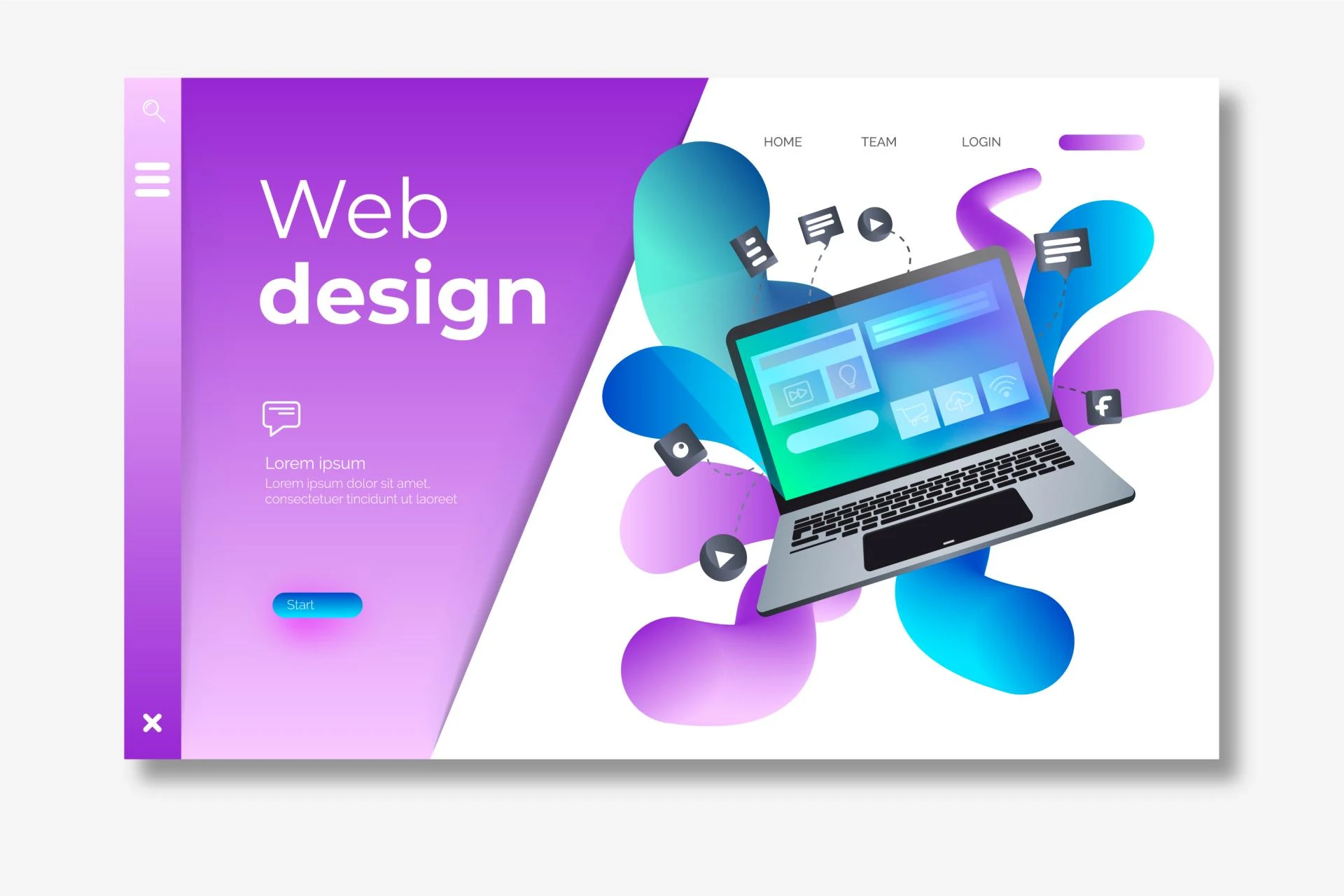

your website isn’t just an online brochure it’s your most important sales tool and your digital storefront. But a simple presence isn’t enough. If your site looks dated, loads slowly, or is confusing to navigate, you are actively losing customers.
This is where a modern web designer steps in. They don’t just make things look pretty; they implement strategic design choices that directly translate into measurable business growth.
The Strategic Shift: From Aesthetic to ROI
A great modern design focuses on Return on Investment (ROI). Every element is deliberately chosen to convert visitors into leads, and leads into paying customers. Here’s how professional web designers achieve this:
1. User Experience (UX) is the Foundation
The single biggest factor in modern design is User Experience (UX). A good designer makes your site effortless to use.
- Intuitive Navigation: If a visitor can’t find what they need in three clicks or less, they’ll leave. Modern designers create clear, logical hierarchies, ensuring a smooth path from the homepage to the conversion goal (e.g., a ‘Contact Us’ page or a product).
- Speed and Performance: Google has made it clear that page loading speed is a critical ranking factor. Modern web designers use clean code, optimized images, and efficient hosting to ensure your site loads in under 3 seconds. A slow site equals lost revenue.
- Mobile-First Design (Responsiveness): With the majority of traffic coming from smartphones, a modern site is always fully responsive, meaning it looks and functions perfectly on any device. Google actively penalizes sites that aren’t mobile-friendly.
2. Boosted Credibility and Trust
People judge a book by its cover, and they certainly judge a business by its website. A dated, cluttered, or buggy site screams “unprofessional” or “out of business.”
- High-Quality Visuals: Professional photography, clear typography, and a consistent visual brand identity project professionalism and instill trust in potential customers.
- Clear Value Proposition: Within the first few seconds, a modern design clearly communicates what you do and how you benefit the customer — often with a bold header, a strong image, and a single, clear call-to-action (CTA).
- Security Signals: Implementing visible security badges (like SSL certificates) and clear privacy policies are essential trust signals that modern designers integrate seamlessly.
3. Higher Conversion Rates Through Design
Conversion Rate Optimization (CRO) is about maximizing the percentage of visitors who take a desired action (like making a purchase, filling out a form, or calling). Design plays a huge role here.
- Strategic Use of Calls-to-Action (CTAs): Modern designers place CTAs where the user’s attention is naturally focused, using contrasting colors and compelling text. They are not distracting but always available at the right moment.
- Frictionless Forms: Designers simplify forms by only asking for necessary information and making form fields easy to use — reducing the “friction” that causes users to abandon the process.
- Optimized Landing Pages: Landing pages are designed with minimal distractions (no complex navigation), focusing the visitor entirely on the single conversion goal of that page.
Conclusion:
The days of viewing a website as a static expense are over. A modern website, built by a strategic web designer, is a dynamic asset that actively contributes to sales, reduces marketing costs, and solidifies brand authority.
If your current website is underperforming, slow, or difficult to use on a phone, it’s not just a design problem — it’s a growth problem. By focusing on a modern design centered on UX and performance, you are laying the groundwork for sustainable business growth that outpaces the competition.












Sign in to leave a comment.