
Introduction
For over a decade, businesses have competed for digital attention—building websites, social media profiles, and e-commerce platforms to maintain visibility in an increasingly connected world. Yet despite these efforts, most digital strategies remain passive, relying heavily on content algorithms, paid advertising, and third-party platforms. In this model, audiences are viewers, not participants, and businesses depend on intermediaries to control access, engagement, and data.
The emergence of blockchain technology and white label NFT marketplace development is rewriting this narrative. By enabling companies to own their digital ecosystems and engage users through verifiable, interactive digital assets, businesses are transitioning from passive digital participants to active owners of decentralized communities. These marketplaces empower brands to issue, trade, and manage NFTs (non-fungible tokens) that represent everything from digital art and collectibles to loyalty programs and virtual experiences—all under their own brand identity.
This evolution marks a fundamental shift in how enterprises define digital presence: from occupying digital space to creating ecosystems of ownership, participation, and long-term engagement.
Understanding the Shift from Passive to Active Digital Presence
Traditional digital engagement models rely on centralized platforms like social networks, content aggregators, and e-commerce intermediaries. While these systems provide reach, they limit autonomy. Businesses can post, advertise, and sell—but they do not own the digital infrastructure or the audience data. Algorithms and platform policies dictate visibility, while user relationships remain fragmented and transient.
In contrast, Web3 technologies—especially blockchain and NFTs—enable direct, trust-based relationships between businesses and their audiences. Ownership replaces participation metrics; communities replace followers; and assets replace advertisements.
Passive Presence (Web2 Era)
- Businesses rely on third-party intermediaries for visibility and transactions.
- Audience engagement is measured by metrics like clicks, likes, and impressions.
- Users interact without meaningful ownership or incentive.
- Platforms control data, monetization, and content algorithms.
Active Ownership (Web3 Era)
- Businesses control their own decentralized platforms via white label NFT marketplace development.
- Users participate through ownership of branded digital assets or tokens.
- Engagement becomes interactive, gamified, and financially rewarding.
- Data, rewards, and value flow transparently between brand and community.
This transition represents not just a technological upgrade, but a strategic realignment of business models around participation, transparency, and shared value.
What Is White Label NFT Marketplace Development?
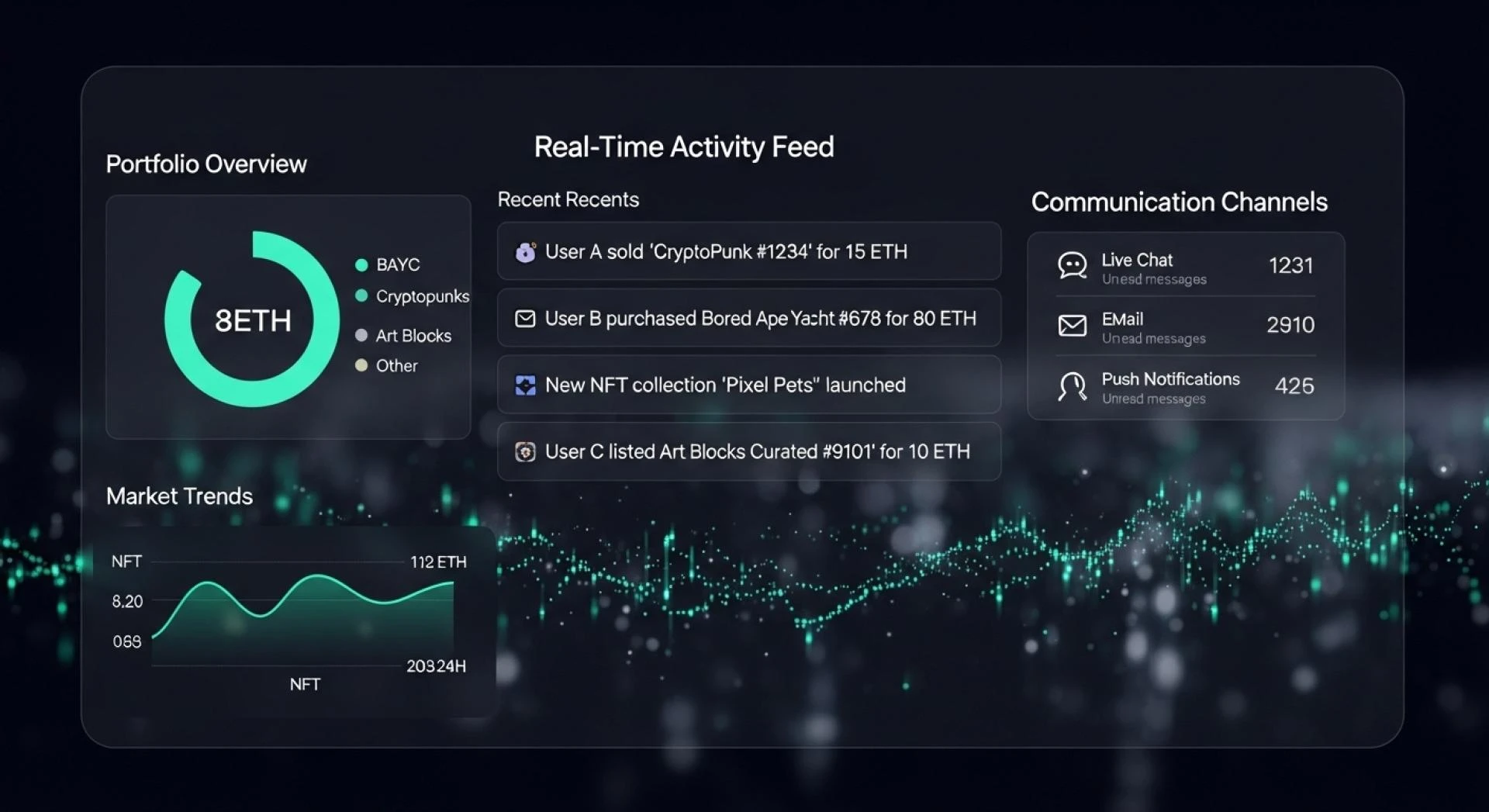
A white label NFT marketplace is a customizable, blockchain-powered platform that allows businesses to create, issue, and trade NFTs under their own brand identity. Instead of building from scratch, enterprises can deploy ready-made yet highly flexible frameworks that integrate seamlessly with existing systems and user interfaces.
Core Features of a White Label NFT Marketplace
- Brand Customization: Complete control over visual design, branding, and user experience.
- Multi-Blockchain Support: Compatibility with Ethereum, Polygon, Binance Smart Chain, and other networks for scalability and flexibility.
- Smart Contract Integration: Automated royalties, dynamic asset behavior, and transparent transactions.
- Secure Wallet Integration: Enables crypto and fiat transactions with secure digital ownership.
- Analytics and Reporting: Real-time data insights for measuring engagement and asset performance.
- Scalable Infrastructure: Designed to support global audiences and high transaction volumes.
Through these capabilities, a white label NFT marketplace development company helps businesses transform their online operations into decentralized ecosystems—where value is created, exchanged, and retained by both brand and community.
From Content Consumers to Digital Stakeholders
In the Web2 model, users are largely consumers—they interact with content but rarely share in its ownership or rewards. NFTs change this equation by allowing audiences to own a piece of the brand experience.
Imagine a fashion label releasing a limited collection of digital wearables as NFTs. Customers who purchase these tokens not only gain access to exclusive designs but also unlock early access to physical collections, receive voting rights for future collaborations, or resell their NFTs in secondary markets.
This dynamic transforms users from passive consumers into active stakeholders, aligning their interests with the brand’s long-term success.
Key Advantages of Stakeholder Participation
- Enhanced Loyalty: Ownership fosters deeper emotional and financial investment.
- Community Growth: Token-based ecosystems encourage peer-to-peer collaboration.
- Viral Engagement: NFT holders become brand ambassadors, promoting organically through shared ownership.
- Sustainable Revenue: Secondary sales and royalty mechanisms provide recurring income.
Through white label NFT marketplace development, businesses can architect such experiences seamlessly, creating participatory economies where engagement, ownership, and brand growth evolve together.
Building Active Interaction Through Tokenization
Tokenization—the process of converting assets or experiences into NFTs—forms the backbone of interactive engagement in modern business ecosystems.
1. Tokenized Experiences
Brands can tokenize access to digital events, premium content, or exclusive perks. For instance, entertainment companies can issue NFTs that grant backstage passes or virtual meet-and-greet privileges. Each token becomes a gateway to unique, personalized engagement.
2. Gamified Loyalty Systems
Traditional loyalty programs often struggle with engagement fatigue. Tokenized systems, however, transform reward points into tradable, upgradeable digital assets. A customer who earns an NFT through interaction can trade it, showcase it, or use it to unlock new experiences—making participation inherently valuable.
3. Co-Creation and Governance
NFTs can also grant users voting rights within a brand’s digital ecosystem. This participatory governance empowers users to influence design decisions, event schedules, or community initiatives—fostering a sense of shared ownership and responsibility.
4. Cross-Platform Interoperability
A well-designed white label NFT marketplace solution supports assets that are usable across different metaverses or digital platforms, expanding the ecosystem’s value beyond a single domain. This interoperability enhances the longevity of engagement and solidifies brand relevance across emerging virtual worlds.
Together, these tokenization strategies enable businesses to shift from broadcasting messages to co-creating value, marking a profound leap in digital relationship-building.
Strengthening Brand Identity and Trust
In an age of digital oversaturation, standing out requires more than presence—it demands authenticity. White label NFT marketplaces enable brands to express identity through verifiable ownership and transparent interaction, strengthening both trust and recognition.
Authenticity and Provenance
Blockchain ensures that every NFT is traceable to its origin, eliminating counterfeits and reinforcing authenticity. For industries like art, fashion, or luxury goods, this feature builds unparalleled consumer confidence.
Transparency and Ethical Engagement
Smart contracts facilitate transparent and fair distribution of rewards, royalties, and access rights. Businesses that operate transparently gain a reputation for integrity and accountability, essential for sustainable growth.
Community Storytelling
Every NFT can serve as a narrative element—a symbol of shared milestones, achievements, or values. This enables brands to cultivate story-driven ecosystems, where digital assets double as emotional touchpoints.
Data Ownership and Privacy
Unlike traditional platforms that monetize user data, white label NFT marketplaces allow businesses to manage and protect user information directly, ensuring compliance and reinforcing trust.
Through this alignment of technology, transparency, and identity, companies can foster authentic digital communities grounded in trust and shared ownership.
Long-Term Strategic Value and Brand Equity
The emergence of NFT-based ecosystems has introduced an entirely new framework for long-term business strategy—one built around transparency, participation, and co-creation. Rather than focusing solely on short-term engagement metrics like clicks or impressions, businesses using white label NFT marketplaces can measure success through sustained community participation, recurring interactions, and evolving asset value.
At the heart of this new strategy lies the concept of active ownership. When users own branded digital assets, their relationship with the brand shifts from transactional to participatory. This direct connection fosters not only customer retention but also long-term brand equity. Each NFT issued through a white label NFT marketplace represents a verified, lasting link between the business and its audience—an unbreakable record of engagement, loyalty, and shared value.
This decentralized ownership model gives brands the ability to turn intangible qualities—trust, authenticity, and cultural relevance—into measurable assets on the blockchain. As businesses continue to issue and manage NFTs tied to experiences, products, or milestones, they gradually build a layered ecosystem of digital brand heritage that compounds in value over time.
New Business Models and Economic Impact
The monetization potential of white label NFT marketplaces extends far beyond initial sales. While the early NFT boom was dominated by collectibles and art, the next phase is defined by utility-driven business models that integrate NFTs into long-term operations.
Diversified Revenue Streams
- Primary Sales – Businesses can generate direct revenue by selling branded NFTs, tokenized merchandise, or digital experiences.
- Secondary Market Royalties – Smart contracts automatically distribute a portion of every resale back to the business, ensuring continuous income even after the initial transaction.
- Membership NFTs – Enterprises can issue NFTs as digital memberships, providing holders with exclusive access to premium services, events, or content.
- Collaborative Launches – Partnering with other brands or creators allows for shared releases that expand reach and diversify audience bases.
- Phygital Assets – Combining physical goods with NFT ownership certificates bridges the gap between tangible and digital economies.
Measuring Return on Investment
Return on investment in this model is multidimensional. In addition to direct financial returns, brands gain data-driven insights into user engagement, build resilient communities, and reduce dependency on external platforms. As Web3 ecosystems mature, these non-financial returns—data sovereignty, customer loyalty, and brand influence—become equally important to traditional ROI metrics.
Ultimately, white label NFT marketplace development allows businesses to turn engagement itself into an economic activity, converting participation and creativity into sustainable revenue channels.
Ethical Considerations and Responsible Innovation
As with any transformative technology, the rise of NFTs brings both opportunities and responsibilities. Businesses entering this space must balance innovation with ethical practice to ensure trust, inclusivity, and sustainability.
Transparency and Fair Access
Every token minted, sold, or distributed through a marketplace should have a clear purpose and transparent value structure. Users must understand what they own and what rights or benefits their NFTs confer. Misrepresentation or speculative promotion risks eroding consumer trust and damaging brand reputation.
Sustainability
While blockchain innovation continues to progress, environmental concerns remain central to public discourse. Businesses can address this by selecting energy-efficient blockchain networks or Layer-2 solutions that minimize energy consumption. A commitment to sustainable operations enhances both environmental responsibility and public perception.
Inclusivity
NFT ecosystems should strive for accessibility. Simplifying onboarding, supporting multiple payment methods, and offering educational resources ensure that participation is not limited to crypto-native users. Building inclusive communities aligns with the broader goal of digital democratization.
Data Protection
Even as blockchain promotes transparency, user data security remains essential. Enterprises should maintain compliance with privacy laws and adopt encryption standards to safeguard user information. Trust must remain at the core of every digital interaction.
Responsible innovation is not just an ethical necessity; it’s a long-term strategic advantage. Brands that prioritize fairness, sustainability, and transparency will emerge as leaders in the decentralized digital economy.
Future Trends: The Next Phase of Active Ownership
As Web3 ecosystems continue to evolve, white label NFT marketplace development is expected to integrate with emerging technologies such as AI, the metaverse, and IoT. These intersections will shape the next generation of digital engagement and ownership.
Interoperable Ecosystems
Future marketplaces will enable NFTs that can be used across multiple virtual worlds, games, or platforms. Interoperability will allow users to carry digital identities, assets, and memberships seamlessly between ecosystems—expanding brand influence beyond single-platform boundaries.
AI-Driven Personalization
Artificial intelligence will transform how NFTs are experienced. Predictive analytics can tailor NFT offerings to individual user preferences, while AI-driven automation can dynamically evolve NFTs based on engagement patterns. This hyper-personalization will make every user journey unique, enhancing satisfaction and retention.
Tokenized Loyalty Programs
NFTs are set to replace traditional loyalty systems. Instead of static points, users will earn tradeable, value-backed digital tokens for brand interactions. These tokens may unlock rewards, access tiers, or governance rights, making loyalty more interactive and rewarding.
Phygital and Experiential Assets
The blending of physical and digital assets—phygital NFTs—will become mainstream. Retailers and manufacturers can use NFTs as certificates of authenticity, while event organizers can issue NFTs as digital tickets or memorabilia, preserving unique experiences on-chain.
Community-Driven Economies
Decentralized autonomous organizations (DAOs) are emerging as models for community governance. Businesses may integrate DAO frameworks into their marketplaces, giving NFT holders a voice in decision-making. This collective governance approach strengthens trust and deepens community investment.
These trends highlight the direction in which business ecosystems are headed: toward inclusivity, interoperability, and user-driven innovation. Enterprises that adapt early to these developments will position themselves at the forefront of the decentralized digital economy.
The Broader Cultural and Economic Implications
The transition from passive digital presence to active ownership carries implications beyond individual businesses—it is reshaping digital culture itself. As NFTs make ownership verifiable, transparent, and portable, consumers are beginning to expect similar authenticity across all digital interactions.
This evolution mirrors the historical shifts seen during the rise of social media and e-commerce. However, unlike those centralized revolutions, the NFT movement redistributes power. It enables participants to co-own, co-create, and co-monetize their interactions, leading to a more equitable digital economy.
For businesses, this means that long-term success will rely not on controlling attention, but on cultivating participation. Every NFT minted becomes a bridge between a brand and its community—a digital handshake built on trust and shared value.
Conclusion
White label NFT marketplace development represents a turning point in how businesses define their digital strategies. By offering customizable, decentralized platforms, these marketplaces enable enterprises to move beyond passive online presence and create ecosystems of active ownership, engagement, and value exchange.
Through tokenized assets, smart contracts, and transparent governance, businesses can transform customer relationships into participatory economies. Users no longer just consume—they contribute, trade, and grow alongside the brand. This shift empowers companies to build resilient communities, enhance loyalty, and generate sustainable revenue across global markets.
In the Web3 era, success is no longer measured only by visibility or reach, but by authenticity, transparency, and the ability to create enduring value through shared ownership. The businesses that understand this paradigm—and act on it today—will lead the next wave of digital transformation, where growth and engagement are driven not by algorithms, but by genuine human connection and decentralized collaboration.











Sign in to leave a comment.