
Introduction
High-Pressure Sodium (HPS) lights were the industry standard for indoor growing for years. Their intense light output made them a popular choice for growers looking to maximize plant yields. However, as technology has progressed, many growers are making the switch from HPS to LED Grow Lights due to their efficiency, cost savings, and improved performance.
LED grow lights have changed the way indoor cultivation works by providing better energy efficiency, longer lifespan, and enhanced light control. Companies like California LightWorks have developed advanced LED solutions that cater to both small-scale and commercial growers.
This article will cover the key differences between HPS and LED lighting, the benefits of switching, and how growers can transition smoothly.
Why Growers Are Moving from HPS to LED Grow Lights
The shift from HPS to LED Grow Lights is driven by several factors, including cost savings, efficiency, and plant health.
1. Rising Energy Costs
HPS lights consume a significant amount of electricity. As utility costs continue to rise, many growers are looking for ways to reduce expenses without sacrificing plant performance. LEDs provide a more energy-efficient solution, cutting electricity usage while still delivering strong light output.
2. Heat Management Challenges
HPS systems generate a large amount of heat, which requires additional cooling systems to maintain optimal growing conditions. This adds to the overall operating costs. LED lights run cooler, reducing the need for extra ventilation and air conditioning.
3. Improved Light Spectrum Control
HPS lights primarily emit light in the red and orange spectrum, which is beneficial for flowering but lacks the full spectrum needed for optimal growth. Modern LEDs, like those from California LightWorks, offer a balanced spectrum that supports all stages of plant growth.
4. Longevity and Durability
HPS bulbs need regular replacement, adding to long-term costs. In contrast, LEDs last significantly longer, reducing maintenance and replacement expenses.
Benefits of Switching to LED Grow Lights
Moving from HPS to LED Grow Lights offers a variety of benefits for both small-scale and large-scale growers.
1. Energy Savings
LEDs consume up to 50% less electricity compared to HPS systems. This reduction in power usage translates into significant savings over time.
2. Lower Cooling Requirements
Since LED lights generate less heat, growers can reduce their cooling and ventilation expenses. This is especially beneficial for indoor grow rooms where temperature control is a major concern.
3. Better Control Over Light Spectrum
With LEDs, growers can fine-tune the spectrum to match specific plant needs. California LightWorks offers advanced LED systems with adjustable spectrum control to optimize growth.
4. Improved Plant Health and Yield
The full-spectrum output of LED lights ensures that plants receive balanced lighting throughout all growth stages. This leads to stronger, healthier plants and potentially higher yields.
5. Longer Lifespan and Reduced Maintenance
Unlike HPS bulbs that need frequent replacements, LED grow lights can last more than 50,000 hours. This minimizes downtime and reduces operational costs.
How to Transition from HPS to LED Grow Lights
Switching from HPS to LED Grow Lights requires careful planning to maximize the benefits of LED technology.
1. Evaluate Your Current Setup
Before making the switch, assess your existing HPS lighting system. Consider factors such as wattage, coverage area, and cooling needs to determine the best LED replacement.
2. Choose the Right LED System
Selecting the right LED grow light is crucial. Companies like California LightWorks offer various models designed to fit different growing environments, from small grow tents to large commercial facilities.
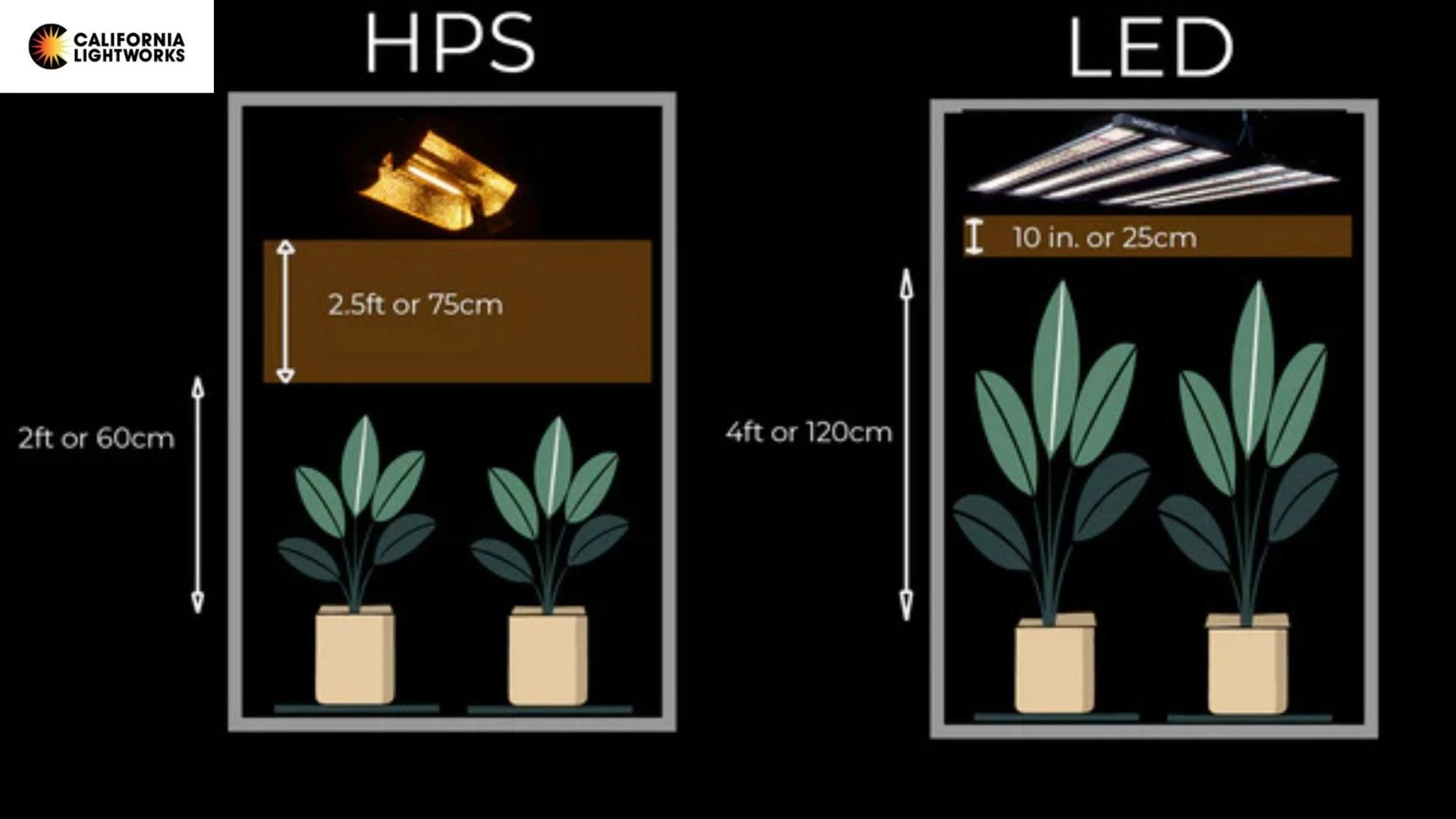
3. Adjust Light Height and Intensity
LED lights are more efficient at delivering usable light to plants, so they should be positioned differently than HPS bulbs. Most LEDs should be hung higher to prevent excessive light intensity.
4. Monitor Environmental Changes
Since LEDs produce less heat, humidity and temperature levels may need to be adjusted. Growers should closely monitor their environment and make necessary modifications to maintain optimal conditions.
5. Optimize Nutrient and Watering Schedules
With improved light efficiency, plants may require changes in watering and nutrient intake. Observe plant responses and adjust feeding schedules as needed.
Why Choose California LightWorks for LED Solutions?
When upgrading from HPS to LED Grow Lights, selecting a trusted brand is important. California LightWorks has established itself as a leader in LED grow lighting, offering reliable and innovative solutions for growers.
1. Advanced LED Technology
California LightWorks designs high-performance LED systems with full-spectrum capabilities, allowing growers to optimize plant growth at every stage.
2. Energy Efficiency and Sustainability
By using state-of-the-art LED chips, California LightWorks products help growers reduce energy consumption while maintaining high yields.
3. Durable and Long-Lasting Solutions
Built with quality components, California LightWorks LED grow lights are designed for longevity, minimizing the need for frequent replacements.
4. Trusted by Growers Worldwide
With a strong reputation in the industry, California LightWorks has been a top choice for indoor and greenhouse growers looking for dependable LED lighting solutions.
Common Concerns About LED Grow Lights
Some growers hesitate to switch from HPS to LED Grow Lights due to common concerns. Here’s how LEDs address these issues:
1. Do LEDs Provide the Same Yield as HPS?
Yes, when used correctly, high-quality LED grow lights can match or exceed the yields produced by HPS systems.
2. Are LEDs Too Expensive?
While LEDs have a higher upfront cost, they provide long-term savings through reduced energy consumption and lower maintenance costs.
3. Do LEDs Require a Different Growing Approach?
Some adjustments may be needed, such as repositioning lights and modifying watering schedules, but overall, the growing process remains similar.
FAQs
1. How long does it take to transition from HPS to LED Grow Lights?
The transition process depends on your setup, but most growers can switch within a few weeks with proper planning.
2. Do LED grow lights reduce electricity costs?
Yes, LED grow lights consume less power than HPS, leading to significant energy savings.
3. Can I mix HPS and LED lights?
Some growers use a hybrid approach, but switching fully to LED provides the best energy efficiency and performance.
4. Do plants react differently to LED lighting?
Plants may require slight adjustments in watering and nutrients, but overall, they thrive under well-designed LED systems.
5. Which LED brand is best for growers?
California LightWorks is a top choice for high-quality, reliable LED grow lights.
Conclusion
Switching from HPS to LED Grow Lights offers multiple advantages, from reduced energy costs to improved plant growth. While the initial investment may seem high, the long-term benefits make LED lighting a smart choice for serious growers.
For those looking for high-quality LED solutions, California LightWorks provides advanced lighting technology designed to optimize indoor cultivation. With improved efficiency, durability, and performance, LED grow lights are shaping the future of indoor farming.










Sign in to leave a comment.