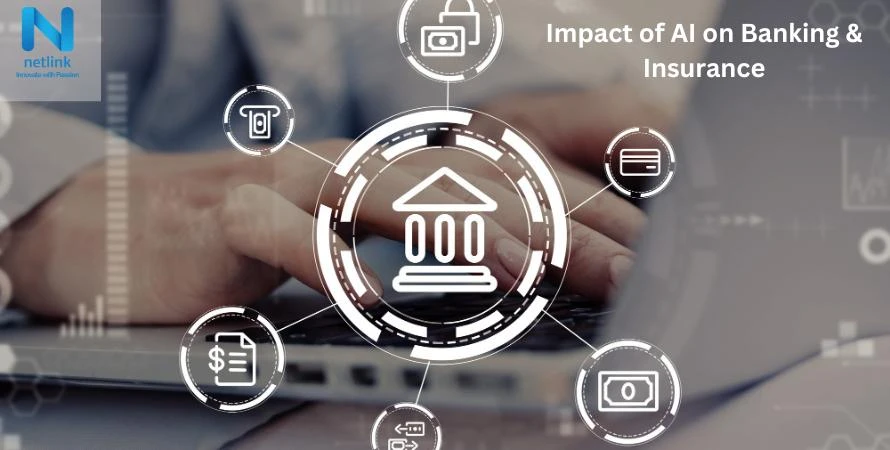

Digital transformation is shaking up the financial industry, and AI and Machine Learning are at the forefront of this revolution. These technologies are addressing the industry's struggles to manage customer data and improve data management, leading to more efficient and customer-focused operations. This article delves into the impact of AI and Machine Learning on the Finance Industry, and how they are being used to address industry-specific challenges.
Growth of AI and Machine Learning Across Verticals
The global AI market size was valued at USD 93.5 billion in 2021, and it is projected to expand at a compound annual growth rate of 38.1% from 2022 to 2030. In the finance industry, the global AI in banking market size was valued at $3.88 billion in 2020 and is projected to reach $64.03 billion by 2030, growing at a CAGR of 32.6% from 2021 to 2030.
Impact of AI on Banking
Automated workflows and faster decision-making are two critical factors that help the banking industry better serve customers. Ever since AI and Machine Learning were added to the banking strategy, the results have been excellent. The industry can automate many processes while reducing human-induced errors.
Automated Credit Risk Assessment and Data Management
Credit scores play a crucial role in loan sanctioning and settlement. Assessing the credit score requires many factors to consider and analyze before arriving at the final value. With AI, both challenges are addressed. Artificial Intelligence systems in the bank enable the workforce to calculate the individual credit score of every customer by weighing different parameters. The credit report for an individual, often provided by AI-based systems, is 100% accurate as the technology considers real-time scenarios before arriving at a credit score.
Automated Fraud Detection in Banking
Assessing and reducing potential fraud is critical for the banking industry's growth and for preventing losses. The industry faces many problems with phishing scams and other malware that create havoc in the systems, leading to potential losses. On the other hand, some customers provide false details to acquire funds from the banks, contributing to massive losses. AI-enabled automation improves the fraud detection process and reduces losses significantly. AI technology matches the requirements with the rules, and any deviation concerning preset rules will be monitored and informed to bank staff.
Impact of AI on Insurance
The insurance industry has also benefited massively from AI and Machine Learning technology investments. Especially customer claims and underwriting are processes that have improved significantly with the help of AI and Machine Learning technology-enabled systems.
Automating Underwriting Process
Underwriters help the bank with detailed assessments against the risk of providing a loan to any individual. The complicated process involves much effort to explore the risk and reduce any potential loss in the future. The introduction of AI in the process has completely changed the way it works. With the help of AI and Machine Learning automation, the underwriters can accurately assess the risk associated with any individual and ensure whether they are the right candidate for lending.
Automating Claims Process
Claim assessment and settlement is a vast process in the Insurance industry. Any discrepancies or false data could impact the insurance industry as they will be staring at huge losses. The industry is looking for solutions to address claim management risks and seamless claims settlement. AI and Machine Learning technologies are being used to simplify the task of claim executives and fast-forward the process. It also improves the data security of the process significantly.
Challenges Faced by the Industry Daily
Consider any finance-based company, such as banks or insurance companies, that faces challenges daily and looks for solutions to negate them. Some of these challenges include managing customer data, adjusting strategy to improve customer satisfaction, making quick and informed decisions, enticing customers with offers and discounts, engaging customers, and serving customers.













Sign in to leave a comment.