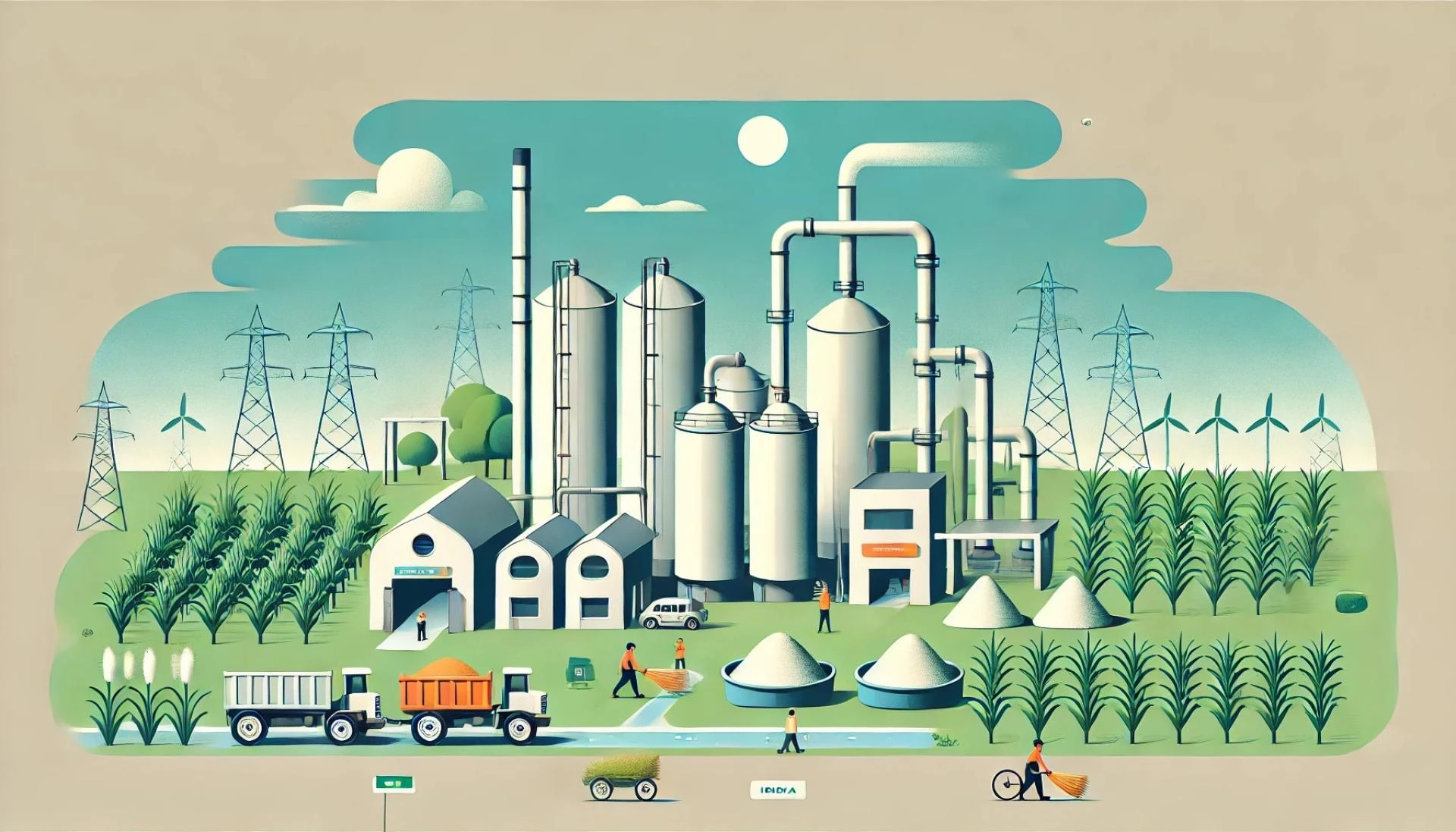

India’s energy landscape is at a crossroads. As the world’s third-largest oil importer, the nation faces mounting pressure to curb fossil fuel dependence, reduce emissions, and stabilize energy costs. Ethanol, a renewable fuel derived from agricultural feedstocks, has emerged as a linchpin in this transition. The government’s Ethanol Blending Programme (EBP), targeting 20% ethanol-petrol blending by 2025, is not just a policy—it’s a blueprint for energy sovereignty. For businesses, an ethanol plant setup represents a strategic entry into a market poised to redefine India’s economic and environmental future.
The Hidden Value Chain of Ethanol Production
While ethanol is often framed as a “green fuel,” its true potential lies in its ability to integrate agriculture, energy, and waste management into a circular economy. Modern ethanol plant setup are no longer limited to sugarcane or grains. Innovations in second-generation (2G) ethanol technology enable the use of agricultural residues—rice straw, corn stover, and bagasse—turning waste into wealth. This shift addresses two critical challenges: reducing stubble-burning (a major contributor to air pollution) and creating year-round feedstock supply chains, independent of seasonal crop cycles.
The economic ripple effects are profound. Farmers gain markets for surplus or non-food-grade produce, while rural economies benefit from job creation in feedstock collection, plant operations, and logistics. For industries, ethanol by-products like distillers’ grains (DDGS) offer high-protein animal feed alternatives, reducing reliance on costly soybean or fishmeal imports.
Policy Tailwinds and Market Realities
India’s National Biofuel Policy 2018 and interest subvention schemes for ethanol projects have created a fertile ground for investment. Oil Marketing Companies (OMCs) are mandated to purchase ethanol at government-fixed prices, ensuring predictable revenue streams. However, the real opportunity lies in anticipating future demand. With the EBP target requiring 10 billion liters of ethanol annually by 2025—nearly triple current production—the supply gap is glaring. Early movers in ethanol plant setup can secure long-term contracts, scale operations, and position themselves as partners in India’s energy security.
Strategic Challenges and Innovations
Scaling ethanol production isn’t without hurdles. Feedstock availability remains a bottleneck, particularly for grain-based plants competing with food supply chains. Water-intensive processes and energy consumption in distillation also pose sustainability concerns. However, breakthroughs in dry-mill technology, water recycling systems, and AI-driven yield optimization are reshaping the sector. For instance, 2G plants using enzymatic hydrolysis can extract ethanol from cellulose-rich waste, slashing water use and carbon footprints.
The Global Context: Ethanol as a Geopolitical Asset
Globally, ethanol is gaining traction as countries race to meet net-zero targets. Brazil’s success with sugarcane ethanol and the U.S.’s corn-based industry highlight its viability. India, with its vast agricultural base, can leverage ethanol plants to not only meet domestic demand but also emerge as a biofuel exporter. This aligns with initiatives like the Global Biofuel Alliance, positioning India as a leader in the green energy transition.
Conclusion: Beyond Fuel—Building a Legacy
An ethanol plant setup transcends profit; it’s a commitment to India’s energy resilience, rural prosperity, and environmental stewardship. Companies investing today are not just constructing facilities—they’re laying the groundwork for a sector that will influence national GDP, global trade dynamics, and climate action. As feedstock innovation accelerates and policies evolve, ethanol will cement its role as a cornerstone of sustainable development.
The future of energy is green, decentralized, and inclusive. By pioneering ethanol plant projects, businesses can fuel this transformation—and reap the rewards of being first in a market where necessity meets opportunity.











Sign in to leave a comment.