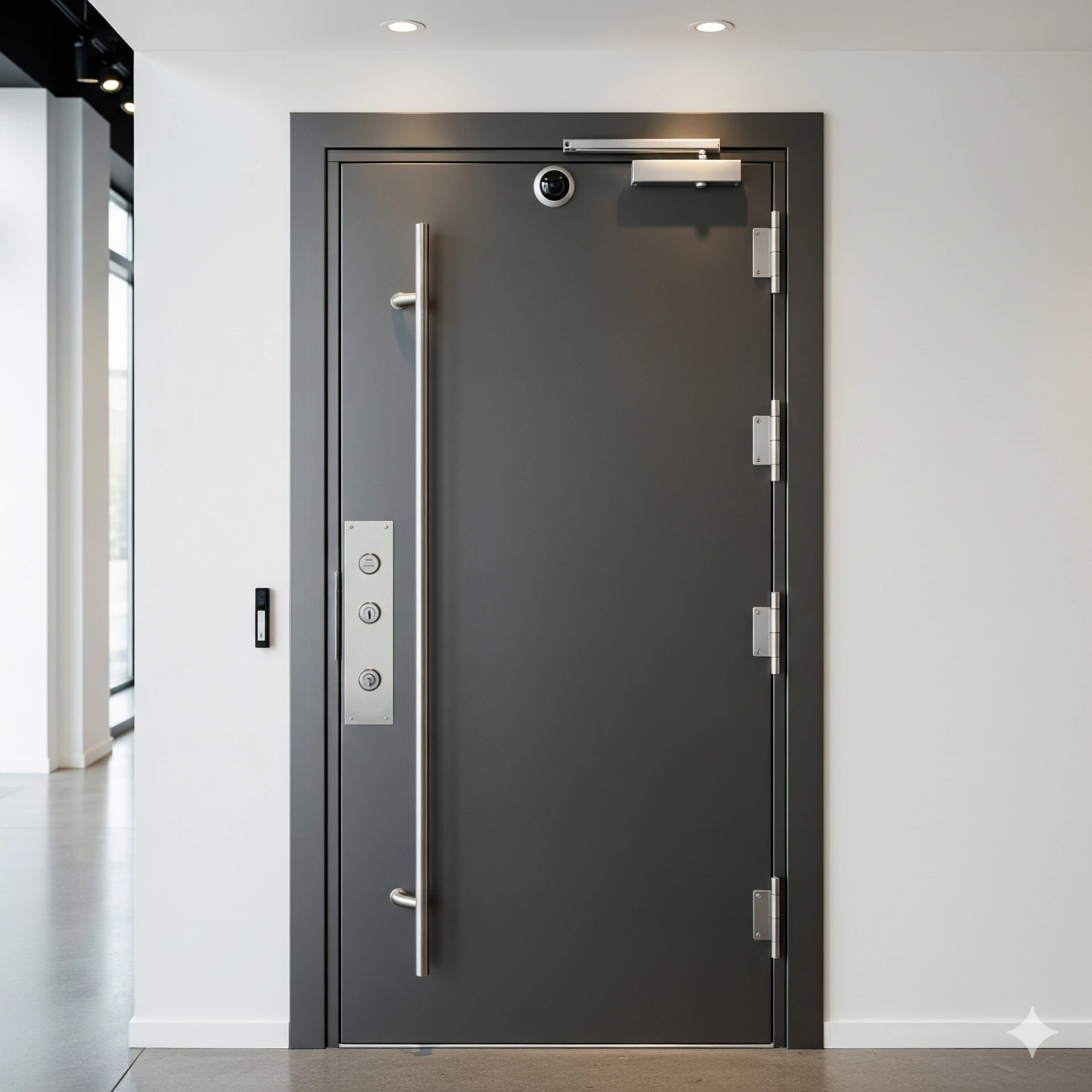

When renovating or updating commercial and retail spaces, people tend to focus on the structure of the building and its interior finish, making sure that it will perform its intended function and look good while it does so. However, one area that is often overlooked is that of commercial door installation.
This is a mistake as the doors that are fitted to commercial premises are fundamental to safety, security, energy efficiency and legal compliance. Considering commercial door installation during the planning phase is essential to ensure that the solution chosen not only satisfies the aesthetic requirements but also delivers enhanced usability, long-term performance and regulatory compliance.
Most important points for consideration
When planning to install new commercial doors, there are several key points which warrant serious consideration to ensure the most suitable solution is selected. These are:
1. Regulatory compliance
Every commercial door installation in Canada is required to adhere to the National Building Code of Canada, as well as to specific provincial and municipal regulations. Although requirements may vary depending on the type of building, its occupancy and use case, there are several common factors to think about. These include:
- the need to install fire-rated doors, frames and hardware at suitable points to allow safe egress in the event of a fire or other emergency
- the need to comply with accessibility and anti-discrimination laws
- the need to weather-seal exterior doors to reduce heat loss
Failing to comply with these requirements can threaten the safety of the building and its occupants. It may also put the management company or building owner at risk of fines and costly retrofits.
2. Security
Most people only think of security when considering commercial door installation. This is because the exterior doors to the building are its first line of defence against unauthorized entry and are key to protecting occupants from harm. When updating a commercial space, consideration must be given to the type of door that is most appropriate to minimize the likelihood of break-ins. For example, steel-reinforced solid doors are visibly tamper-resistant, reducing the chances of opportunistic break-in attempts.
It is always sensible to install exit devices on the inside of exterior doors. These allow building occupants to quickly and safely exit the building in the event of a fire or other emergency without compromising building security.
3. Functionality
When planning a commercial door installation, thought should be given to the way in which the building is used to reduce the chances of unintended negative consequences or poor customer experiences. For example, while automatic swing doors are designed to enhance accessibility in high-traffic areas, in crowded spaces, they can increase the likelihood of accidents. Instead, a sliding door could be considered, as it takes up less room.
4. Aesthetics
Opening the front door of an office or retail establishment is often the very first interaction a customer has with the business inside. For this reason, the door needs to make a positive first impression. It may be worth considering investing in a custom finish, either printing your logo or business name onto a frosted glass front or etching it into the door handle.
5. Weather resistance
Commercial doors must withstand all that the Canadian weather can throw at them, from freezing winter conditions to hot, humid summers and everything in between. Weatherstripping and high-quality seals can help to prevent drafts and damp, while thermal break frames can reduce heat transfer and minimize condensation.
Regular maintenance is key to ensuring the door operates smoothly all year round.
6. Professional installation
Certified professional locksmiths are best placed to perform commercial door installations. This is because they are both familiar with regulatory requirements and experienced in fitting and maintaining commercial doors. They can provide the ongoing maintenance that is necessary to ensure longevity and functionality, realigning and lubricating the door as needed and fitting replacement parts when necessary.
Proactive maintenance can reduce the likelihood of unexpected failures, so hiring a professional locksmith to routinely inspect and maintain commercial doors is a sound investment.
7. Cost
For many businesses, cost is a deciding factor. It is important to consider the full cost of ownership rather than just the up-front cost. This is because a more expensive option may last longer and provide greater energy savings. This means its overall cost of ownership will be less than a cheaper option that will need more maintenance and may wear out faster.
Most high-quality doors are warrantied against faults and defects, so that should they occur, the door can be repaired or replaced free of charge within its warranty period.
Conclusion
By considering these seven factors during the planning phase, businesses are more likely to invest in safe, secure, efficient and accessible doors that enhance their brand image and comply with all necessary regulations.















Sign in to leave a comment.