
When I signed up for the Kuari Pass trek, I imagined snow peaks, alpine meadows, and plenty of photographs for my travel album. I knew it would be beautiful, but I thought the experience would be about the things I saw, the scenery, the trails, the camps. What I did not expect was that the most powerful moment of the trek would come in complete silence.
That silence, up at the pass, surrounded by the highest mountains of India, changed the way I look at the world.
While planning, I considered both Indiahikes (IH) and Himalayan Dream Treks (HDT), two well known organizers for Kuari Pass. In the end, I chose Himalayan Dream Treks, and their team made the entire journey smooth, safe, and truly unforgettable.
The Long Walk to the Pass
The final push to Kuari Pass started early in the morning from our campsite at Khullara. It was still dark when we stepped out of our tents, breath turning to mist in the freezing air. Our trek leader handed out hot tea, and everyone sipped quietly, nerves and excitement written on our faces.
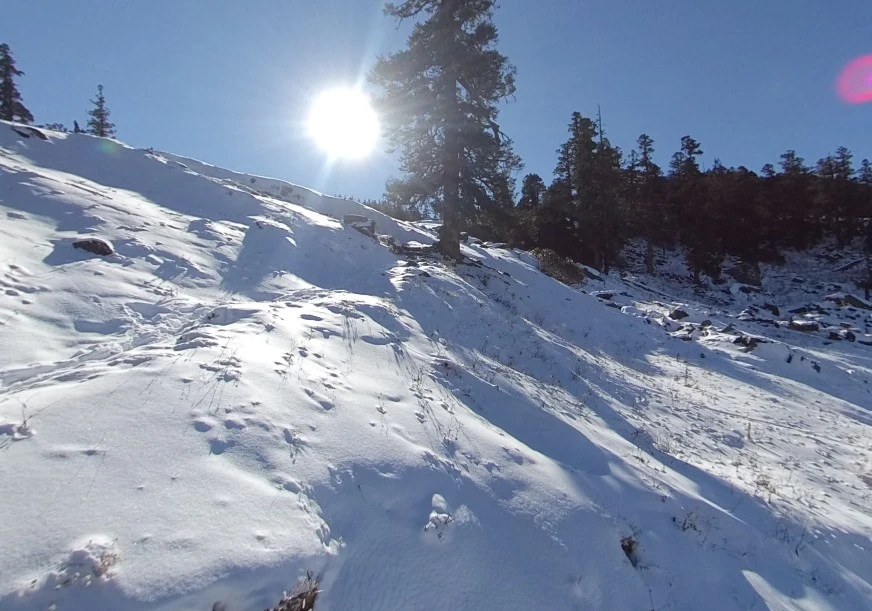
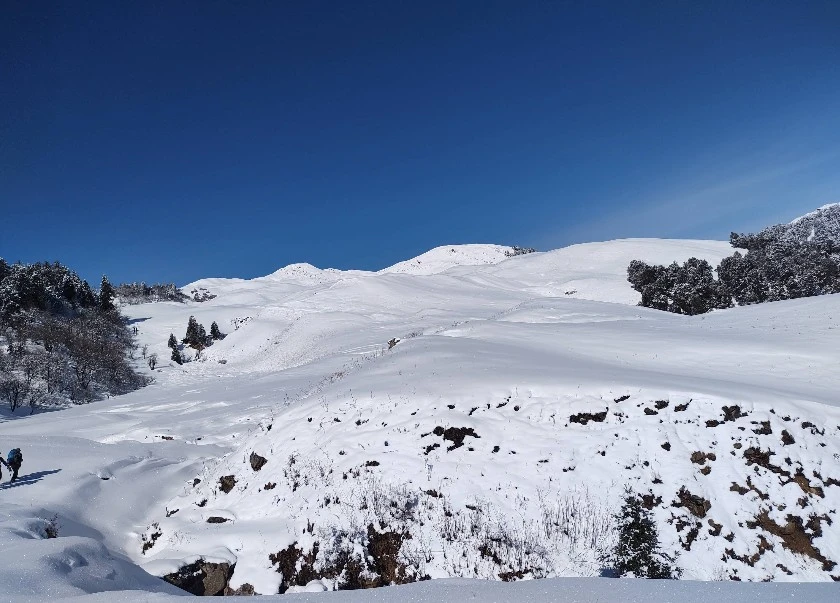
The trail ahead was steep. We strapped on our backpacks, adjusted our trekking poles, and began the climb. At first, there was chatter, encouragement, jokes, the crunch of boots on snow. But as the ascent grew tougher, conversations faded. All you could hear was the sound of breathing and the occasional call of a bird.
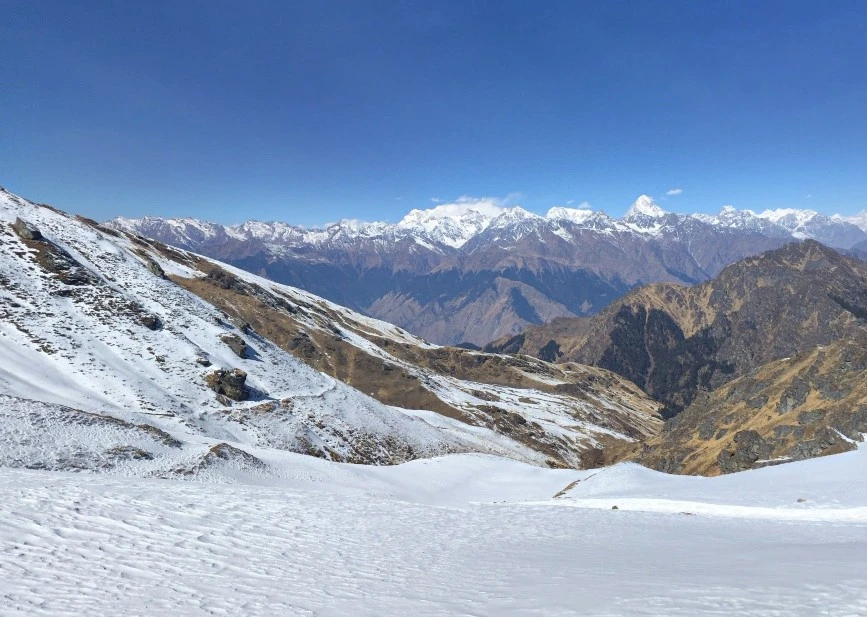
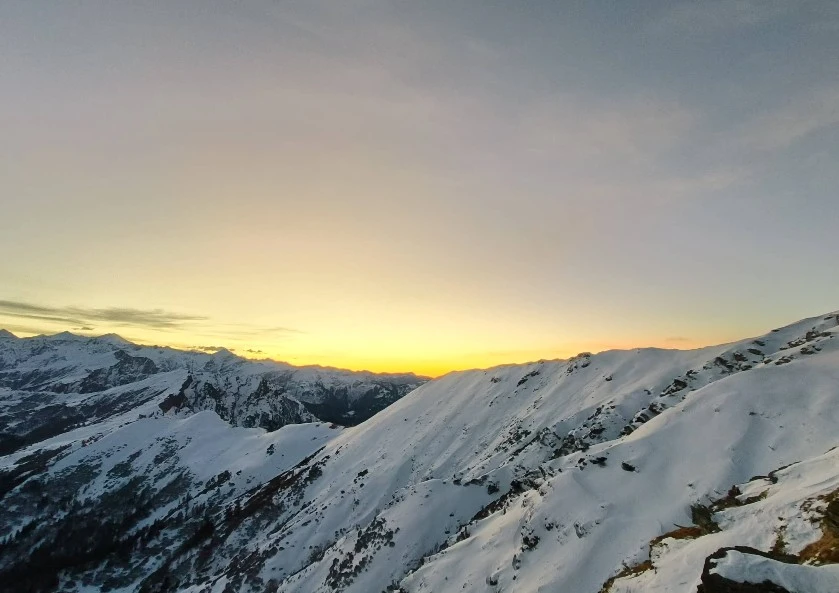
Step by step, we made our way higher. The oak and rhododendron forests gave way to open ridges, and suddenly the mountains started appearing, first a glimpse of Dronagiri, then the twin peaks of Hathi and Ghoda. Each turn of the trail revealed a new giant.
Hiking here felt like much more than a vigorous walk. It was a true pilgrimage into the Himalayas, a reminder that trekking is not only about reaching a destination but about experiencing every step, whether through dense forest, over meadows like Gorson Bugyal, or along snowy ridges.
The Moment of Arrival
After hours of climbing, we finally reached the pass. The altitude hit me, but so did the view.
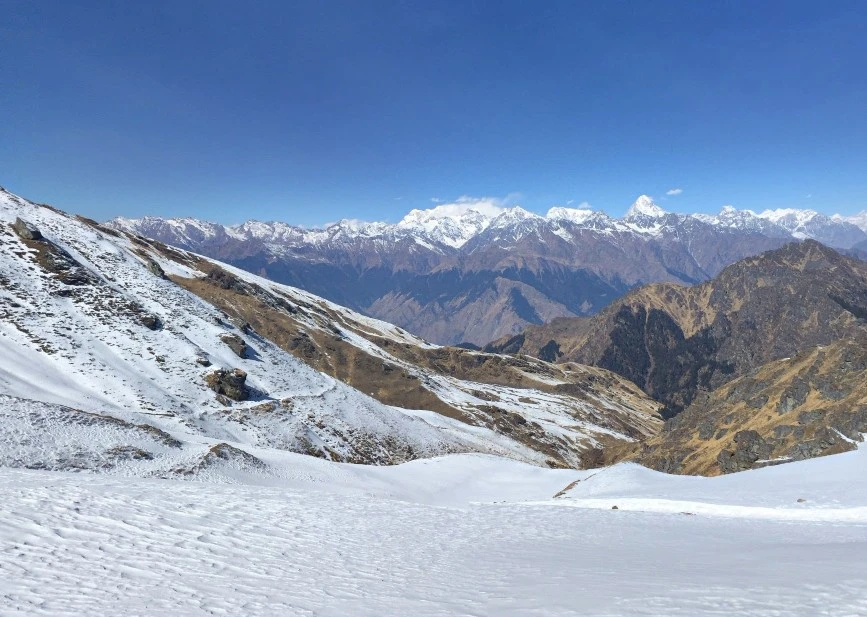
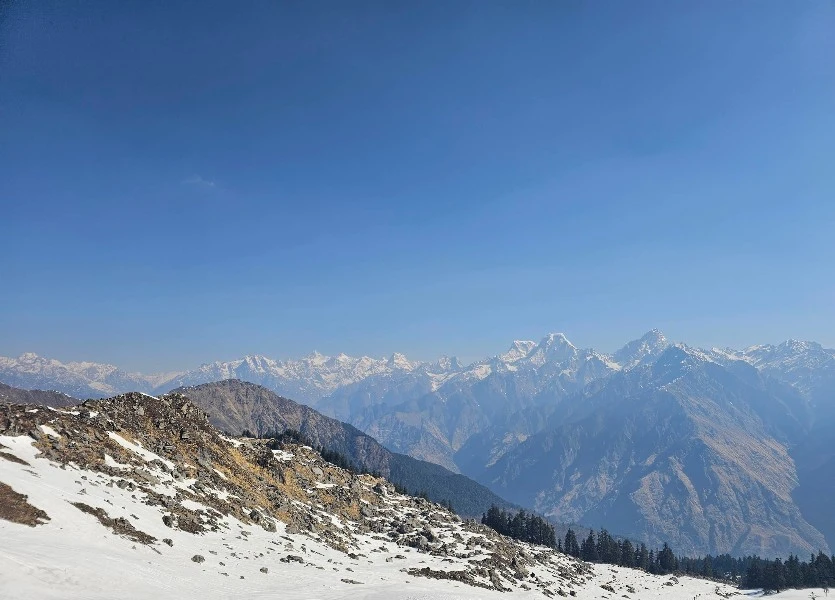
There it was, Nanda Devi, India’s second-highest peak, rising in perfect solitude. Around her stood a royal court of mountains: Kamet, Chaukhamba, Neelkanth, Mana, and so many others whose names I did not even know. The sight was overwhelming, almost unreal.
At first, I wanted to shout in excitement. To laugh, to cheer, to tell the world I had made it. But then something happened, something I cannot fully explain.
A hush fell over me. Over all of us.
Nobody spoke. Nobody moved. We just stood there, staring at the Himalayas. The mountains demanded silence, and we gave it.
The Power of Silence
It was the deepest silence I have ever experienced. Not the awkward silence of city life, but a living silence, vast, endless, filled with the presence of the mountains.
In that silence, I noticed everything more clearly: the way the wind brushed against my face, the sparkle of snow under the sun, the stillness of peaks that had stood for millions of years.
Inside me, too, there was a stillness I had never known. All the worries I had carried, the deadlines, the future plans, the regrets, suddenly felt so small. Against the backdrop of those timeless mountains, my problems seemed like dust in the wind.
For the first time in years, I was not thinking of the past or the future. I was simply there, in that moment, in that silence, at the top of the world.
A Shared Understanding
Later, when I looked around, I saw the same expression on everyone’s face. Eyes wide, lips closed, hearts open. We did not need to speak, because we all understood the same truth, that words could never capture what the mountains had just given us.
Some people prayed silently. Others just sat down on the rocks, gazing out. I closed my eyes for a moment, and when I opened them, I felt different, lighter, freer.
There was a quiet etiquette in that moment, one that reminded me of unspoken hiking traditions—leave nothing behind, respect the trail, and avoid unnecessary noise. The Himalayas had their own rules, and we were simply visitors.
The Descent with New Eyes
When we finally began the descent, we did so quietly. The silence from the summit stayed with us. The same trail we had climbed now looked different, clearer, sharper, more alive.
The forests seemed greener, the streams sparkled brighter, and even the smallest flowers by the trail looked like miracles. The silence had opened my eyes to details I had overlooked before.
That night, at the campsite, we eventually went back to talking, laughing, and singing. But beneath it all, the silence of the pass remained, like a secret treasure each of us carried inside.
I realized why Kuari Pass is considered one of the best easy to moderate treks in Uttarakhand. It is accessible for beginners yet rewarding enough for seasoned trekkers, offering close and clear views of Nanda Devi and other Himalayan giants in just five to six days. Unlike longer backpacking expeditions that require weeks, this short trek still carries the thrill of a long-distance journey.
What the Mountains Taught Me
The Kuari Pass trek gave me many gifts, stunning landscapes, new friends, and unforgettable adventures. But the greatest gift was the silence at the top.
It taught me that not every experience needs to be spoken about, not every feeling needs to be explained. Sometimes, the most powerful truths are found in stillness.
In that silence, I understood what it means to simply be. Not to chase, not to plan, not to prove, just to exist, fully present, in the vastness of life.
That is what the Kuari Pass trek gave me. And that is why, whenever life feels too loud, I close my eyes and return to that silence at the summit.









Sign in to leave a comment.