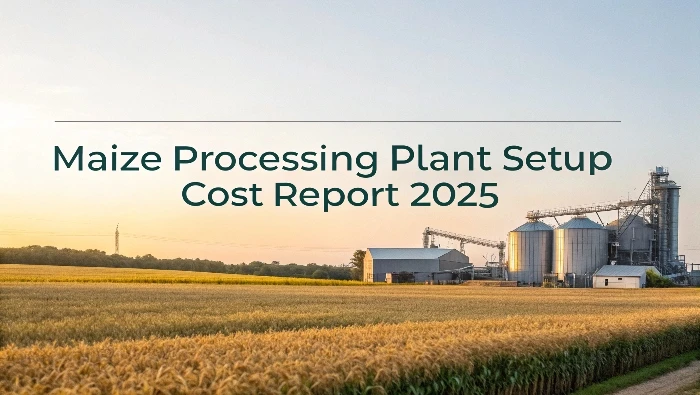

Maize/Corn Processing Plant Report Overview:
IMARC’s new report titled “Maize/Corn Processing Plant Project Report 2025: Industry Trends, Plant Setup, Machinery, Raw Materials, Investment Opportunities, Cost and Revenue,” offers a comprehensive roadmap for establishing a maize or corn processing facility. The report provides detailed insights into all the essential technical and financial elements of maize or corn processing plant setup, including production processes, equipment selection, infrastructure planning, and project economics. This publication serves as a vital reference for entrepreneurs, investors, researchers, consultants, and business strategists seeking to evaluate the feasibility and profitability of setting up a maize or corn processing plant.
What is Maize/Corn Processing?
Maize, also known as corn, is one of the world’s most versatile and widely cultivated crops. The maize processing industry transforms raw corn kernels into a variety of products such as corn flour, starch, glucose syrup, ethanol, corn oil, animal feed, and other value-added derivatives. The process involves cleaning, conditioning, degermination, milling, and refining, depending on the end product. Corn’s high carbohydrate content, nutritional profile, and adaptability make it an indispensable raw material for the food, beverage, pharmaceutical, and biofuel industries. The global corn processing market continues to grow due to the crop’s diverse industrial applications and the increasing demand for both food-grade and industrial starches.
Market Drivers and Outlook:
The maize processing industry is driven by rising global demand for food, beverages, and bio-based products. Growth in the food and beverage sector, particularly for corn-derived ingredients like starch, glucose, and high-fructose corn syrup, continues to propel the market. Additionally, the increasing use of corn-based ethanol as a renewable fuel source supports the bioenergy sector. Population growth, expanding livestock industries, and the shift toward processed foods also contribute to demand. Advancements in milling and refining technologies, along with sustainability initiatives promoting efficient resource utilization, are expected to further enhance the industry’s growth potential.
See the Data First: Download Your Sample Report: https://www.imarcgroup.com/maize-corn-processing-plant-project-report/requestsample
Maize/Corn Processing and Technical Workflow:
This section outlines the process flow and key technical stages involved in maize or corn processing, including unit operations, raw material requirements, and quality control parameters.
Aspects Covered:
- Product Overview
- Unit Operations Involved
- Mass Balance and Raw Material Requirements
- Quality Assurance Criteria
- Technical Tests
Process Description:
The maize processing operation begins with cleaning and grading, where impurities and foreign matter are removed. The grains are then conditioned by adjusting their moisture content before undergoing milling. Depending on the end use, the process can follow two main routes: dry milling or wet milling.
- Dry milling produces cornmeal, flour, grits, and animal feed by physically separating the germ, bran, and endosperm.
- Wet milling involves soaking corn in water and sulfur dioxide to soften the kernel, followed by separation into components like starch, gluten, fiber, and oil.
The extracted starch can be further processed into derivatives such as dextrose, glucose syrup, or ethanol. Quality assurance includes testing for starch content, moisture levels, granulation, and microbial safety to meet industry standards.
Infrastructure and Setup Requirements:
This section covers the essential infrastructural, mechanical, and logistical considerations for establishing a maize processing plant. It highlights critical areas such as location selection, plant layout, machinery, utilities, and human resource requirements.
Aspects Covered:
- Land, Location and Site Development
- Plant Layout
- Machinery Requirements and Costs
- Raw Material Requirements and Costs
- Packaging Requirements and Costs
- Transportation Requirements and Costs
- Utility Requirements and Costs
- Human Resource Requirements and Costs
Land, Location, and Site Development:
The plant should ideally be situated near maize-growing regions to ensure a steady raw material supply and minimize transportation costs. The site should have adequate access to utilities such as water, electricity, and waste disposal facilities. Land allocation must consider areas for raw material storage, processing units, packaging, and finished goods warehouses.
Plant Layout:
An efficient plant layout ensures a streamlined workflow, segregating sections for cleaning, milling, refining, drying, and packaging. Proper layout design enhances productivity, safety, and operational efficiency while allowing for future expansion.
Machinery Requirements:
Key machinery includes grain cleaners, dehullers, degerminators, hammer mills or roller mills, sieving systems, dryers, starch extractors, and refining equipment. Wet milling plants require specialized units such as steeping tanks, centrifuges, and evaporators.
Raw Materials:
The main raw material is maize or corn, with water and chemicals (such as sulfur dioxide for wet milling) also being necessary. The quality and moisture content of the maize significantly influence yield and final product quality.
Packaging and Transportation:
Processed maize products are packed in polypropylene bags, drums, or bulk containers, depending on their type. Proper packaging preserves product integrity during storage and transportation. Efficient logistics planning ensures timely distribution to domestic and export markets.
Utilities and Human Resources:
Utilities such as water, steam, power, and compressed air are crucial for smooth operations. A skilled workforce comprising engineers, technicians, quality analysts, and operators ensures consistent production and adherence to safety standards.
Financial Projections and Economic Viability:
This section provides a detailed financial assessment of setting up a maize/corn processing plant, including cost structure, revenue projections, and profitability metrics.
Aspects Covered:
- Capital Investments
- Operating Costs
- Expenditure Projections
- Revenue Projections
- Taxation and Depreciation
- Profit Projections
- Financial Analysis
Capital costs encompass land acquisition, construction, machinery installation, and working capital. Operating expenses include raw materials, labor, utilities, packaging, and maintenance. Financial indicators such as internal rate of return (IRR), net present value (NPV), gross margin, and payback period help determine the project’s long-term profitability and risk profile.
Key Considerations for Plant Design and Operations:
Production Capacity:
Plant capacity should be determined based on market demand, available maize supply, and scalability goals.
Automation Levels:
Automation can significantly improve product consistency and process control. Depending on investment size, plants may opt for semi-automated or fully automated systems.
Location Adaptation:
Selecting a location near major maize cultivation regions minimizes raw material logistics costs and enhances supply reliability.
Product Flexibility:
The plant should be capable of producing various products—such as starch, corn flour, glucose syrup, or ethanol—to diversify revenue streams.
Sustainability Features:
Incorporating energy-efficient machinery, wastewater recycling, and by-product utilization (e.g., using corn fiber as animal feed) promotes sustainability and cost efficiency.
Raw Material Sourcing:
Developing long-term partnerships with local farmers or cooperatives ensures stable maize procurement and supports traceability and price stability.
In summary, establishing a maize or corn processing plant offers a promising business opportunity due to its strong market demand, wide product applications, and potential for value addition. With the adoption of modern technologies, efficient resource management, and sustainability-driven operations, the maize processing industry is positioned for steady growth and profitability in the coming years.
Speak to an Expert: Submit Your Question Now: https://www.imarcgroup.com/request?type=report&id=8561&flag=C
Frequently Asked Questions:
- What are the raw material requirements for maize/corn processing?
- How much does it cost to set up a maize/corn processing plant?
- Which machinery is required for maize or corn milling and refining?
- Is maize/corn processing a profitable business in 2025?
About Us:
IMARC Group is a leading global market research and management consulting firm. We specialize in helping organizations identify opportunities, mitigate risks, and create impactful business strategies.
Our expertise includes:
- Market Entry and Expansion Strategy
- Feasibility Studies and Business Planning
- Company Incorporation and Factory Setup Support
- Regulatory and Licensing Navigation
- Competitive Analysis and Benchmarking
- Procurement and Supply Chain Research
- Branding, Marketing, and Sales Strategy
Contact Us:
IMARC Group
134 N 4th St. Brooklyn, NY 11249, USA
Email: [email protected]
Tel No:(D) +91 120 433 0800
United States: (+1-201971-6302)













Sign in to leave a comment.