

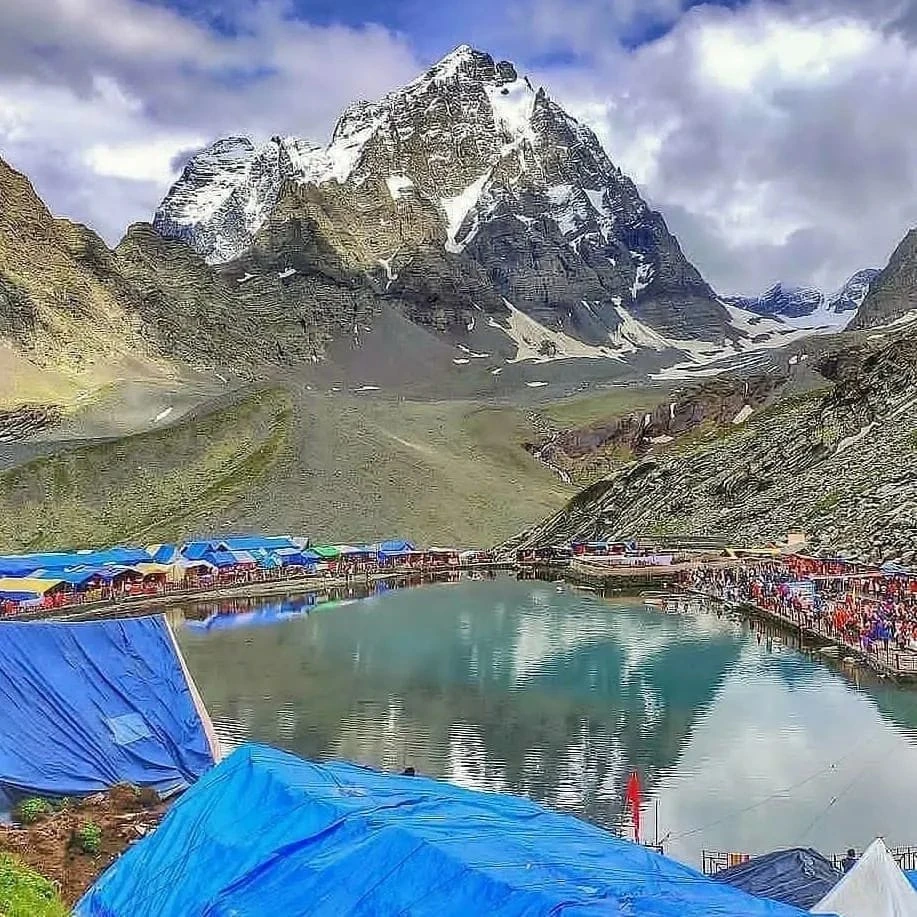
The Manimahesh Yatra is among the most revered and important pilgrimages for the people of Himachal Pradesh and holds great spiritual significance for the adherents of the Hindu faith. Situated deep in the Pir Panjal range of the Himalayas and at a distance of 14 km in the Chamba district of Himachal Pradesh, the Manimahesh Lake is positioned at an elevation of 4080 meters above sea level and very close to the magnificent peak of Manimahesh Kailash.
The Religious Significance of Manimahesh Yatra
As per Hindu mythology, Manimahesh is the home of Lord Shiva. This lake was formed by the creation of Lord Shiva himself, and the radiant mountain at the rear side of the lake symbolizes the presence of the lord. Pilgrims think that the sight of the Mani or the jewel on the Kailash peak cleanses one’s sins. This is the reason the Manimahesh Yatra trekking is the most revered trekking tour in North India.
Devotees, hailing from all corners of the country, come to this place with unadulterated devotion, reciting their chants and carrying their immeasurable faith in their hearts. For devotees, undertaking this journey is a lifetime achievement that gives them peace and spiritual power.
The Mythological Stories Connected to Manimahesh
The mythological history of Manimahesh finds a close association with Lord Shiva and Goddess Parvati. According to a popular myth, Goddess Parvati used to take baths in Gauri Kund, which is an important lake situated close to the trail to Manimahesh. Due to this myth, it has been restricted to women pilgrims only, and none other than female devoteees are allowed to set foot into this sacred water body.
The third is that nobody has ever managed to Scale the Manimahesh Kailash Peak. It is believed that this peak keeps protecting itself through change of weather, thunder, and landslides. It is also a strong conviction that God Shiva safeguards the peak and hence it is impossible for a human to attain the top of the peak. This is one of the secrets that give the Manimahesh Yatra a touch of godliness.
Best Time For Manimahesh Yatra
The yatra takes place in August and September. This time of the year corresponds to the Hindu month of Bhadon. The yatra starts on the eighth day of the new moon period and lasts for about 15 days. This period is regarded as highly auspicious, and it draws thousands of devotees to join the yatra.
During this time, camps for medical assistance, eating facilities, and resting stations are set up by the local authority for ease. The mood is devotional and celebratory, with “Har Har Mahadev” chanted incessantly.
The Sacred Route and Key Stops
The trek to Manimahesh is dotted with holy sites. Dhancho is one of the principal halts, famous for its spectacular waterfall and meadows. It is a common resting spot for the pilgrims.
The another important spot is Gauri Kund, which is dedicated to Goddess Parvati. The holy dip in this spot is an imperative part of the pilgrimage undertaken by female devotees. The environmental conditions here are quite special, with cold water.
The Manimahesh parikrama trekking trail also increases the diversity of the yatra. This trekking trail includes the Kugti village and the pious temple of Kartikeya Swami and the group of temples at Chaurasi in Bharmour. These ancient temples show the rich cultural heritage of the region.
Approaches to Manimahesh
It requires a careful plan to reach Manimahesh, especially because of its inaccessibility. The closest railhead to Manimahesh is Pathankot in the state of Punjab, which has connectivity to the bigger cities. The closest airport to Manimahesh would be Gaggal Airport, in the state of Kangra, some 180 km away. Another feasible option would be Amritsar Airport.
From the airport, the devotees proceed to Bharmour by road, which remains their base town for the yatra. The facility of staying in Bharmour has plain yet comfortable places to stay. The trekking tour then commences from this point. Many people begin their tour from New Delhi to Pathankot by train.
Faith, Nature, and Inner Peace
However, what makes the Manimahesh Yatra unique is the combination of pilgrimage and natural beauty. Manimahesh Yatra is an adventure that tests the body but comforts the mind. Trekking through Forest woods, wading through rivers, and experiencing the varied natural scenery inculcates the values of humility.
Devotees always look back at their yatra experience in terms of it having changed their lives. “The mountains' quiet, the murmurs of prayer, and the view of the holy lake are all part of this irrevocable bonding experience that stays with you for all your life,” writes one.
Cultural and Social Significance
The yatra also holds importance for people living in that area. The villagers are involved in the yatra by providing food, shelter, and directions to the devotees. It’s an example of service, which represents faith. The area’s traditional songs, practices, and age-old rituals are maintained through Manimahesh Yatra, which is a valuable asset to Himachal Pradesh.
Conclusion
The Manimahesh Yatra is not just a journey, it's a journey of devotion, history, and discovery. That draws on the myths of old and is surrounded by some of the most spectacular scenery in the Himalayas, and it has been beckoning pilgrims for many years now. Whether one comes seeking blessings, peace of mind, or a connection with nature, this sacred yatra always provides a pure, powerful, and memorable experience.
For those ardent devotees of Lord Shiva and the power that resonates at holy sites, Manimahesh is a divine summons from the mountains themselves, beckoning all to embark on a journey of piety and truth.











Sign in to leave a comment.