
Introduction
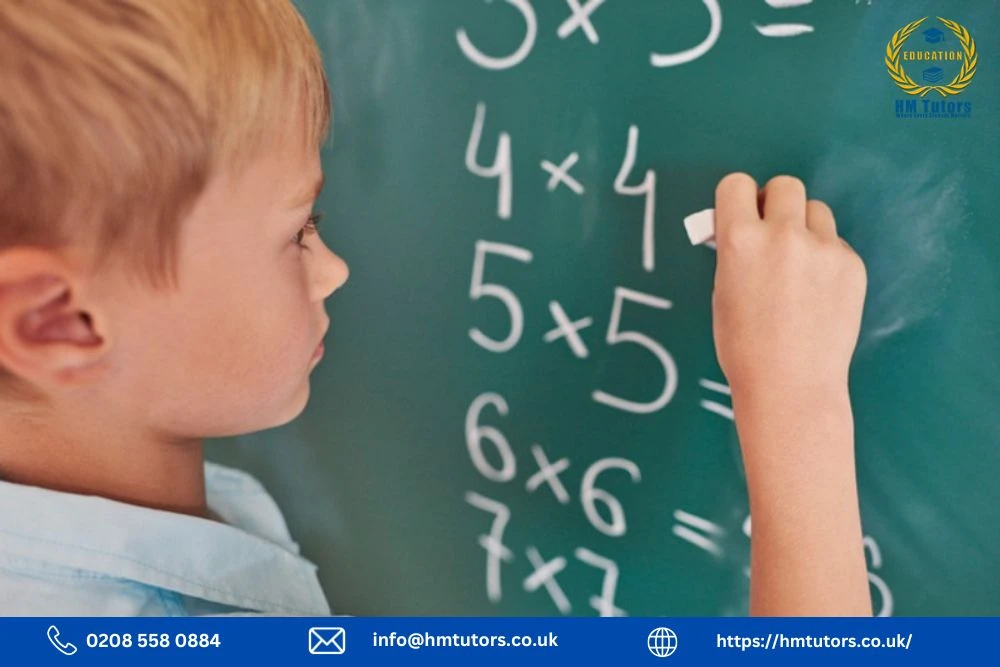
Year 3 Key Stage 2 Maths is a fundamental stage in a pupil’s mathematical learning journey. As children progress from the foundation stage to lower Key Stage 2, they develop essential skills in multiplication tables, place value, fractions, and written methods. This guide provides an in-depth look at the Year 3 Maths Curriculum, offering insights into effective teaching strategies, structured worksheets, and high-quality teaching resources that align with the National Curriculum.
Understanding the Year 3 Maths Curriculum
The Year 3 Maths Curriculum builds on early years and foundation stage knowledge, ensuring a seamless transition into lower Key Stage 2. Core areas of focus include:
- Number and Place Value: Recognising numbers up to 1,000, identifying numerical patterns, and solving number problems.
- Addition and Subtraction: Developing fluency in formal written methods to subtract numbers and add multi-digit numbers accurately.
- Multiplication and Division: Strengthening understanding of multiplication tables up to 12x12 and applying division concepts through unit fractions and simple fractions.
- Fractions: Comparing equivalent fractions and learning how to subtract fractions effectively.
- Measurement and Geometry: Exploring 2D shapes, and 3D shapes, and interpreting data using bar charts.
- Statistics: Collecting, representing, and analysing data using bar charts and pictograms.
Key Information for Teaching Year 3 Maths
Teachers play a crucial role in helping pupils build confidence in mathematical vocabulary and core concepts through structured maths lessons. Effective approaches include:
- White Rose Maths: A widely used framework that follows the National Curriculum, offering structured, weekly lesson plans.
- Interactive Maths Worksheets: Engaging activities that reinforce concepts such as times tables, long multiplication, and division.
- Hands-On Learning: Incorporating 3D shapes and real-life mathematical scenarios to enhance spatial awareness and problem-solving skills.
- Data Interpretation: Teaching pupils to collect, organise, and analyse data using bar charts.
- Formal Written Methods: Introducing structured techniques for multiplication and division to improve problem-solving accuracy.
Essential Maths Topics for Year 3 KS2
1. Number and Place Value
A solid grasp of place value is fundamental for success in primary school maths. Pupils should:
- Identify the value of digits in three-digit numbers.
- Count in multiples of 4, 8, 50, and 100.
- Solve number problems using number lines and grids.
2. Multiplication and Division
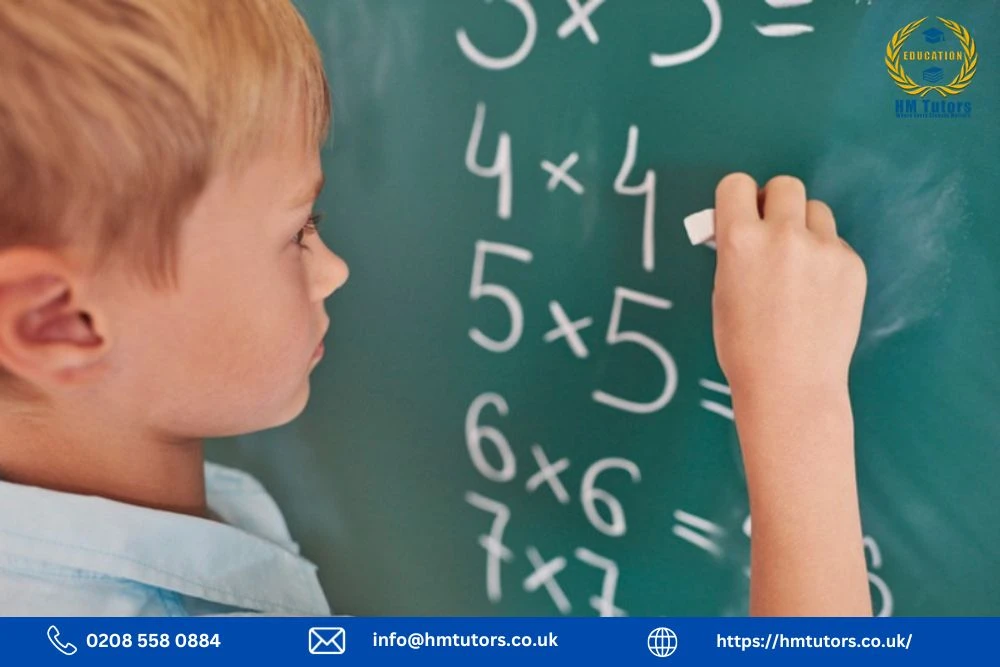
Mastering multiplication tables is a key part of the Year 3 Maths Curriculum. Pupils should:
- Learn and recall national curriculum times tables up to 12x12.
- Use division strategies to split numbers into equal parts.
- Apply multiplication and division skills to practical, real-world problems.
3. Fractions and Equivalent Fractions
Fractions are introduced as part of the lower KS2 syllabus. Pupils should develop an understanding of:
- Recognising and using unit fractions (e.g., 1/2, 1/3, 1/4).
- Comparing and ordering simple fractions.
- Identifying equivalent fractions through visual representations and practical activities.
- Learning to subtract fractions using engaging, real-life examples.
4. Geometry: 2D and 3D Shapes
Pupils develop spatial awareness by recognising, describing, and comparing different shapes. Key learning points include:
- Identifying and classifying 2D shapes such as squares, rectangles, and triangles.
- Understanding the properties of 3D shapes including cubes, spheres, and pyramids.
- Exploring symmetry and spatial relationships through interactive activities.
5. Statistics: Using Bar Charts and Graphs
Developing analytical skills is essential for problem-solving. Pupils learn how to:
- Create and interpret bar charts.
- Use pictograms to represent numerical data effectively.
- Solve problems using real-world statistical examples.
Effective Teaching Strategies for Year 3 Maths
To ensure pupils grasp mathematical concepts with confidence, teachers and parents can implement various strategies:
- Practical Applications: Engage children with hands-on activities such as using counters to illustrate fractions or measuring real objects.
- Structured Teaching Resources: Printable 3 Maths Worksheets support learning in key areas like place value, written methods, and multiplication.
- Consistent Practice: Encourage regular practice of times tables, number problems, and written methods.
- Engaging Lessons: Incorporate storytelling and real-world applications to make maths lessons more enjoyable and relatable.
- Technology Integration: Leverage interactive apps and online platforms to provide additional practice and assessment tools.
Transitioning from Lower KS2 to Upper Key Stage 2
As pupils progress through KS2 Maths, strong foundational skills are essential for success in secondary school. The transition includes:
- Mastering long multiplication and division with increased complexity.
- Understanding more advanced fractions, decimals, and percentages.
- Applying mathematical concepts in real-world problem-solving scenarios.
- Developing logical reasoning and critical thinking abilities.
FAQs
- What are the core areas of focus in the Year 3 Maths Curriculum?
- The core areas include number and place value, addition and subtraction, multiplication and division, fractions, measurement, geometry, and statistics.
- Why is place value important in Year 3 Maths?
- Place value helps pupils understand the value of digits in three-digit numbers, which is fundamental for solving number problems.
- How can multiplication tables be mastered in Year 3?
- Pupils can master multiplication tables by practising up to 12x12 and applying these tables to real-world problems.
- What is the importance of learning fractions in Year 3?
- Learning fractions enables pupils to understand unit fractions, compare and order fractions, and subtract fractions, laying the groundwork for more complex concepts in later years.
- How can technology be integrated into Year 3 Maths teaching?
- Technology can be integrated through interactive apps and online platforms, offering additional practice and assessment tools to reinforce learning.
Conclusion
Year 3 Key Stage 2 Maths is a pivotal stage in a pupil’s academic journey. A structured approach, engaging teaching resources, and regular practice ensure that pupils develop confidence and competence in essential mathematical concepts. By focusing on mathematical vocabulary, place value, multiplication tables, fractions, and data analysis, teachers and parents can provide a strong foundation that prepares pupils for success in upper Key Stage 2 and beyond.
HM Tutors provides expert, engaging, and tailored Year 3 Maths tuition to enhance student learning and confidence.










Sign in to leave a comment.