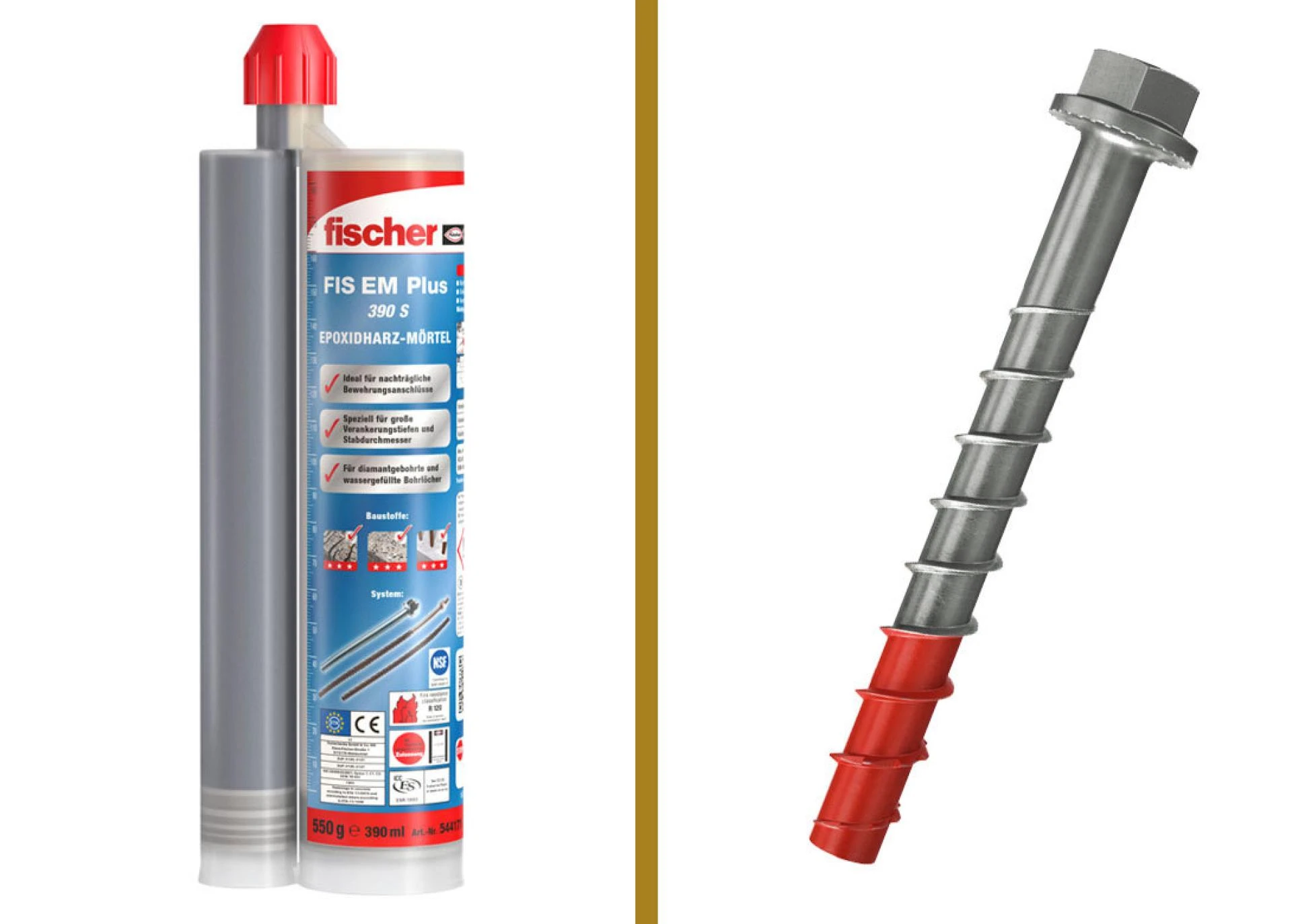
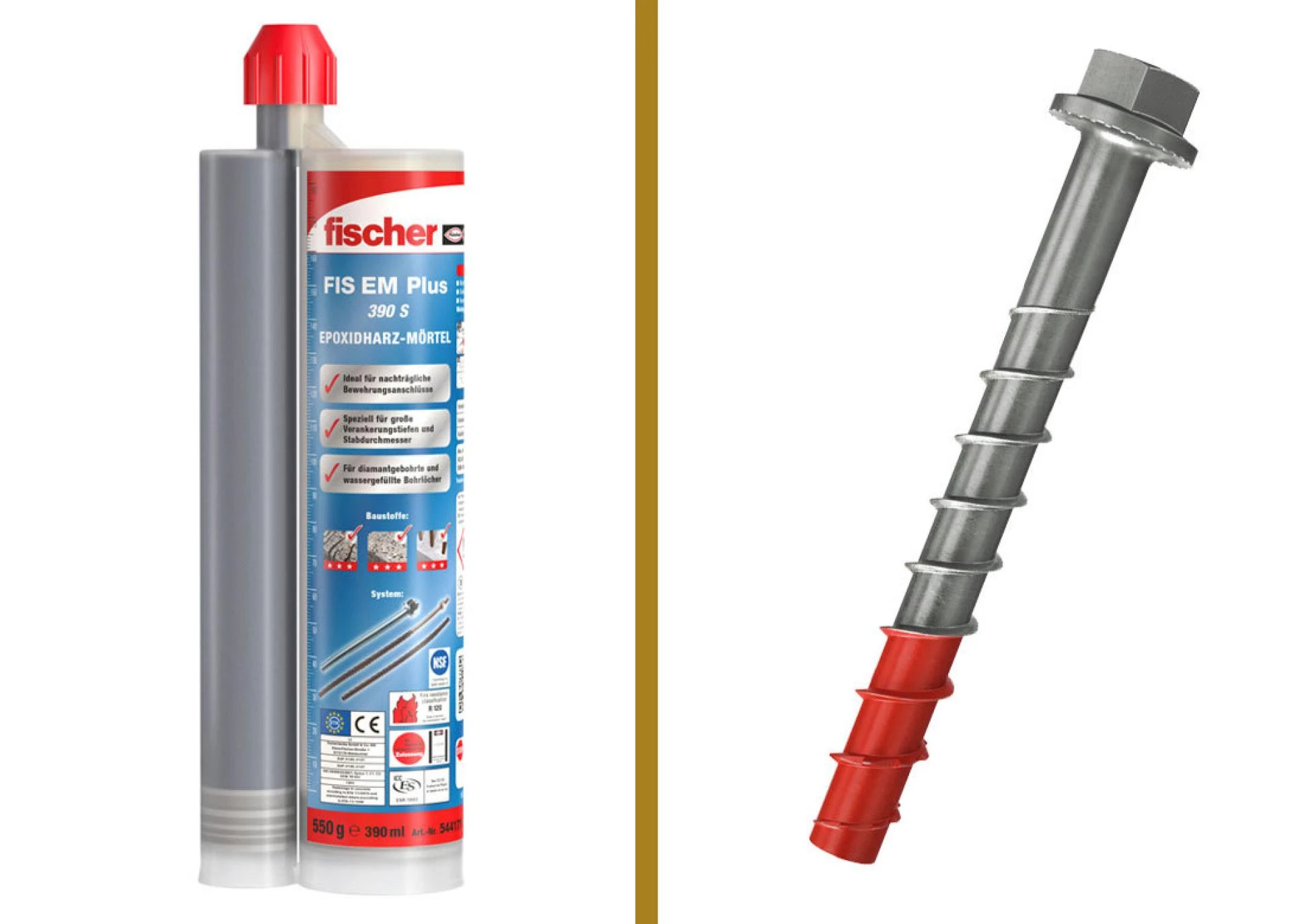
The decision between chemical and mechanical anchors can have a significant impact on the stability of your construction or the securing of large loads. Choosing the right anchor type for your project is essential, irrespective of whether you're installing machinery in a high-rise or setting up a shelving unit in a warehouse.
In construction and industrial sectors, anchors play a key role in keeping everything in place — but they come in two primary forms: mechanical anchors and chemical anchors. While they both do the job, their methods and applications differ. Understanding these differences can guide you to the best solution for your needs in terms of performance and cost-effectiveness.
Strong structural support is provided by both mechanical and chemical anchors, but there are differences in how and when to apply them. For mechanical anchors to stay in concrete or masonry, they must physically expand or interlock. Chemical anchors, on the other hand, create a long-lasting hold by bonding the anchor to the substrate using an adhesive based on resin.
How do you choose the one that best suits your needs? Let's explore what distinguishes each type and when to select one over the other.
Understanding the Basics of Mechanical and Chemical Anchors
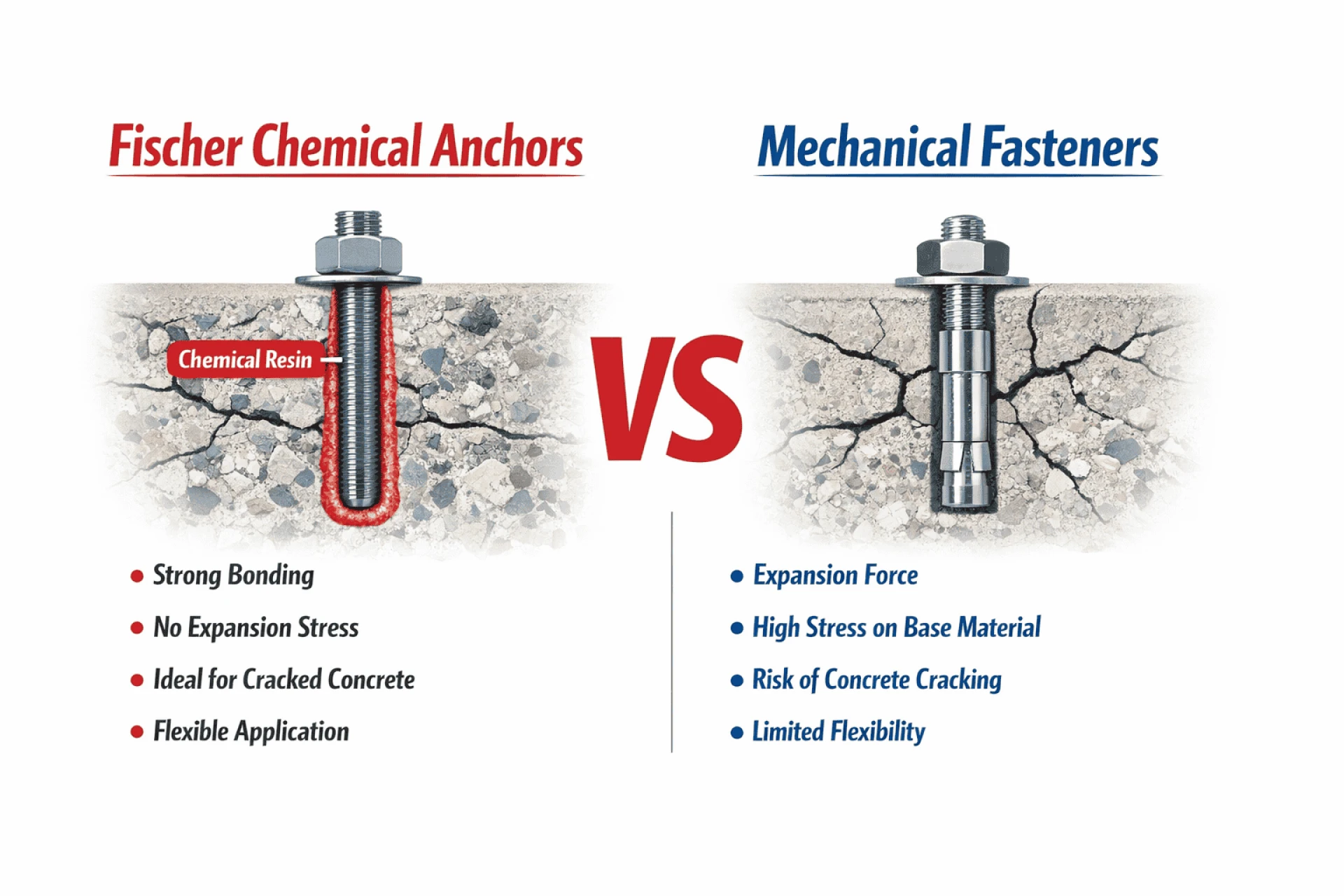
Mechanical anchors are often the go-to choice for simple, quick installations. They work by expanding within the material, creating a strong mechanical bond. From heavy-duty machinery to securing structural supports, mechanical anchors are favoured for their ease of use and fast installation. However, they do have limitations when it comes to challenging environments. In contrast, chemical anchors bond to surfaces with a chemical resin. Applications requiring the highest level of durability, such as high-stress or high-temperature settings, are perfect for these anchors. Mechanical anchors might not be sufficient, to function in porous or fractured materials.
Now that we’ve covered the basics of each anchor type, let’s explore when it’s best to use mechanical anchors and where chemical anchors might be the better fit.
When to Use Mechanical Anchors?
Mechanical anchors are your best option if your project calls for speed and simplicity. These anchors are quick to install and don’t require curing time. Because of their design, they are simple to put into drilled holes, where they expand to fit snugly. Because of this, they are perfect for applications that require quick strength, including attaching machines on solid, well-formed surfaces or fastening shelf systems. When the conditions are simple and don't call for a specialized solution, mechanical anchors are an excellent option.
But in some circumstances, mechanical anchors may not be as effective. Chemical anchors, for example, can be a better option if you need to secure goods in conditions with extreme temperature variations or porous materials. But, mechanical anchors work best under typical conditions and when installation speed is crucial.
Now, let us take a look at how chemical anchors step in for more complex situations that require a deeper, stronger bond.
When to Opt for Chemical Anchors?
Chemical anchors are superior in difficult situations, whereas mechanical anchors are superior in simplicity. These anchors offer exceptional durability and strength, particularly in materials that are hard, porous, or broken. Chemical anchors' main benefit is their adaptability.
Chemical anchors provide a dependable grip by bonding to the material at a deeper level, whether you're working with brick, stone, or concrete.
Where mechanical anchors might not provide the same degree of endurance, these anchors are especially helpful in regions with high moisture content, intense heat, or seismic activity.
The capacity of chemical anchors to secure loads for long periods of time is one of its key selling qualities. These anchors' resin can cure even in moist conditions, producing a strong, long-lasting bind. But keep in mind that installation is slower than with mechanical anchors because these anchors need time to cure. Still, chemical anchors are an excellent choice for projects that demand longevity and resistance to extreme conditions.
Let’s explore the key differences between mechanical and chemical anchors, so you can get a clear picture of how each one fits into your project.
Comparing Mechanical and Chemical Anchors
The differences between mechanical and chemical anchors come down to key factors:- installation speed, bond strength, and environmental suitability. Mechanical anchors are quick to install and are perfect for straightforward applications on solid materials. However, they can be less effective in materials that are cracked or overly porous. Chemical anchors, on the other hand, take longer to install since they must cure. Nevertheless, they offer a far stronger bond, particularly in difficult conditions like wet or broken concrete.
The price is another important distinction. For projects with limited funds, mechanical anchors are appealing since they are usually less expensive up front. However, due to their enhanced strength and durability, chemical anchors offer better long-term value, especially in high-stress or high-load applications. When considering which anchor to use, weigh the time and cost against the project requirements, and you will be able to determine the best fit for you.
Now that you have a clearer understanding of the key differences, let’s explore how to choose the right anchor for your specific project.
Which Anchor Is Best for Your Project?
Choosing between mechanical and chemical anchors largely depends on the project’s unique requirements. If your project requires fast installation, with a standard surface and light to moderate loads, mechanical anchors are a great option. However, chemical anchors may be the superior choice if you’re dealing with harsh environmental conditions, heavy-duty loads, or porous materials.
Before deciding, assess the following factors: What type of material are you securing? Will the anchor be exposed to extreme weather or moisture? How much load will the anchor need to bear? Answering these questions will help guide your decision. At the end of the day, the goal is to ensure the anchor you choose provides the strength and durability needed for your project to succeed.
Let us wrap it up by looking at real-world applications where each anchor type excels.
Which Anchor Should You Choose?
Both mechanical and chemical anchors have their place in construction and industrial applications. The decision comes down to your project’s specific needs, from installation time and load capacity to environmental factors. While mechanical anchors are perfect for quick, easy installation in typical environments, chemical anchors provide the deep, long-lasting strength required in more challenging conditions.
The key takeaway is simple:- choose the anchor that aligns with your project’s demands. Whether you need the speed and simplicity of mechanical anchors or the power and durability of chemical anchors, the right choice will set the foundation for a secure and successful project.
What type of anchor fits your next project? Let us know your choice in the comments, or reach out if you need help choosing the best solution.










Sign in to leave a comment.