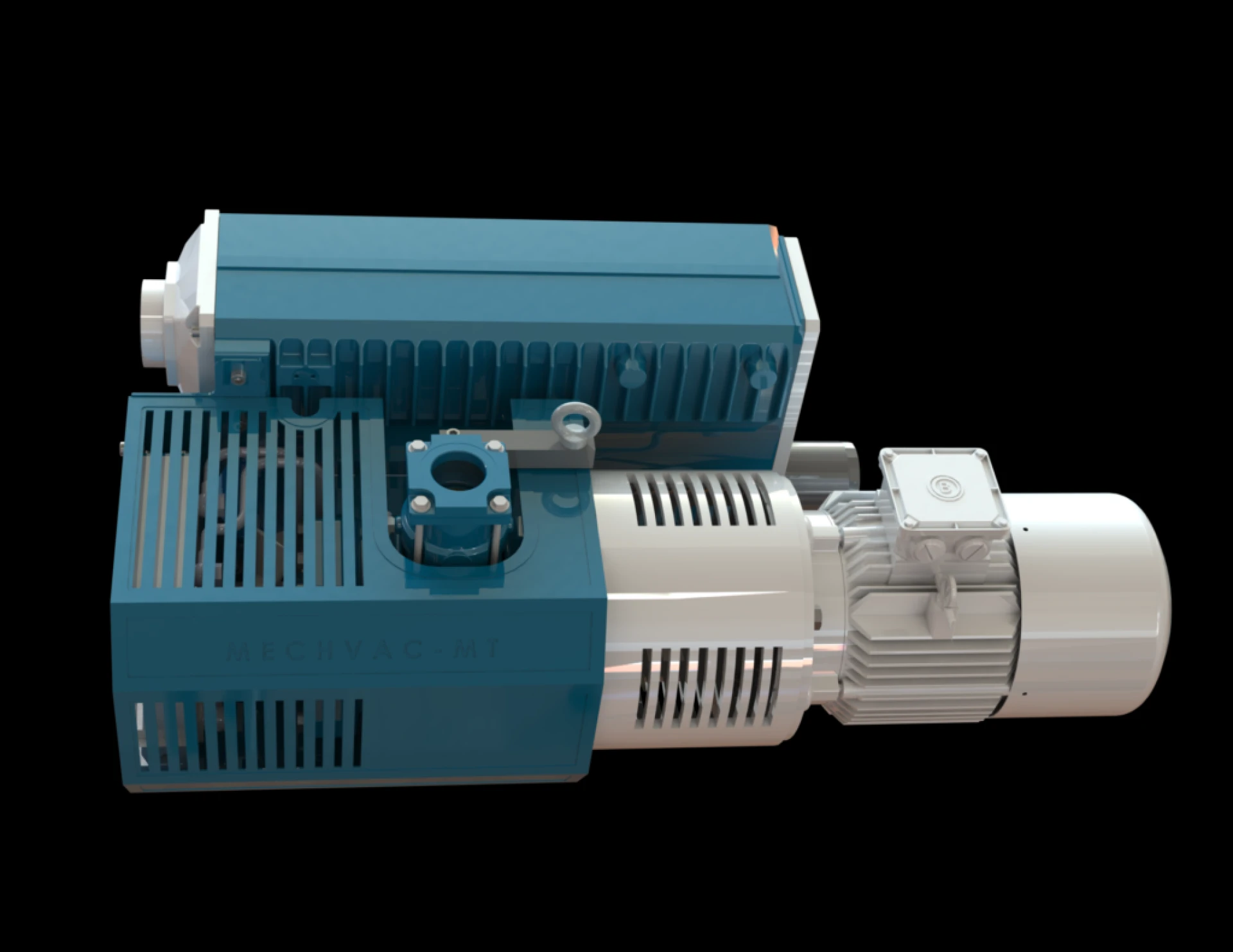

In industrial and laboratory environments where cleanliness and efficiency are critical, dry rotary vane vacuum pumps have emerged as a reliable and oil-free alternative to traditional vacuum technologies. But what makes these pumps work without the need for lubrication? In this blog, we’ll dive into the internal mechanism of dry rotary vane vacuum pumps and understand how they maintain strong, consistent vacuum performance—without a drop of oil.
What is a Dry Rotary Vane Vacuum Pump?
A dry rotary vane vacuum pump is a positive displacement pump designed to create vacuum by mechanically compressing and moving air or gas using rotating vanes inside a cavity. Unlike oil-lubricated pumps, these pumps operate entirely without oil in the compression chamber, making them ideal for applications requiring clean, contamination-free operation—such as in pharmaceuticals, food packaging, electronics, and medical systems.
The Core Mechanism: How It Works
At the heart of every dry rotary vane vacuum pump lies a rotor mounted eccentrically within a cylindrical housing. Here's a step-by-step look at the process:
- Eccentric Rotation: The rotor is not centered inside the pump housing, creating variable space between the rotor and the chamber wall as it turns.
- Sliding Vanes: Vanes—usually made from a high-performance composite material—slide in and out of the rotor’s slots by centrifugal force. These vanes maintain contact with the chamber wall as the rotor spins.
- Air Intake and Trapping: As the rotor turns, the space between vanes on the intake side increases, drawing air or gas into the chamber.
- Compression: As the rotor continues to turn, the trapped air is compressed by the decreasing space between vanes, thanks to the eccentric shape of the housing.
- Exhaust: Finally, the compressed air is expelled through an exhaust valve. The entire process repeats rapidly, producing a steady vacuum.
No Oil? No Problem
What distinguishes dry rotary vane pumps from their oil-lubricated counterparts is their ability to operate efficiently without internal lubrication. Here's how they manage this:
- Self-Lubricating Vanes
The vanes are often made from advanced carbon composites that offer excellent wear resistance and natural lubricity.
- Precision Engineering
The pump components are manufactured to tight tolerances, reducing friction and the need for additional lubrication.
- Optimized Cooling and Airflow
Cooling fans and smart airflow designs prevent excessive heat buildup, maintaining optimal performance even during continuous operation.
Advantages of an Oil-Free System
- Cleaner Operation
No oil means zero risk of contamination, making these pumps suitable for sensitive applications.
- Lower Maintenance
With no oil to change or leaks to monitor, these pumps typically require less maintenance and have lower operating costs.
- Eco-Friendly
Oil-free systems reduce environmental impact and simplify waste management.
Conclusion
Dry rotary vane vacuum pumps represent a leap forward in clean, efficient vacuum technology. By relying on precision design and innovative materials rather than traditional lubrication, these pumps deliver consistent performance with fewer complications. Whether you're in a lab, a manufacturing line, or a medical facility, understanding how these mechanisms work can help you choose the right pump for your needs—and appreciate the engineering that powers them.
Read More: https://www.edocr.com/v/nxx3oaxn/mechvatech/what-is-a-dry-rotary-vane-vacuum-pump-and-how-does










Sign in to leave a comment.