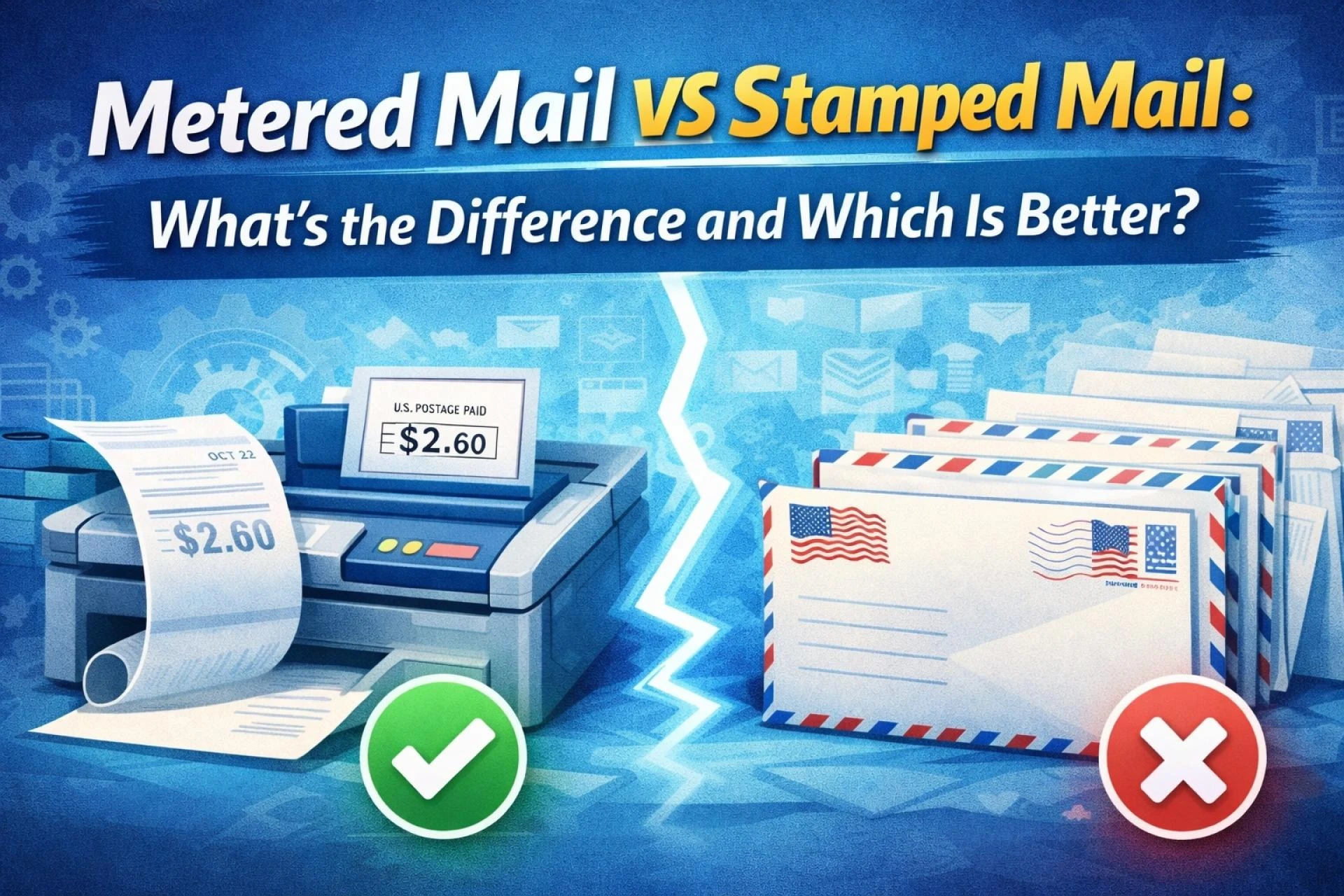

Sending mail is still a big part of life — whether you’re a small business owner mailing invoices, a teacher sending report cards, or someone dropping a birthday card to a friend. But when you stand at the post office counter or prepare a stack of envelopes at your desk, you face a simple choice: metered mail vs stamped mail.
Both get your letter or package delivered, but they work very differently. One feels personal and traditional. The other feels modern, fast, and business-smart. In this easy-to-read guide, we’ll break down exactly what each option means, how they compare, the real costs, and most importantly which one is better for your needs.
By the end, you’ll know exactly when to stick on a pretty stamp and when to switch to a meter. Let’s dive in!
What Is Stamped Mail?
Stamped mail is the classic way most of us know. You buy physical postage stamps — those colorful little stickers with pictures of flowers, flags, or famous people — and stick them on the top-right corner of your envelope.
How it works (super simple):
- Go to the post office, grocery store, or buy online.
- Pick the right stamp value based on weight and destination (a regular letter usually needs one “Forever” stamp in the US).
- Lick or peel and stick it on.
- Drop it in a mailbox or hand it over the counter.
That’s it! The postal worker later cancels the stamp with a postmark so it can’t be reused.
Stamped mail is perfect for everyday personal use. Sending thank-you notes, wedding invitations, holiday cards, or a few invoices here and there? Stamps make it feel warm and thoughtful. Recipients often notice the nice stamp and feel it’s more “human.”
In countries like India, you buy adhesive stamps from India Post counters or authorized sellers and affix them the same way.
Quick fact: The first adhesive postage stamp (the Penny Black) appeared in 1840 in Britain. We’ve been using them for nearly 200 years because they’re simple and reliable.
What Is Metered Mail?
Metered mail is the smarter, faster cousin of stamps — especially for anyone who sends more than a handful of letters a week.
Instead of sticking paper stamps, you use a postage meter (also called a franking machine in many countries). This small machine sits on your desk or countertop. It prints the exact postage directly onto the envelope or onto a sticky label.
How it works:
- You lease or rent the meter from an approved provider (you can’t buy one outright in most countries for security reasons).
- You add money to your meter account online — just like topping up a prepaid phone.
- Place your envelope on the scale built into the meter (or connect a separate scale).
- The machine instantly calculates the correct postage, prints it in black ink (along with the date and a special code called an “indicia”), and often prints your return address too.
- Done! Drop the mail at the post office or schedule a pickup.
Modern meters are tiny and smart. Many connect to the internet, update rates automatically when postal prices change, and even let you add your company logo for free advertising.
In the US, this is called metered mail. In India, it’s commonly known as franking. Big companies, banks, schools, and government offices use franking machines every day.
Key Differences Between Stamped and Metered Mail
Here’s a clear side-by-side comparison:
| Feature | Stamped Mail | Metered Mail |
|---|---|---|
| How postage is added | Physical sticker you stick on | Machine prints directly on envelope/label |
| Best for | Low volume (under 50–100 pieces/month) | Medium to high volume |
| Cost per letter (US 1 oz First-Class example, 2026) | $0.78 | $0.74 (saves 4¢ per letter) |
| Accuracy | You guess or buy different values | Machine weighs and calculates exactly |
| Time to prepare | Slow — stick one by one | Very fast — up to 100+ letters per minute |
| Appearance | Colorful, personal, decorative | Clean, professional, business-like |
| Convenience | Need to buy stamps, may run out | Refill online anytime, no running out |
| Discounts | None | Commercial discounts available |
| Maintenance | None | Lease fee + occasional ink |
| Personal touch | High | Lower (but can add logo) |
Metered mail also looks more “official,” which can help business mail stand out less like junk mail.
Pros and Cons of Stamped Mail
Pros:
- Zero extra equipment or monthly fees
- Feels warm and personal — great for invitations, cards, thank-yous
- Easy for beginners or very occasional mailers
- Beautiful designs available (holiday stamps, commemorative stamps)
- No learning curve
Cons:
- Time-consuming when you have many letters
- Easy to overpay (buy $1 stamp for a 78¢ letter)
- You must visit the post office when you run out
- Stamps can get damaged, lost, or stolen
- No automatic rate updates — you buy new ones when prices rise
- Harder to track exact spending
If you send fewer than 20–30 letters a month and love the personal feel, stamped mail is still wonderful.
Pros and Cons of Metered Mail
Pros:
- Saves money — often 3–6¢ per letter plus bigger commercial discounts
- Super fast and accurate (no more “is this heavy enough for two stamps?”)
- Prints postage + return address + date in one step
- Refill postage 24/7 from your phone or computer
- Tracks every cent you spend (great for accounting)
- Can handle heavy or odd-sized mail perfectly
- Professional look that says “serious business”
Cons:
- Monthly lease cost (starts around $20–40 in the US, similar in other countries)
- Small learning curve at the beginning
- Must mail the letters on the same day you print the postage (or re-meter them)
- Not ideal if you send only 5 letters a month
For most small businesses, the time and money saved quickly cover the lease fee.
Real Cost Comparison: How Much Can You Actually Save?
Let’s do the math with current 2026 US rates:
- You send 200 letters per month.
- Stamped: 200 × $0.78 = $156
- Metered: 200 × $0.74 = $148
You save $8 every month — that’s $96 a year just on postage, before counting time saved!
Add in the time you no longer waste licking stamps or driving to the post office, and the savings grow even bigger. Many businesses report total savings of 10–20% when they switch to metered mail.
In India, franking often gives similar percentage discounts for bulk mailers.
Which Is Better — Stamped or Metered?
Choose stamped mail if:
- You send mail only occasionally (personal cards, small non-profit, hobby)
- You love the creative stamp designs
- Your budget is tight and you don’t want any monthly fees
- You want that warm, handmade feeling
Choose metered mail if:
- You send 50+ pieces per month (invoices, marketing, statements)
- You run a small business, school, church, or club
- You hate wasting time on repetitive tasks
- You want to look professional and save money automatically
Real-life example: Sarah runs a small dental clinic and sends 150 appointment reminders every month. Using stamps took her staff 45 minutes and cost extra because they often overpaid. After switching to a meter, it now takes 8 minutes, saves $6–8 every month, and patients say the mail looks more “official.”
Another example: Rahul in Kolkata sends birthday cards to 15 relatives every year. For him, buying a sheet of beautiful stamps once a year is perfect — no need for a meter.
Helpful Tips for Both Options
For stamped mail:
- Buy “Forever” stamps so you don’t worry about rate changes
- Keep a small stock of 1-oz and 2-oz stamps
- Use a damp sponge instead of licking (healthier!)
- Check weight with a kitchen scale to avoid surprises
For metered mail:
- Start with a low-cost basic model if you’re a small business
- Choose a provider with good customer support (Pitney Bowes, Quadient, FP Mailing, etc.)
- Print a few test envelopes first
- Set up automatic low-balance alerts
- Combine with address printing for even more time savings
Pro tip for everyone: Weigh your mail! A single extra gram can push you into the next price bracket.
The Future of Mailing
Post offices worldwide are encouraging digital and metered options because they’re easier to sort and process automatically. In the US, metered mail already gets slight processing advantages. Online postage services (like Stamps.com or India Post’s digital options) are also growing — they work just like a meter but use your computer instead of a physical machine.
Stamps will never disappear completely — they’re too loved for personal mail. But for regular business use, metered/franking is clearly winning.
Conclusion
Stamped mail and metered mail are both excellent — they just serve different needs.
If your mailing is personal, occasional, or under 30–50 pieces a month, go with stamped mail. It’s simple, charming, and needs no extra tools.
If you send mail regularly for business or organization, switch to metered mail. You’ll save time, save money, reduce errors, and look more professional.
The “better” choice isn’t about which is fancy — it’s about which fits your life or business best.
Ready to decide? Count how many letters or packages you send in a typical month. If the number surprises you, it might be time to try a postage meter. Many providers offer free trials or demos — it costs nothing to check!
Still unsure? Start small: use stamps for personal mail and a meter for business mail. You can happily use both!
FAQs
Q: Can individuals use metered mail? Usually no for physical meters (security rules), but online postage services let anyone print metered-style labels from home.
Q: Do metered stamps expire? Yes — mail them the same day or re-print. Easy fix!
Q: Is metered mail faster to deliver? Not usually, but it processes quicker inside the postal system.
Q: Can I add tracking to both? Yes! Just pay extra for tracking, certified, or registered service on either type.
Now you’re fully informed. Happy mailing — whether you choose a beautiful stamp or a smart meter!
Sign in to leave a comment.