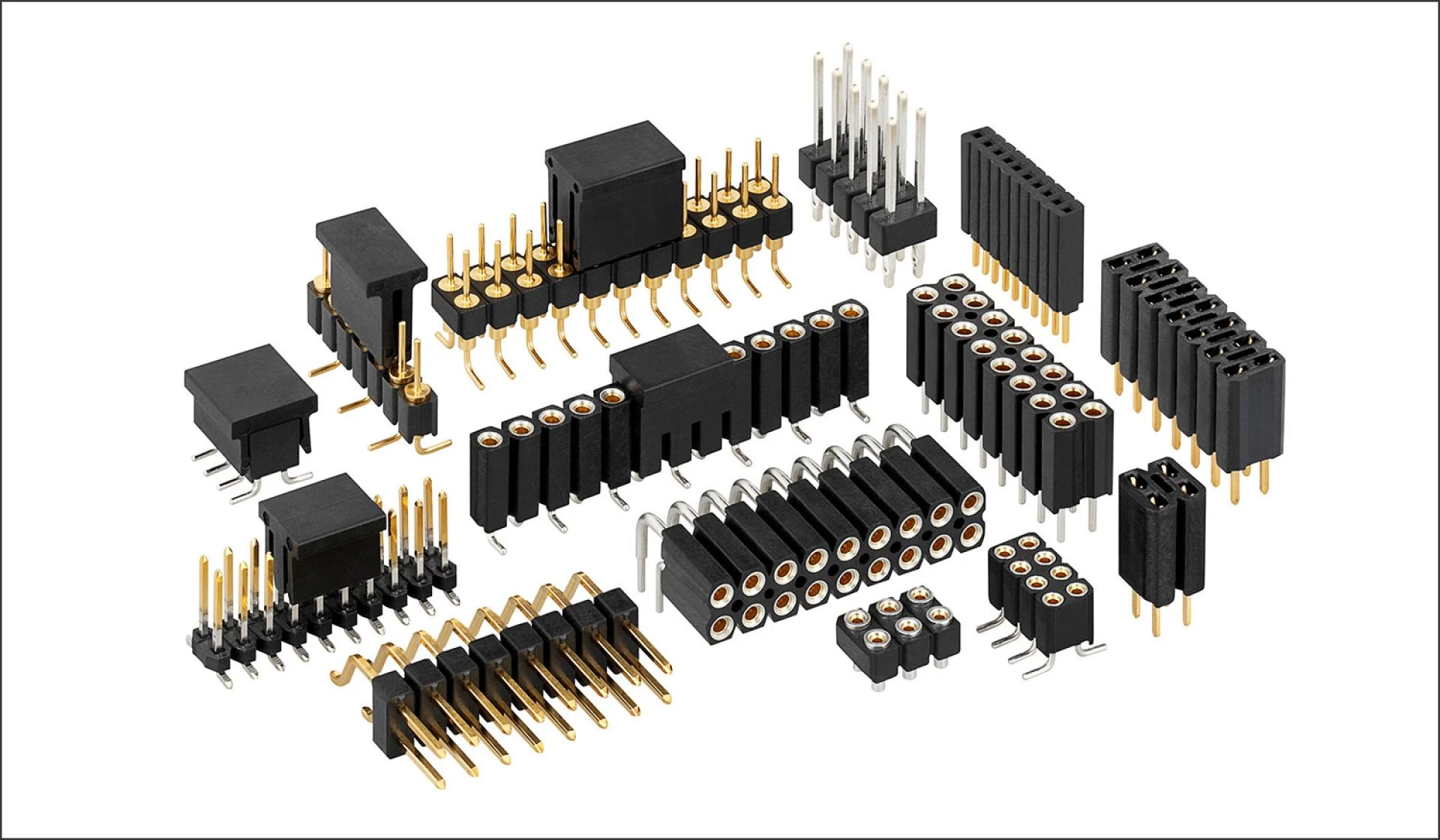

The rapid expansion of Industrial Internet of Things technology is reshaping how factories, utilities, and infrastructure systems operate. As industrial IoT equipment becomes more intelligent, connected, and data-driven, there is increasing pressure to make devices smaller without compromising performance or reliability. At the heart of this evolution lies a critical but often overlooked component: PCB connectors. Advanced PCB connector designs are playing a key role in enabling miniaturisation while supporting accurate sensor connection and robust data transmission in demanding industrial environments.
Industrial IoT devices and edge computing equipment must process large volumes of data in real time while operating in compact enclosures. Space constraints are particularly challenging in applications such as predictive maintenance sensors, smart meters, robotics, and automation controllers. PCB connectors allow multiple electrical connections to be integrated directly onto printed circuit boards, reducing the need for bulky wiring assemblies and enabling high-density electronic layouts.
Modern PCB connectors are engineered to support fine pitch designs, higher pin counts, and multi-signal integration within minimal footprints. This allows manufacturers to place more functionality into smaller devices, which is essential as industrial systems move closer to the edge of operations. Compact designs also reduce material usage and energy consumption, contributing to more efficient and sustainable hardware development.
A reliable sensor connection is fundamental to the accuracy of industrial IoT systems. Sensors collect data related to temperature, pressure, vibration, humidity, and motion, all of which must be transmitted without signal loss or interference. Advanced PCB connectors are designed to maintain consistent electrical contact even under vibration, thermal stress, and mechanical shock. This ensures that data captured at the sensor level reaches processing units accurately, supporting dependable analytics and automation decisions.
Industrial environments pose challenges that consumer electronics rarely encounter. Exposure to dust, moisture, chemicals, and extreme temperatures demands components that meet rigorous performance standards. Industrial connectors used in IoT equipment are therefore built with enhanced insulation materials, secure locking mechanisms, and corrosion-resistant finishes. These features help maintain stable connections over long operational lifecycles, reducing downtime and maintenance costs.
Miniaturisation also requires careful management of signal integrity. As components are placed closer together, the risk of electromagnetic interference increases. PCB connectors designed for industrial IoT applications incorporate shielding and optimized contact geometries to minimize noise and crosstalk. This is particularly important for edge devices that process time-sensitive data locally before transmitting insights to centralized systems.
Manufacturers like Allied Connectors are contributing to this progress by developing PCB connector solutions tailored specifically for industrial applications. By focusing on precision engineering, durability, and compact design, such companies support equipment manufacturers looking to balance size reduction with performance reliability. Their connector portfolios address a wide range of industrial use cases, from factory automation and energy systems to transportation and smart infrastructure.
Another advantage of advanced PCB connectors is their role in modular system design. Modular architectures allow industrial IoT devices to be easily upgraded or customized without redesigning entire systems. PCB connectors enable quick integration of additional sensors, communication modules, or processing units, supporting scalability as operational needs evolve.
PCB connectors are a foundational element in the miniaturisation of industrial IoT equipment. By enabling high-density electronics, ensuring accurate sensor connection, and maintaining data integrity in harsh conditions, these components make compact and intelligent industrial devices possible. As industrial IoT continues to expand, the role of reliable industrial connectors, supported by innovation from companies like Allied Connectors, will remain central to the development of efficient, resilient, and future-ready connected systems.



Sign in to leave a comment.