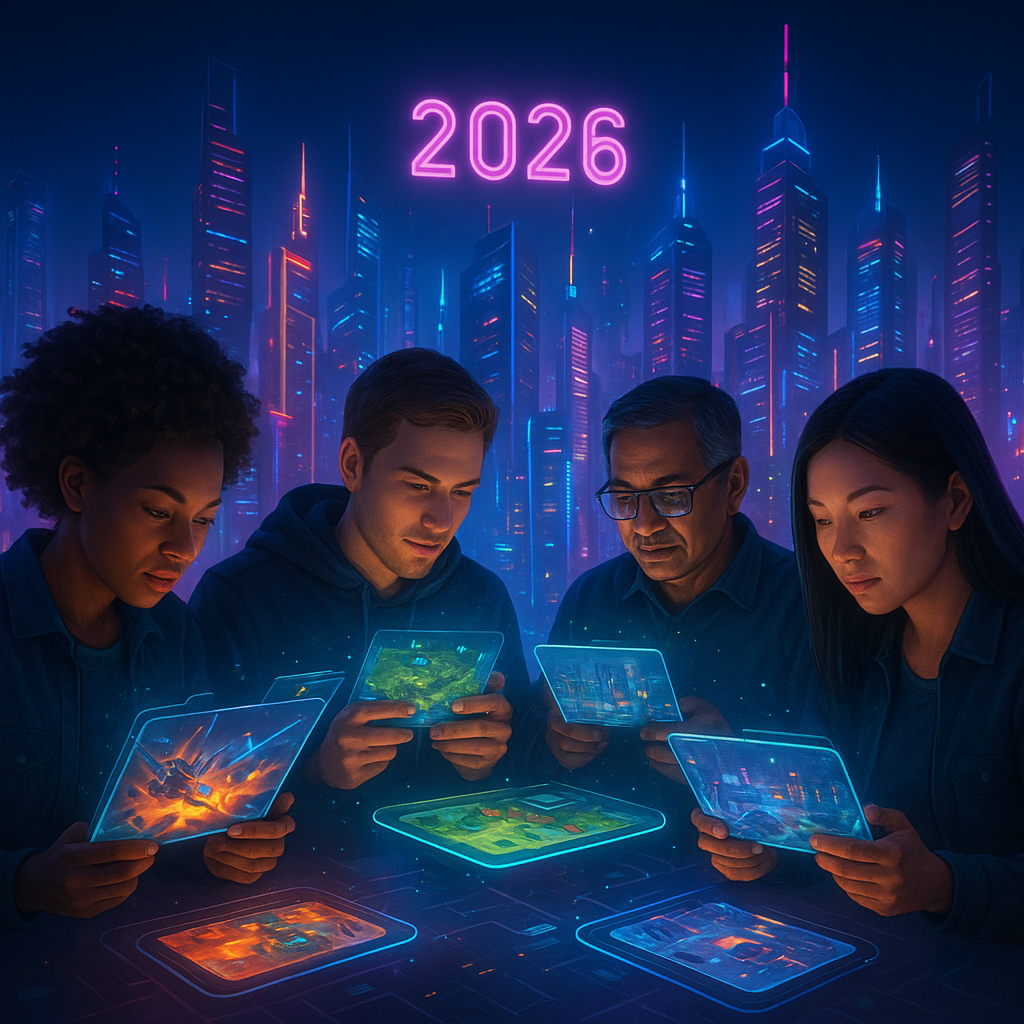

Unfolding the Mobile Gaming Phenomenon: A Snapshot from 2026
In early April 2026, the mobile gaming industry stands as one of the most dynamic and lucrative sectors within global entertainment. Recent reports indicate that mobile games have surpassed $120 billion in annual revenue, marking a 15% growth over 2025, according to industry analysts. This surge is driven by evolving gamer demographics, technology advancements, and shifting monetization strategies. Imagine a bustling urban café in Seoul where young professionals pause their busy lives to immerse themselves in the latest multiplayer mobile game, or a commuter in New York City conquering quests on a subway ride. These everyday scenes illustrate the pervasive influence of mobile gaming worldwide.
Mobile gaming has transformed how people engage with interactive entertainment, making games accessible anytime and anywhere. The convenience of smartphones combined with powerful hardware capabilities allows developers to deliver rich, immersive experiences once exclusive to consoles or PCs. This article explores the trends shaping mobile gaming in 2026, the top grossing games dominating the market, and what the future holds for players and developers alike.
From Casual Beginnings to Industry Titan: The Evolution of Mobile Gaming
The roots of mobile gaming trace back to simple games like Nokia's Snake in the late 1990s, where gameplay was limited by hardware constraints. The introduction of smartphones in the late 2000s, especially Apple's iPhone in 2007, revolutionized the space by providing versatile touchscreens and app ecosystems. Early hits like Angry Birds and Clash of Clans demonstrated the potential for mass-market appeal, blending accessibility with social connectivity.
The 2010s saw rapid innovation with freemium models becoming industry standard, allowing users to download games for free while offering in-app purchases. This model broadened the player base but also introduced challenges related to monetization ethics and user retention. The proliferation of 4G and later 5G networks enabled real-time multiplayer experiences and cloud gaming services, further expanding the horizons.
By the early 2020s, games began integrating augmented reality (AR) and AI-driven personalization, while esports on mobile gained momentum. Industry experts often cite this period as the foundation for the current state of mobile gaming, where technological advancements meet refined business strategies.
2026 Core Trends in Mobile Gaming: Technology, Monetization, and Player Engagement
Today's mobile gaming landscape is shaped by several intersecting trends that drive growth and innovation. According to a comprehensive analysis from Pocket Gamer.Biz, the maturation of AI, disruption in user acquisition, and a shift beyond traditional gaming formats are pivotal this year.
Firstly, AI-driven game design and player personalization have become ubiquitous. Developers leverage machine learning to tailor gameplay difficulty, recommend content, and optimize in-game economies, enhancing player satisfaction and retention. Procedural content generation powered by AI also allows for virtually infinite game worlds and quests, keeping content fresh without exorbitant manual creation costs.
Secondly, monetization strategies have diversified. While in-app purchases remain dominant, subscription models such as Apple Arcade and Google Play Pass have gained traction by bundling premium titles and offering ad-free experiences. Additionally, blockchain and NFT integrations, though controversial, are being cautiously explored by select developers to enable true digital ownership and secondary market economies within games.
Thirdly, social and competitive gaming features are central to engagement. Cross-platform multiplayer is now standard, allowing seamless play between mobile devices and PCs, a trend also reflected in broader gaming ecosystems. This connectivity fosters larger communities and drives esports tournaments on mobile platforms, with prize pools rivaling those of console-based events.
These trends influence player behavior and industry revenues in significant ways. For example, data from Sensor Tower shows that top-grossing mobile games in 2026 feature extensive social components and personalized content delivery, correlating with longer session times and increased spending.
- AI personalization enhances player retention by up to 30%
- Subscription services account for 18% of mobile gaming revenue
- Cross-platform titles see 40% more active daily users
- Blockchain-enabled games contribute 3% to total market revenue but are growing
Top Grossing Mobile Games in 2026: Who Leads the Market and Why?
The competitive landscape of mobile gaming in 2026 is dominated by a mix of legacy franchises and innovative newcomers. According to market intelligence from App Annie, the following titles rank among the top grossing worldwide:
- Honor of Kings: Eternal by Tencent remains the highest grossing, generating over $3.2 billion this year. Its success is attributed to continuous content expansion, deep social features, and regional esports circuits.
- Genshin Impact: Celestial Horizons from miHoYo innovates with expansive open-world exploration and cross-platform play, earning approximately $1.5 billion in 2026.
- League of Legends: Wild Rift 2.0 revitalized the mobile MOBA genre with enhanced graphics and AI-driven matchmaking, driving $1.3 billion in revenue.
- Roblox Mobile Universe capitalizes on user-generated content and social experiences, with revenues hitting $1 billion.
- Call of Duty: Mobile Battlefront maintains strong player engagement through seasonal events and battle royale modes, grossing $950 million.
These games exemplify a blend of rich content, community building, and monetization sophistication. Many incorporate live service models with regular updates and esports integration, ensuring ongoing player investment. The market share of these top titles represents nearly 20% of total mobile gaming revenue, underscoring the industry's concentration around a few blockbuster hits.
"The most successful mobile games today are those that evolve into platforms rather than mere games, creating ecosystems that engage players on multiple levels." – Industry analyst from Pocket Gamer.Biz
Current Developments in 2026: AI, Cloud Gaming, and Regulatory Shifts
In 2026, several transformative developments are shaping mobile gaming's trajectory. Artificial intelligence continues to mature, not only in game design but also in marketing and user acquisition. Predictive analytics now optimizes ad targeting and monetization funnels, reducing player churn significantly.
Cloud gaming services have gained wider adoption, enabled by 6G rollouts in select cities. Platforms such as NVIDIA GeForce Now and Microsoft Xbox Cloud Gaming now offer mobile-optimized experiences with minimal latency, allowing users to access high-fidelity games on modest devices. This trend expands the potential audience beyond traditional smartphone hardware limits.
On the regulatory front, governments worldwide are implementing stricter guidelines on loot boxes, data privacy, and in-app purchasing transparency. The European Union’s updated Digital Gaming Act, effective January 2026, mandates clearer disclosure of in-game purchase odds and tighter age verification processes. Developers are adapting by designing more ethical monetization models and fostering trust with players.
Furthermore, the rise of Web3 technologies continues to influence mobile gaming cautiously. While some companies experiment with blockchain features, consumer skepticism and regulatory scrutiny temper rapid expansion.
- 6G-enabled cloud gaming reduces latency by up to 40%
- New EU regulations require loot box odds disclosure for all mobile games
- AI-driven user acquisition cuts marketing costs by 25%
- Mobile esports tournaments now regularly attract over 10 million viewers globally
"Regulatory clarity in 2026 is encouraging developers to innovate responsibly, balancing monetization with player welfare." – Compliance officer at a leading mobile game publisher
Expert Perspectives and Industry Impact: Voices from the Field
Industry leaders emphasize the importance of embracing technological advances while addressing player expectations for fairness and engagement. Sarah Kim, Chief Product Officer at a top mobile game studio, highlights that "the future lies in combining AI, cloud technology, and community-driven content to create personalized and social experiences that resonate globally." She stresses the need for transparency in monetization to sustain long-term growth.
Meanwhile, esports organizers note the rapid rise of mobile competitive gaming. "Mobile titles now command prize pools and audiences comparable to traditional esports, democratizing access by removing hardware barriers," explains Daniel Ortega, director of a major mobile esports league. This shift expands opportunities for players worldwide and attracts significant sponsorship investment.
Finally, analysts predict that mobile gaming will influence broader entertainment sectors, including augmented reality social platforms and interactive storytelling, reflecting a convergence of media formats.
These insights complement the broader industry analysis found in related WriteUpCafe articles such as Mobile Friendly Online Gaming Platforms for Gaming on the Go and Why a Gaming Desktop Is a Smarter Investment Than a Gaming Console, which explore hardware and platform trends pivotal to gaming experiences.
The Road Ahead: What to Watch in Mobile Gaming Beyond 2026
Looking forward, several key factors will shape the mobile gaming landscape. Enhanced AI capabilities will drive even more immersive and adaptive gameplay, creating personalized narratives and dynamic challenges. The integration of augmented reality with mobile games is poised to deepen, facilitated by lightweight AR glasses expected to debut commercially by 2027.
Monetization models may shift further toward subscription bundles and community-supported content, reducing reliance on microtransactions. Developers will likely explore hybrid models blending free-to-play with premium content tiers to balance accessibility and revenue.
The expansion of mobile esports will continue, with increasing professionalization and mainstream media partnerships. This growth will also promote diversity and inclusion within competitive gaming communities.
Finally, the ecosystem will be influenced by regulatory frameworks evolving to protect players without stifling innovation. Striking this balance will be critical for sustainable industry health.
- AI-driven dynamic storytelling becomes standard in mobile games
- Commercial AR glasses enable new gameplay paradigms
- Subscription services surpass freemium revenue models
- Mobile esports prize pools exceed $100 million annually
In conclusion, mobile gaming in 2026 stands at an intersection of technological innovation, market maturity, and cultural integration. Its trajectory promises continued expansion and evolution, affecting how millions worldwide play, connect, and compete.














Sign in to leave a comment.