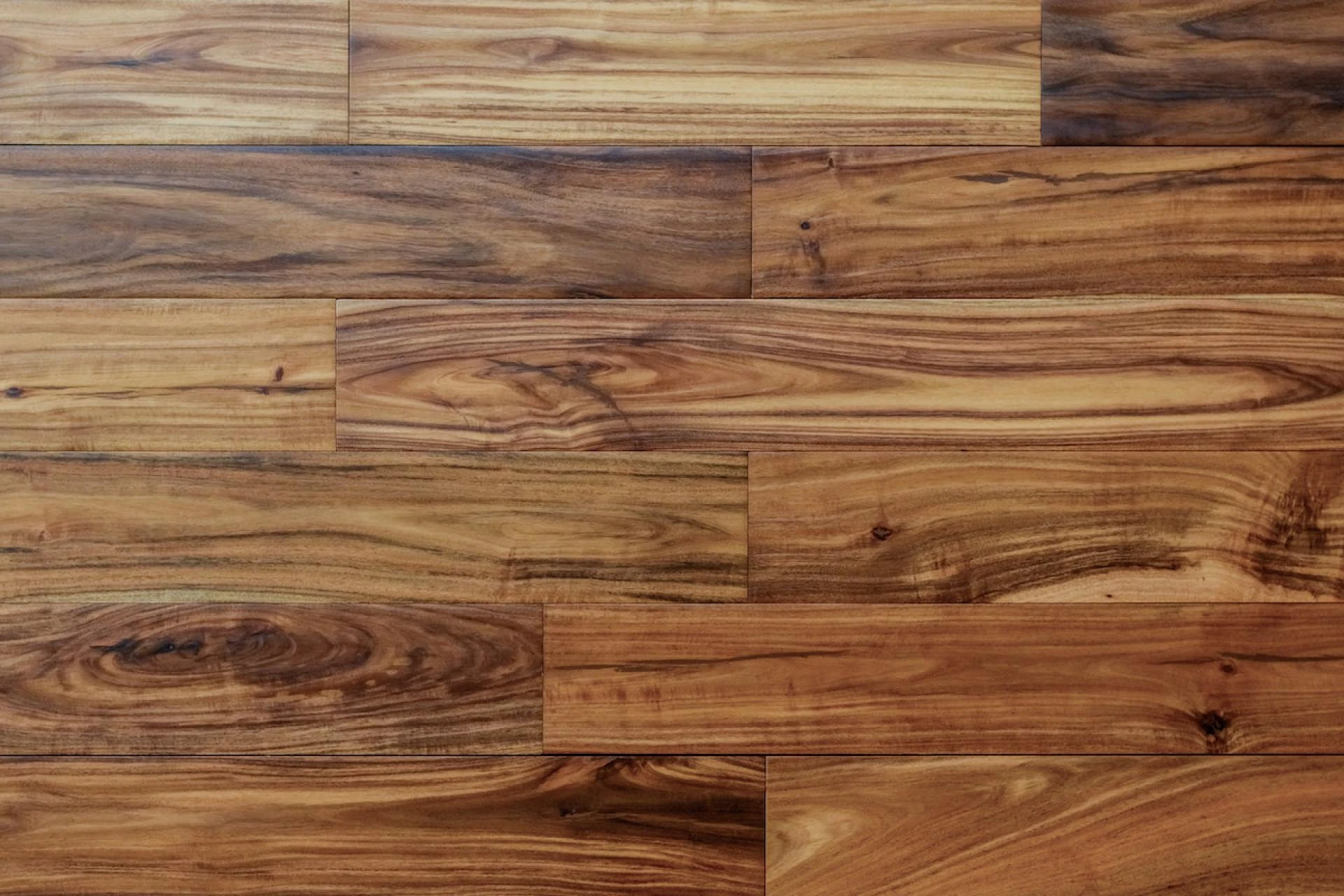

What Is Natural Acacia Wood?
Acacia refers to a broad group of hardwood species that share dense structure, pronounced grain, and natural variation, which together create room-defining floors with visual depth and contrast across planks. Species data show heartwood that ranges from light to rich brown with interlocked grain patterns, making each installation unique while retaining a cohesive look at scale.
In design terms, that translates to a floor that can act as a focal point or a warm, grounding backdrop depending on grade selection and plank width choices.
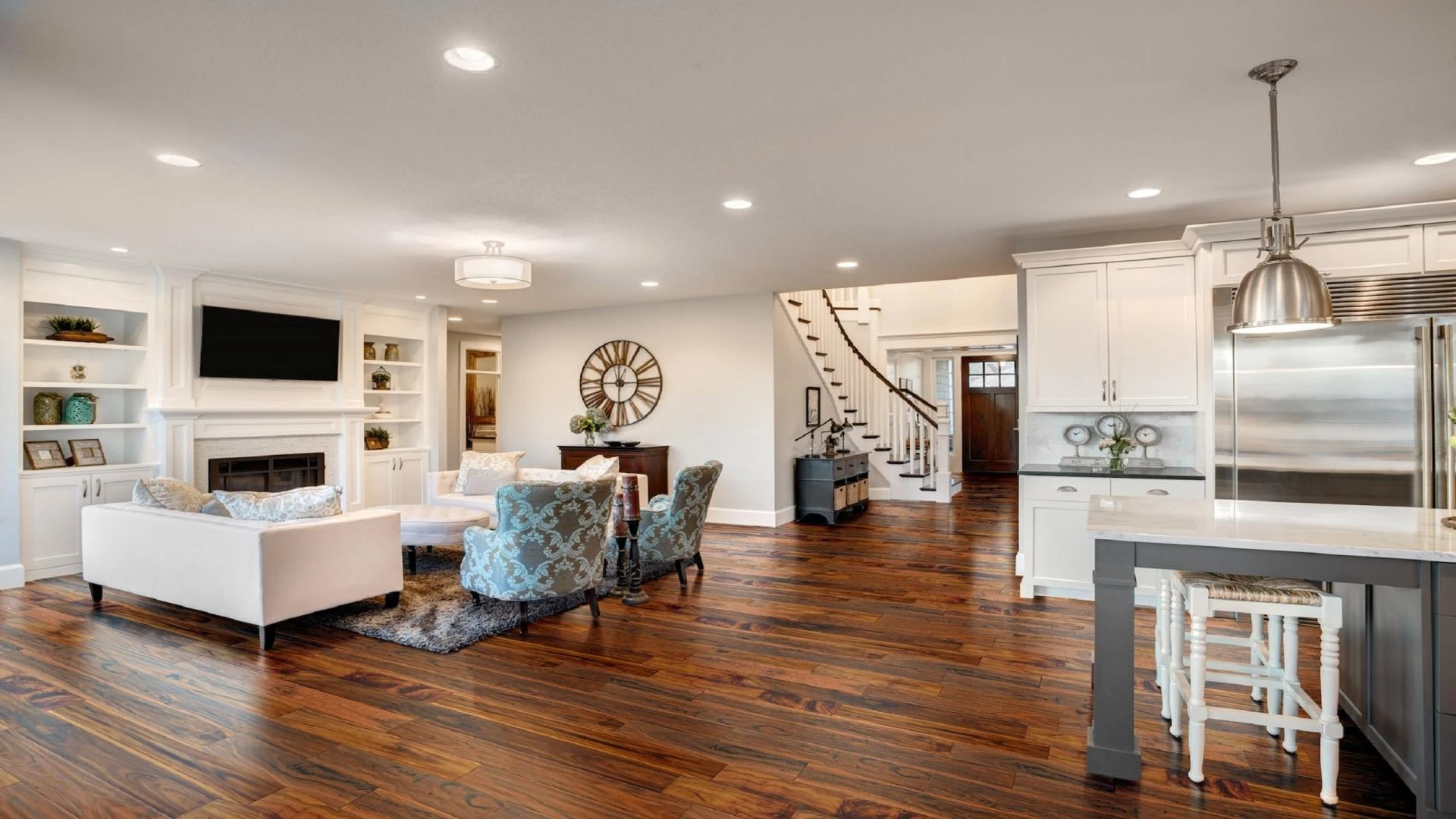
Benefits and Performance of Natural Acacia Wood
- Hardness where it matters: Acacia wood is considered dent resistant compared with white oak and hard maple, offering greater peace of mind in high-traffic zones.
- Natural moisture tolerance: Acacia’s dense composition and lower typical shrinkage support better stability through seasonal changes when paired with correct acclimation and in-home humidity control.
- Design versatility: Characterful knots, tonal shifts, and striking grain let designers achieve both rustic warmth and modern minimalism, especially when using wider planks to showcase variation.
- Easy upkeep: Routine sweeping or vacuuming with a bare-floor setting and occasional use of a wood-finish-appropriate cleaner keep surfaces fresh, while avoiding wet or steam mops preserves finish life.
- Sustainability context: Plantation grown acacia is widely used across Asia but sourcing practices vary by region. Look for documented, responsibly managed supply where possible.
As a result, natural acacia hardwood flooring is a compelling choice for families and pet owners who prefer surfaces that balance durability with distinctive style without demanding complex care.
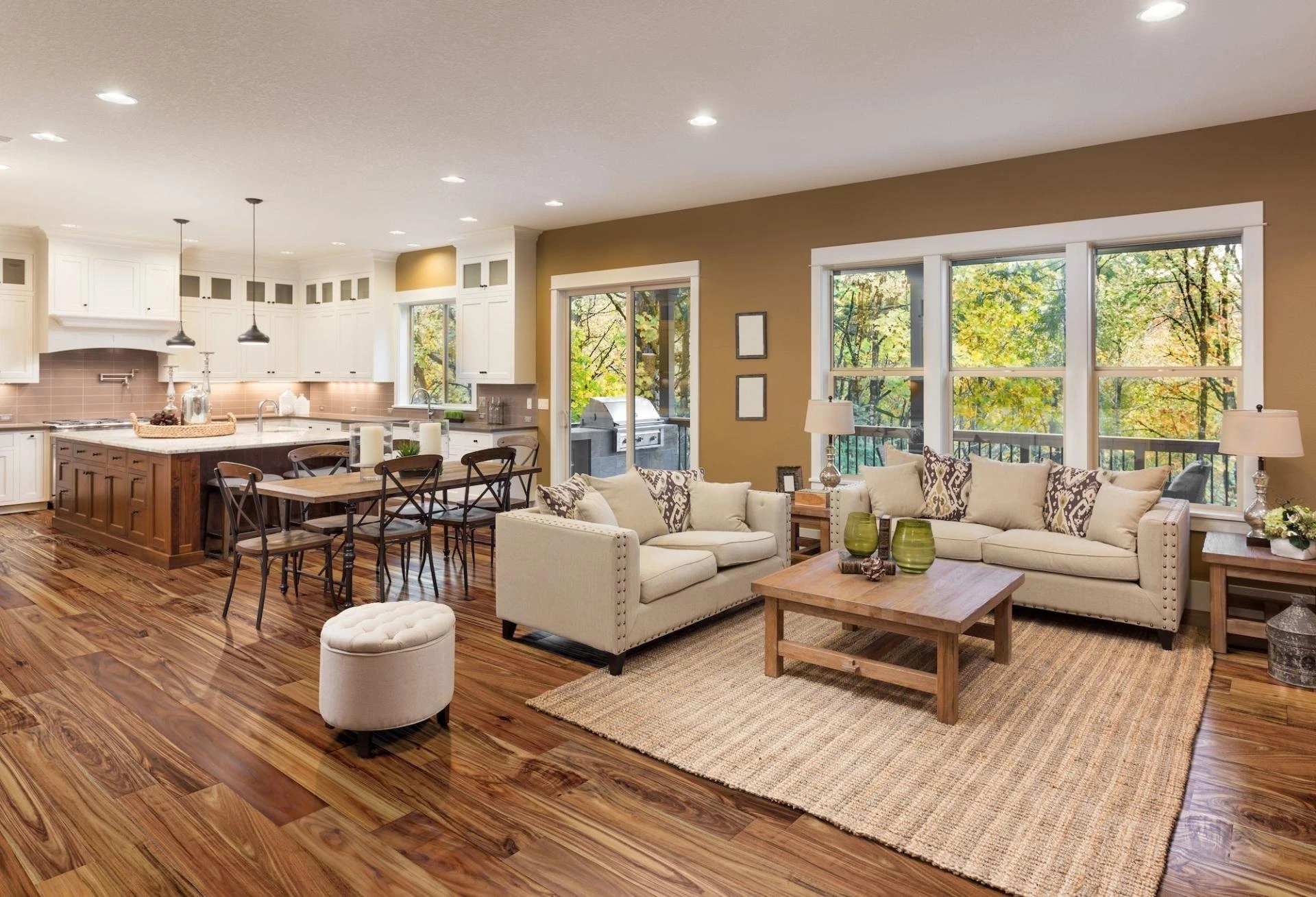
Natural Acacia Wood Installation and Indoor Climate
Solid Vs Engineered Acacia
Solid acacia is typically installed on or above grade by nail-down or glue-down methods and excels in spaces with stable indoor conditions, while engineered acacia adds cross-layer stability for wider planks, basements, and mixed substrates with nail, glue, or float options as appropriate to the product. Homeowners comparing engineered acacia vs solid acacia should weigh site conditions, subfloor type, and target plank width to match performance with design goals.
Humidity Targets and Seasonal Stability
Wood floors generally perform best around 30 to 50 percent relative humidity year-round, which minimizes expansion, contraction, and finish stress through heating and cooling seasons. Following manufacturer and NWFA guidance on acclimation, moisture testing, and vapor controls is key to long-term stability in any hardwood system and helps preserve the refined look that natural acacia wood is chosen for.
Best Rooms and Subfloors
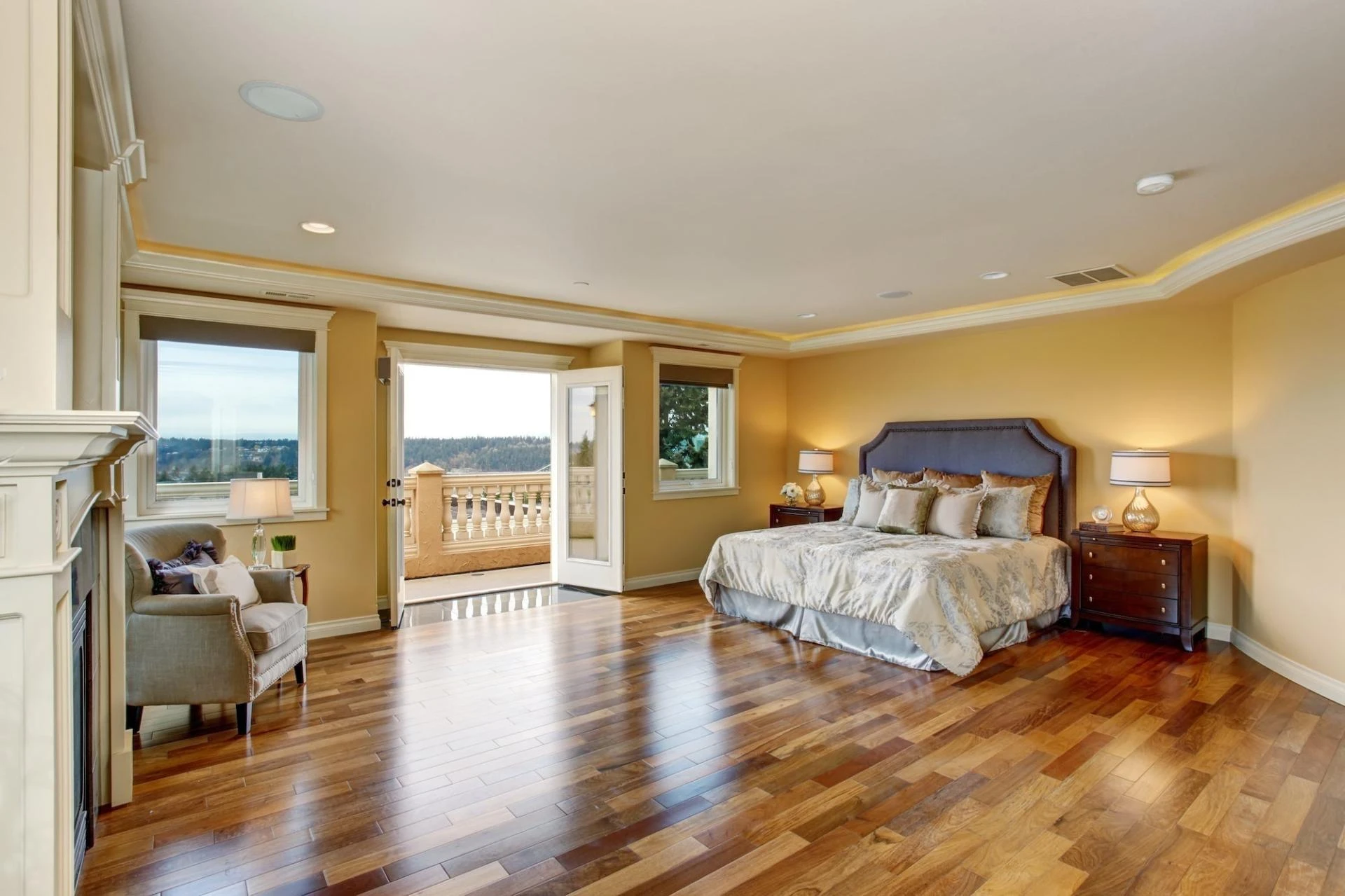
For best rooms for acacia wood flooring, living rooms, bedrooms, hallways, and stairs are strong candidates, while kitchens can work well with mat protection and prompt spill cleanup to respect hardwood’s moisture limits. Concrete subfloors favor engineered formats with appropriate adhesives or floating systems, whereas plywood subfloors can accommodate both solid and engineered with the right fasteners and prep.
Natural Acacia Hardwood Flooring: Design Ideas and Care Tips
Visuals, Widths, and Layout
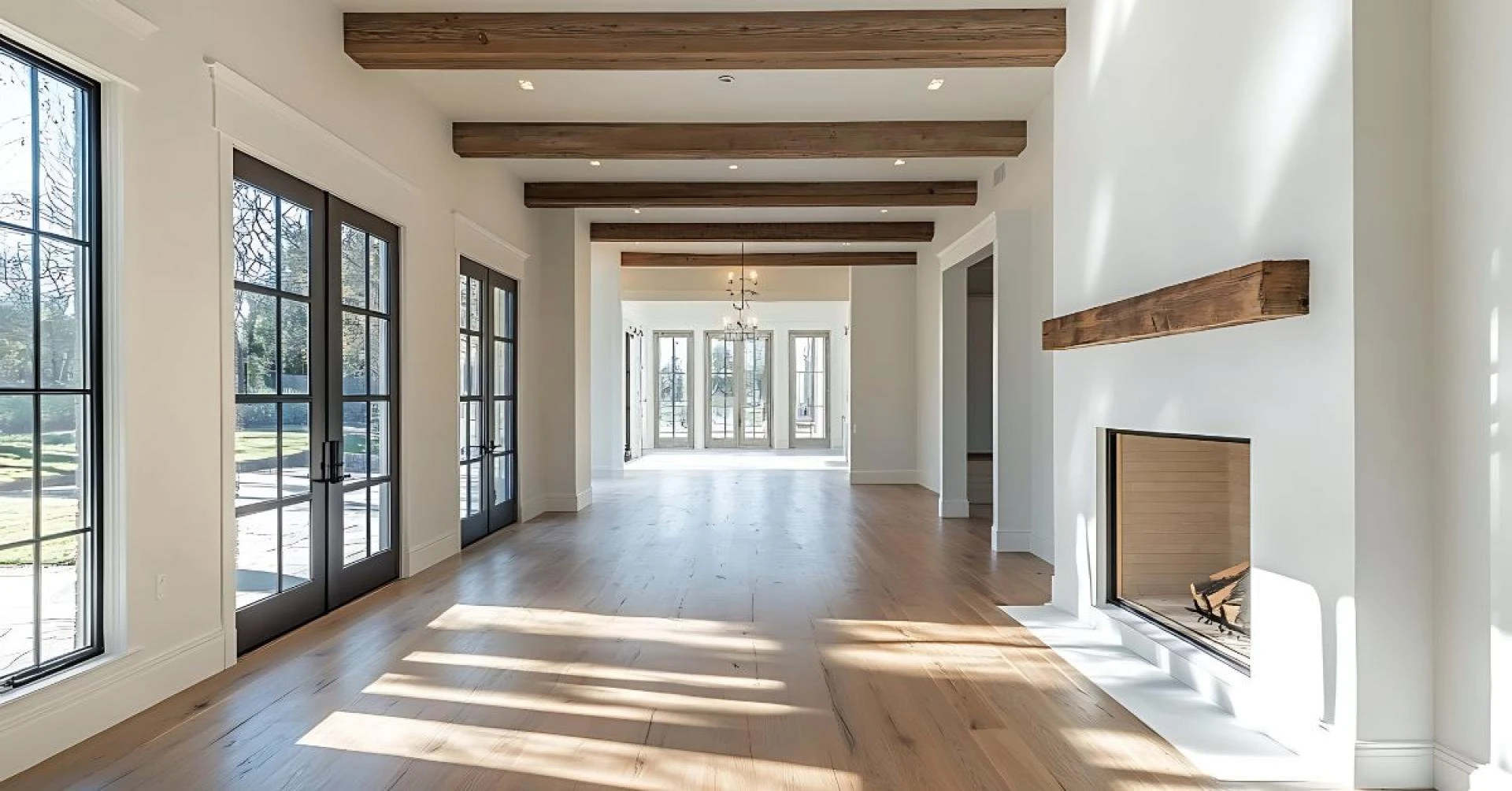
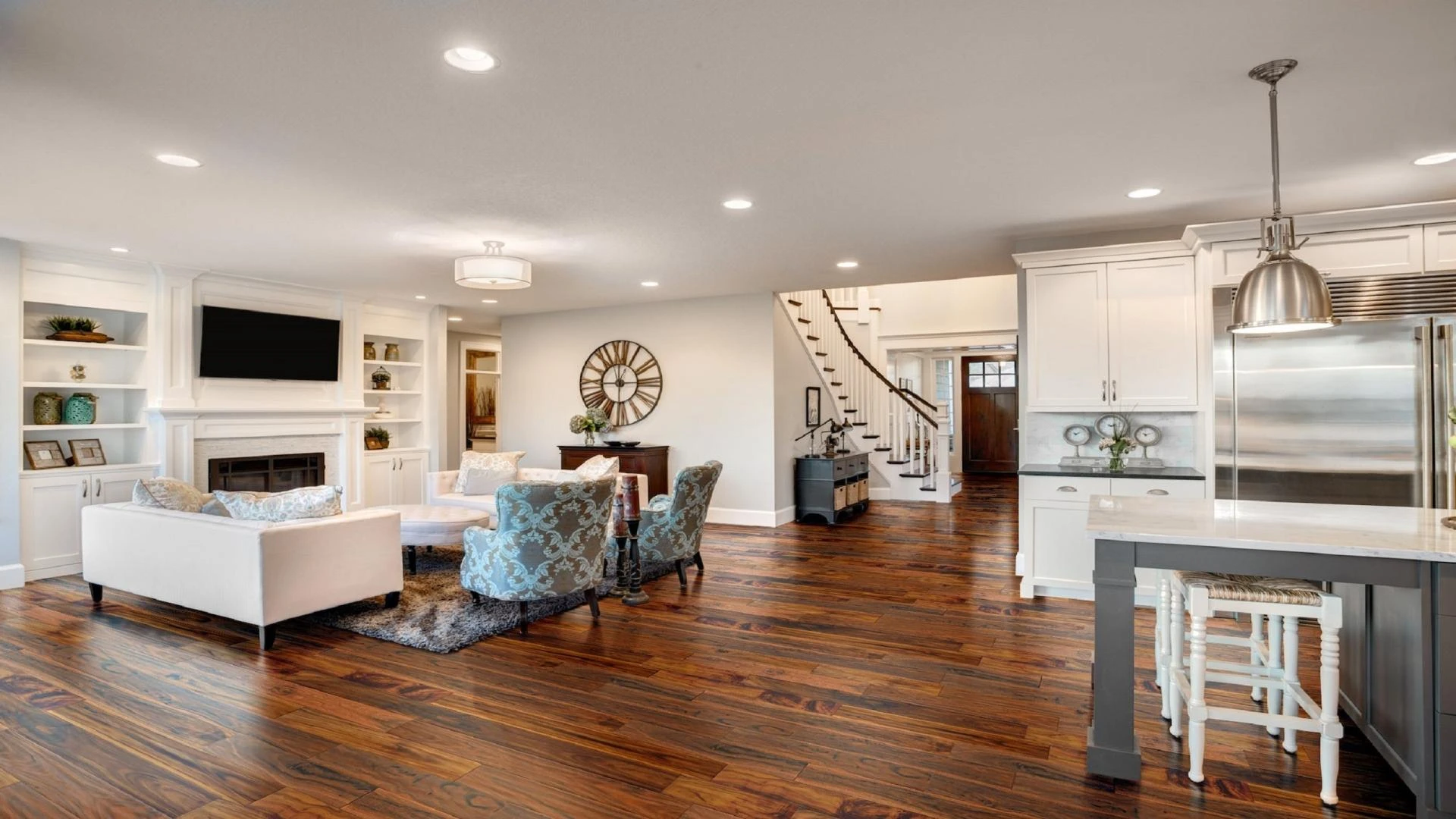
Wide-plank formats highlight acacia’s tonal movement and grain, creating a premium, gallery-like effect that scales beautifully from small rooms to open plans when balanced by simpler furnishings and finishes. Layout strategies, including straight lay, diagonal, or pattern accents, can adjust perceived room proportions and spotlight feature zones without overwhelming the space.
Pairing with warm neutrals, greens, or modern whites and greys lets the floor’s natural variation do the styling heavy lifting while keeping palettes cohesive.
Daily Care and Prevention
For how to clean acacia wood floors, prioritize grit removal via dust mopping or soft-brush vacuuming and use pH-appropriate cleaners aligned to the finish, avoiding wet mops and steam to prevent damage. Entry mats, breathable runners in splash zones, and felt pads under furniture reduce abrasion and help maintain the refined luster of natural acacia hardwood flooring over time.
Indoor Environment Checklist
Keep HVAC and humidification tuned to the ideal humidity for hardwood floors, which is typically around 30 to 50 percent RH, to reduce gapping or cupping and support long-term dimensional stability. A small investment in monitoring tools and seasonal adjustments will pay off in the look and lifespan of natural acacia wood in any climate zone.
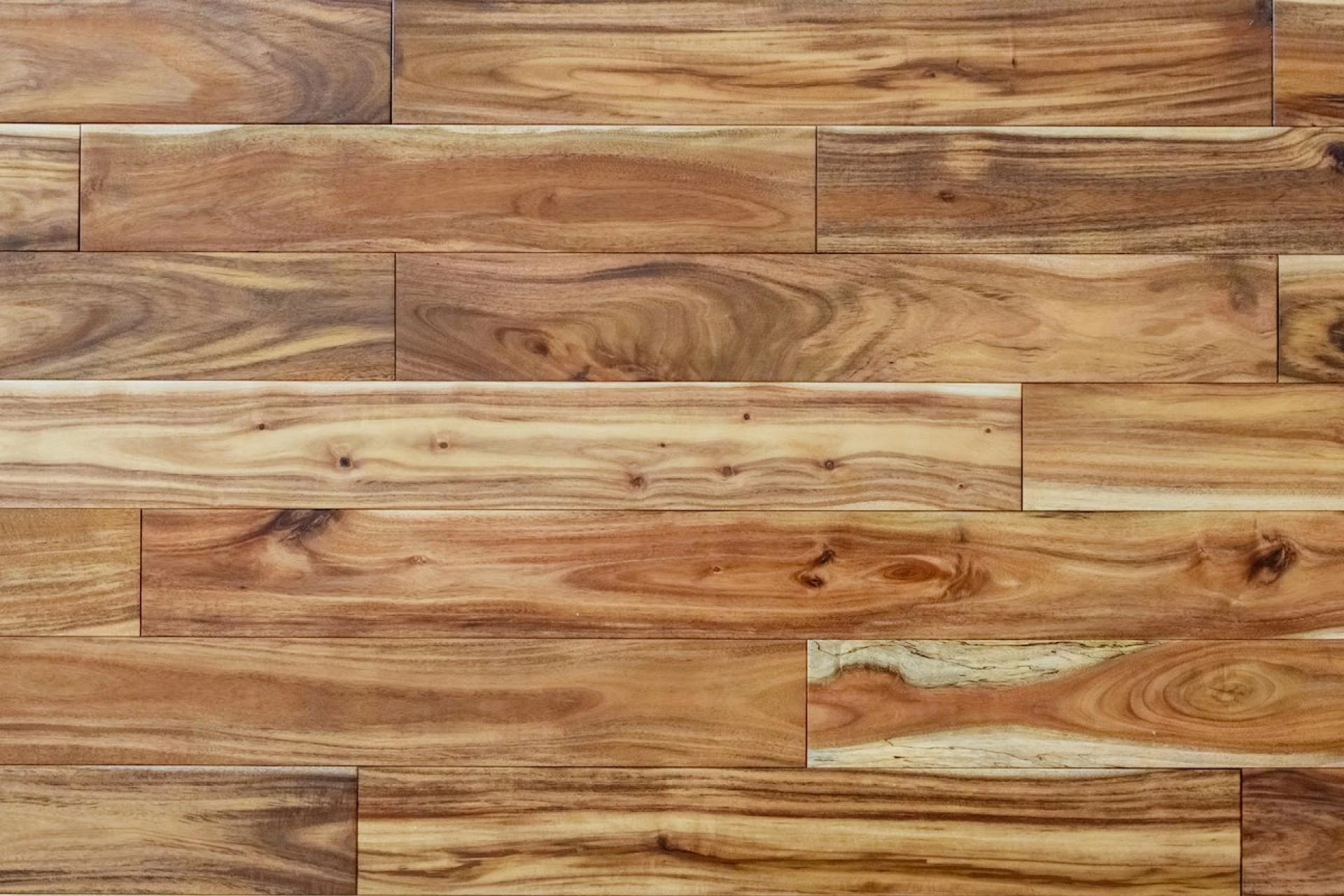
Conclusion
If the goal is a floor that blends dent resistance, organic character, and straightforward care, natural acacia wood delivers a rare mix of performance and personality across room types and design languages.
For a curated range of natural acacia hardwood flooring in solid and engineered constructions, explore Harper Floors for guidance, samples, and support tailored to your project from specification to installation.
FAQs
1. Is acacia harder than oak and maple for everyday wear in family homes?
Yes, many acacia species test above white oak and hard maple on the Janka scale, providing improved dent resistance for busy households and high-traffic areas.
2. Where does engineered acacia make the most sense?
A: Engineered acacia is generally preferred in basements over concrete, in wider plank formats, or in spaces with moisture risk where added dimensional stability is beneficial.
3. Can acacia work in kitchens if spills happen?
Yes, with quick spill response, strategic mat placement, and appropriate cleaners, kitchens can be good candidates, provided expectations are set for any hardwood’s moisture sensitivity.










Sign in to leave a comment.