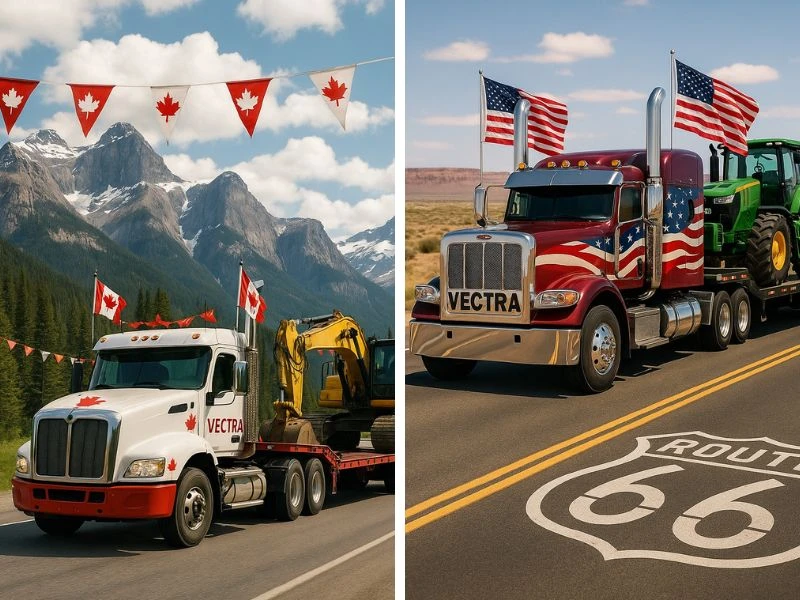

Transporting oversized or overweight loads comes with a unique set of responsibilities and legal requirements. For contractors involved in construction, oil and gas, mining, or large-scale infrastructure projects, understanding heavy haul regulations is crucial to avoiding delays, fines, and safety issues.
In this article, we provide an essential guide to heavy haul permits for contractors, including what they are, when you need them, how to obtain them, and why recent policy shifts—like US tariffs impact Canada haulers—should be on your radar.
What is a Heavy Haul Permit?
A heavy haul permit is a special authorization issued by federal, provincial, or state transportation authorities that allows carriers to move loads exceeding standard legal size or weight limits. These limits vary depending on the jurisdiction and roadway classification but typically involve:
- Oversized width, height, or length
- Overweight based on axle or gross vehicle weight
- Unusual load configurations that require escorts or specific routing
When Do Contractors Need a Heavy Haul Permit?
Contractors need a heavy haul permit anytime the vehicle and load exceed normal limits. Common scenarios include:
- Transporting heavy machinery or prefabricated components
- Moving cranes, generators, or bridge beams
- Delivering construction materials in bulk quantities
Failure to obtain a permit can result in:
- Legal penalties and fines
- Project delays due to impoundments or forced unloads
- Increased liability in case of accidents
The Application Process: Step-by-Step
- Determine Load Dimensions & Weight
- Accurately measure the full dimensions and total weight of your vehicle and cargo.
- Research Jurisdictional Requirements
- Each province, state, or municipality may have unique rules. For instance, Alberta’s permitting process differs from BC or Saskatchewan.
- Apply for Permit
- Submit your application to the relevant authority (e.g., Alberta Transportation, provincial permit offices, or border authorities if crossing into the U.S.).
- Comply with Routing & Escort Rules
- Permits may dictate specific routes, times of day, and mandatory pilot vehicles.
- Ensure Insurance & Safety Compliance
- Adequate insurance coverage and safety equipment (flags, signage, lighting) are mandatory.
How U.S. Tariffs Impact Canada Haulers
The broader trade landscape also affects heavy haul logistics. For example, US tariffs impact Canada haulers by increasing costs for cross-border shipments, complicating scheduling, and reducing flexibility in sourcing equipment or parts. Contractors working on bi-national projects must factor in customs delays and increased documentation when applying for permits that span both countries.
Tips for Contractors to Streamline the Process
- Plan Ahead: Permit processing can take time—especially for superloads.
- Use Permit Services: Hiring a professional permit service can ensure accuracy and expedite approvals.
- Monitor Road Restrictions: Seasonal weight bans and construction zones can affect route viability.
- Stay Informed: Regulations evolve, especially with international policies and environmental guidelines tightening.
Final Thoughts
Obtaining the right heavy haul permits is not just about legal compliance—it’s about keeping your projects on track, avoiding costly mistakes, and ensuring road safety for everyone. By following this essential guide to heavy haul permits for contractors, you can transport oversized loads with confidence and professionalism.













Sign in to leave a comment.