
Introduction
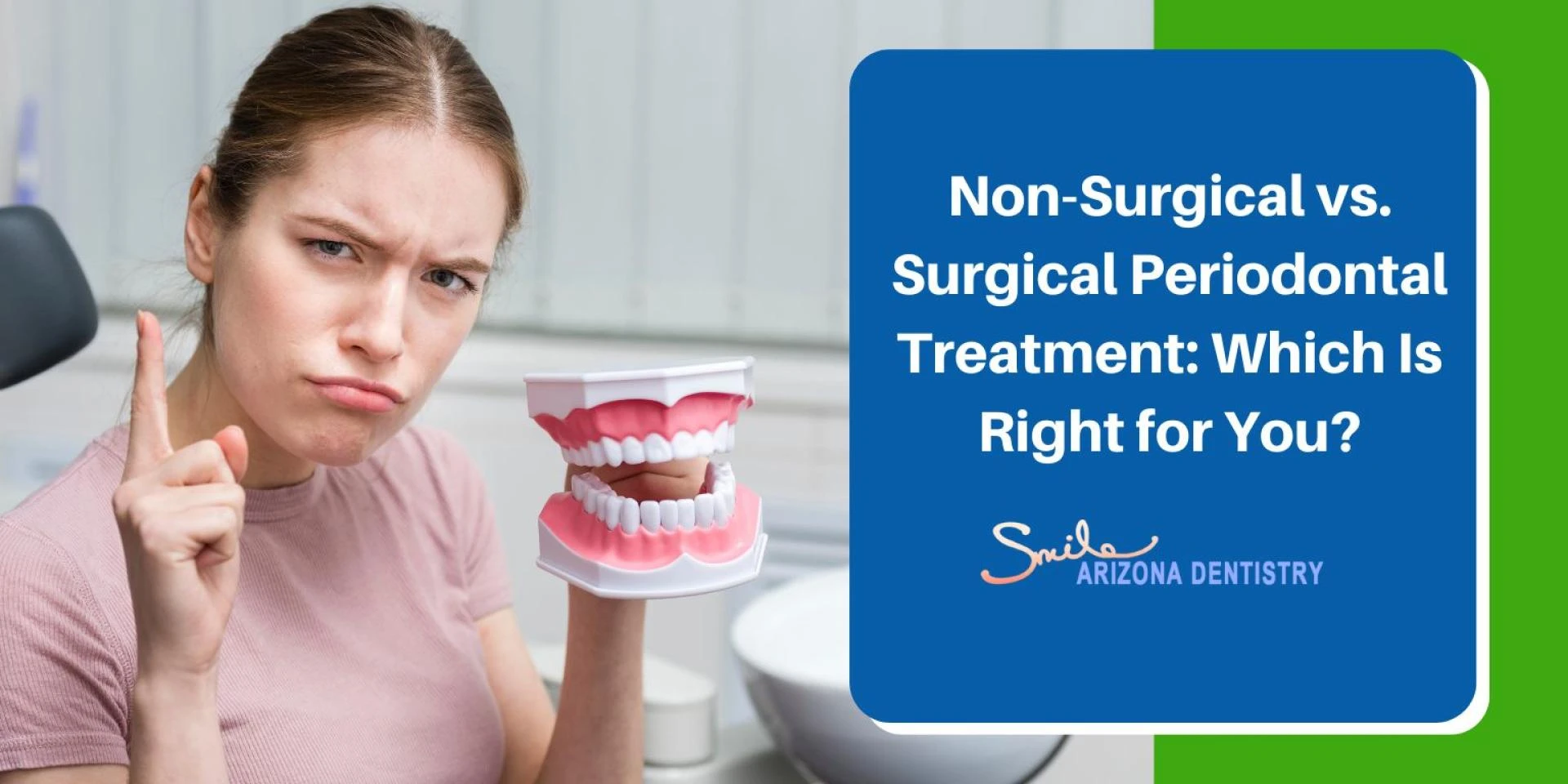
Periodontal disease, commonly known as gum disease, is a serious condition that affects the gums and supporting structures of the teeth. If left untreated, it can lead to tooth loss and other health complications. Fortunately, there are several treatment options available, ranging from non-surgical procedures to surgical interventions. But how do you know which treatment is right for you? In this blog, we’ll explore the differences between non-surgical and surgical periodontal treatments, their benefits, and when each may be necessary.
Understanding Periodontal Disease
Periodontal disease begins with plaque buildup on the teeth and gums. Over time, this plaque hardens into tartar, leading to inflammation, gum recession, and even bone loss. The disease progresses in the following stages:
- Gingivitis – Early-stage gum disease with symptoms like redness, swelling, and bleeding gums.
- Mild to Moderate Periodontitis – Inflammation extends deeper, causing pockets between the gums and teeth.
- Advanced Periodontitis – Severe gum and bone loss, leading to loose teeth and potential tooth loss.
The treatment you need depends on the severity of your gum disease.
Non-Surgical Periodontal Treatments
For mild to moderate cases of gum disease, non - surgical treatments are often the first line of defense. These procedures focus on removing bacteria and tartar buildup while promoting gum healing.
1. Scaling and Root Planning (Deep Cleaning)
What It Is:
- A deep cleaning procedure that removes plaque and tartar from below the gum line.
- The root surfaces are smoothed (planed) to prevent bacteria from reattaching.
Who Needs It:
- Patients with early - stage periodontitis who have deep gum pockets.
- Those experiencing mild gum inflammation and bleeding.
Benefits:
- Removes harmful bacteria
- Helps gums reattach to teeth
- Reduces gum inflammation
- Prevents disease progression
2. Antibiotic Therapy
What It Is:
- Antibiotics (oral or topical) are used to reduce bacterial infection.
- May be applied directly into gum pockets or taken as a pill.
Who Needs It:
- Patients with localized gum infections or mild periodontitis.
- Used as an adjunct to scaling and root planning.
Benefits:
- Helps eliminate persistent bacteria
- Supports healing of gum tissues
- Reduces pocket depth
3. Laser Therapy
What It Is:
- A minimally invasive technique using laser energy to remove infected gum tissue.
- Helps sterilize pockets and reduce bacteria.
Who Needs It:
- Those with moderate gum disease who want a less invasive alternative to traditional treatment.
- Patients who prefer a quicker recovery.
Benefits:
- Less pain and bleeding
- Faster healing time
- Kills bacteria effectively
- Minimally invasive
Surgical Periodontal Treatments
If non-surgical treatments do not provide sufficient results or if gum disease has progressed significantly, surgical intervention may be necessary to restore gum health and prevent further damage.
1. Flap Surgery (Pocket Reduction Surgery)
What It Is:
- A procedure where the gums are lifted back to clean deeper tartar deposits.
- The gums are then repositioned for a snug fit.
Who Needs It:
- Patients with deep gum pockets that don’t respond to non-surgical treatments.
- Those with moderate to severe periodontitis.
Benefits:
- Reduces deep gum pockets
- Prevents further bone loss
- Helps gums fit tightly around teeth
2. Gum Grafting
What It Is:
- A surgical procedure where healthy gum tissue is taken from another area (or a donor source) and grafted onto areas with gum recession.
Who Needs It:
- Individuals with severe gum recession exposing tooth roots.
- Patients who experience tooth sensitivity due to gum loss.
Benefits:
- Protects exposed roots
- Reduces sensitivity
- Improves smile aesthetics
3. Bone Grafting
What It Is:
- A procedure where bone material is added to areas where bone loss has occurred.
- Stimulates natural bone regrowth.
Who Needs It:
- Those with advanced periodontitis where bone loss threatens tooth stability.
- Patients considering dental implants but lack sufficient bone structure.
Benefits:
- Strengthens jawbone
- Increases implant success rate
- Prevents further bone loss
4. Guided Tissue Regeneration (GTR)
What It Is:
- A regenerative technique using special membranes to encourage new gum and bone tissue growth.
Who Needs It:
- Patients with advanced periodontitis and severe bone loss.
Benefits:
- Encourages natural tissue regeneration
- Helps restore lost bone support
- Improves tooth stability
Which Treatment is Right for You?
The best periodontal treatment for you depends on the severity of your gum disease, overall oral health, and personal preferences. Here’s a quick guide:
- Mild Gingivitis → Non-surgical treatments like scaling and root planning + antibiotics
- Moderate Periodontitis → Non-surgical treatments first; laser therapy as an option
- Severe Periodontitis → Surgical treatments like flap surgery, gum grafting, or bone grafting
- Significant Bone Loss → Bone grafting or guided tissue regeneration for restoration
Consulting with a periodontist is the best way to determine the most effective treatment plan for your needs.
Conclusion
Periodontal disease is a serious condition, but it is treatable with the right approach. Non-surgical treatments are effective for early to moderate gum disease, while surgical interventions are necessary for advanced cases. If you’re experiencing symptoms like bleeding gums, gum recession, or persistent bad breath, don’t ignore them - seek professional help as soon as possible. A healthy smile starts with healthy gums!











Sign in to leave a comment.