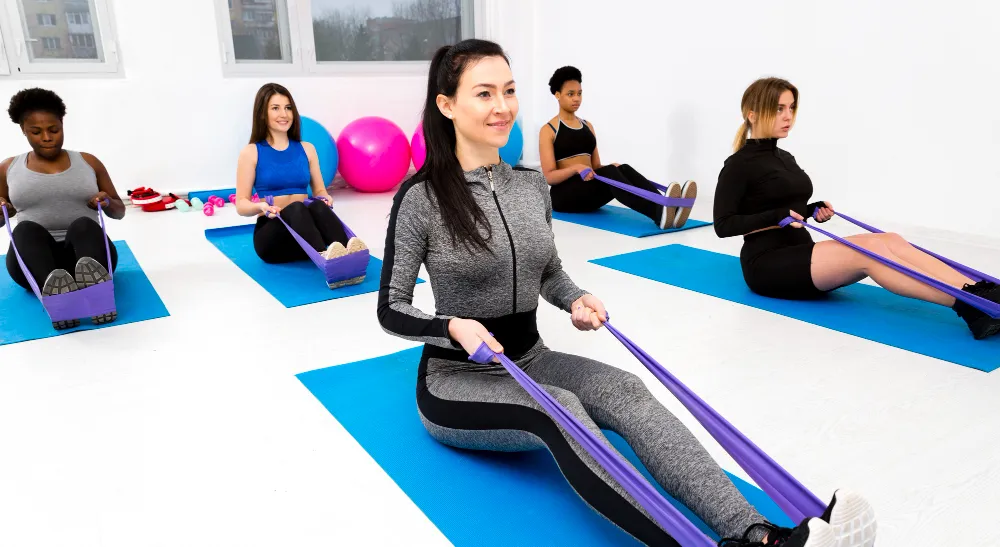

A quiet room, a mat on the floor, a video paused mid-instruction. Somewhere else, a small studio hums—springs creak, an instructor adjusts someone’s shoulder by half an inch. Same goal. Completely different experience.
Choosing a pilates instructor certification often starts with a simple question: learn from home or step into a studio? It sounds like a logistical decision. It rarely stays that simple.
Convenience Has a Strong Pull
Online training feels easy to say yes to. No commute, no fixed class times, no awkward first-day introductions. Just a login and a structured course waiting patiently.
There’s something reassuring about being able to replay a lesson. Anatomy, for example, can get dense. Watching it twice—sometimes three times—helps things settle in. No pressure to “get it” instantly.
Still, a small gap shows up sooner or later.
Pilates isn’t only about understanding movement. It’s about sensing it. That tiny shift in alignment, the difference between doing an exercise and doing it correctly—those details don’t always translate through a screen.

The Studio Feels Different—Immediately
Step into a training studio and the tone changes. There’s structure. There’s observation. There’s someone noticing things that might go unnoticed otherwise.
A lifted ribcage gets corrected in seconds. Breathing becomes deeper with a single cue. These moments feel small. They’re not.
They build awareness quickly.
There’s also a certain pressure—mild, but present. Others are learning in the same space. Mistakes happen in real time, sometimes a little awkwardly. But that discomfort? It teaches faster than expected.
Not always comfortable. Often effective.
Learning vs Doing—A Subtle Divide
Online courses tend to deliver information well. Detailed modules, clear explanations, organized progress. The theory side of Pilates—muscle groups, movement patterns, sequencing—can be covered thoroughly.
But teaching isn’t just recalling information.
Imagine guiding someone who keeps shifting weight unevenly without realizing it. Or someone holding their breath during a movement that should feel fluid. Recognizing those patterns takes exposure.
In-studio training naturally includes that exposure. Bodies move differently. No two sessions look exactly the same. That unpredictability sharpens observation skills.

Online learners can develop this too. It just takes more deliberate effort—practice groups, extra workshops, maybe shadowing experienced instructors.
Confidence Doesn’t Always Follow Knowledge
Knowing something and feeling ready to teach it—two separate things.
Some trainees finish online programs with solid understanding, yet hesitate when leading an actual class. Words don’t come out as smoothly. Timing feels slightly off. Totally normal, but noticeable.
In-studio environments tend to introduce that challenge earlier. Practice teaching happens before certification ends. Mistakes surface sooner, which means they get worked through sooner.
It’s not about avoiding discomfort. It’s about when it shows up.
The Cost Conversation Isn’t Straightforward
Online options usually come at a lower price. That’s often the first advantage people notice.
Studio programs? Higher fees, fixed schedules, sometimes additional travel costs. It can feel like a bigger commitment right away.
But here’s where it gets a bit complicated.
A less expensive course might require extra hands-on workshops later. A pricier program might already include those hours. So the total investment—time, money, effort—can balance out in unexpected ways.
It’s rarely just about the upfront number.
The Hybrid Path—Not Perfect, But Practical
Some programs now mix both approaches. Theory online, practical sessions in person.
It makes sense on paper. Flexibility stays intact, while hands-on experience isn’t ignored. For many, this middle ground feels realistic—especially when schedules don’t allow full in-studio commitment.
Still, it depends on execution. A poorly structured hybrid course can feel disconnected. A well-designed one can feel surprisingly complete.
Details matter here.
There’s More Than Technique Involved
Pilates teaching goes beyond movement. It touches posture, breathing, awareness—sometimes even emotional state.
That’s why some instructors explore additional practices alongside training. Exposure to methods like reiki San Antonio sessions, for instance, can shape how relaxation and energy flow are approached during classes. Not essential. But it adds perspective.
Because, in the end, clients don’t just follow instructions. They respond to how those instructions feel.
So… Which One Actually Works Better?
That depends on the person asking.
Online certification suits those who value flexibility, prefer self-paced learning, and don’t mind seeking out real-world practice later. It demands discipline. Quiet consistency.
In-studio training suits those who learn best through direct interaction, immediate correction, and structured environments. It asks for time and presence—but gives faster feedback in return.
Neither path guarantees a great instructor. And neither blocks that outcome either.
The real difference shows up afterward—in how often someone practices, how willing they are to keep improving, and how they handle the awkward early stages of teaching.













Sign in to leave a comment.