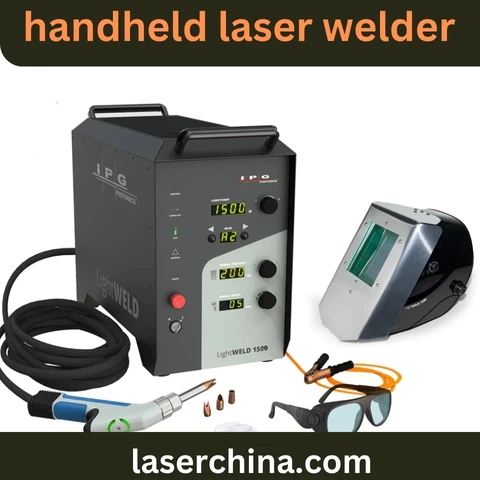

In the realm of modern manufacturing, precision is paramount. Enter the fiber laser welder, a revolutionary technology redefining the way industries join materials with unparalleled accuracy. In this blog, we'll delve into the world of fiber laser welders, exploring their capabilities, applications, and why they're the ultimate solution for achieving flawless welds in today's competitive market.
Unveiling the Power of Fiber Laser Welders
Fiber laser welders are at the forefront of welding technology, utilizing focused laser beams generated by fiber optics to create precise and high-quality welds with minimal heat-affected zones. Unlike traditional welding methods that rely on heat to melt and fuse materials, fiber laser welders offer finer control over the welding process, resulting in stronger and more reliable joints. This precision allows for the welding of intricate geometries and small components with ease, making fiber laser welders indispensable in a wide range of applications.
Advantages of Fiber Laser Welders
The advantages of fiber laser welders are manifold:
Precision: Fiber laser welders provide unmatched precision, allowing for the welding of intricate components with tight tolerances. This precision ensures superior quality and reduces the need for post-welding processing.
Speed: Fiber laser welders operate at high speeds, increasing productivity and reducing production costs. The fast processing times enable manufacturers to meet tight deadlines and improve overall efficiency.
Versatility: Fiber laser welders are versatile and can weld a wide range of materials, including metals, plastics, and ceramics. This versatility makes fiber laser welders suitable for diverse applications across industries.
Minimal Heat-Affected Zone: Fiber laser welders produce minimal heat-affected zones, reducing the risk of material distortion and preserving the integrity of the welded joint. This results in cleaner and more aesthetically pleasing welds.
Applications Across Industries
Fiber laser welders find applications in various industries:
Automotive: Fiber laser welders are used in the automotive industry to join lightweight materials like aluminum and advanced high-strength steels, improving fuel efficiency and reducing vehicle weight.
Aerospace: Fiber laser welders create complex assemblies with tight tolerances in the aerospace industry, ensuring structural integrity and safety.
Electronics: Fiber laser welders enable the precise joining of delicate components in the electronics industry, enhancing product performance and reliability.
Choosing the Right Fiber Laser Welder
When selecting a fiber laser welder for your business, consider factors such as:
Power Output: Choose a fiber laser welder with the appropriate power output for your welding requirements.
Beam Quality: Opt for a system with high beam quality to ensure precise and consistent welding results.
Automation Capability: Look for a system with automation capabilities to increase productivity and efficiency.
Technical Support: Ensure that the manufacturer provides comprehensive technical support and training to maximize the potential of your fiber laser welder.
Conclusion: Elevating Welding to New Heights
In conclusion, fiber laser welders represent a significant advancement in welding technology, offering unmatched precision, efficiency, and versatility across industries. By harnessing the power of fiber optics, businesses can achieve flawless welds with minimal heat-affected zones, resulting in stronger and more reliable products. Whether you're in automotive, aerospace, electronics, or any other industry, embracing fiber laser welding technology is key to staying ahead of the competition and unlocking new possibilities for innovation and growth.










Sign in to leave a comment.