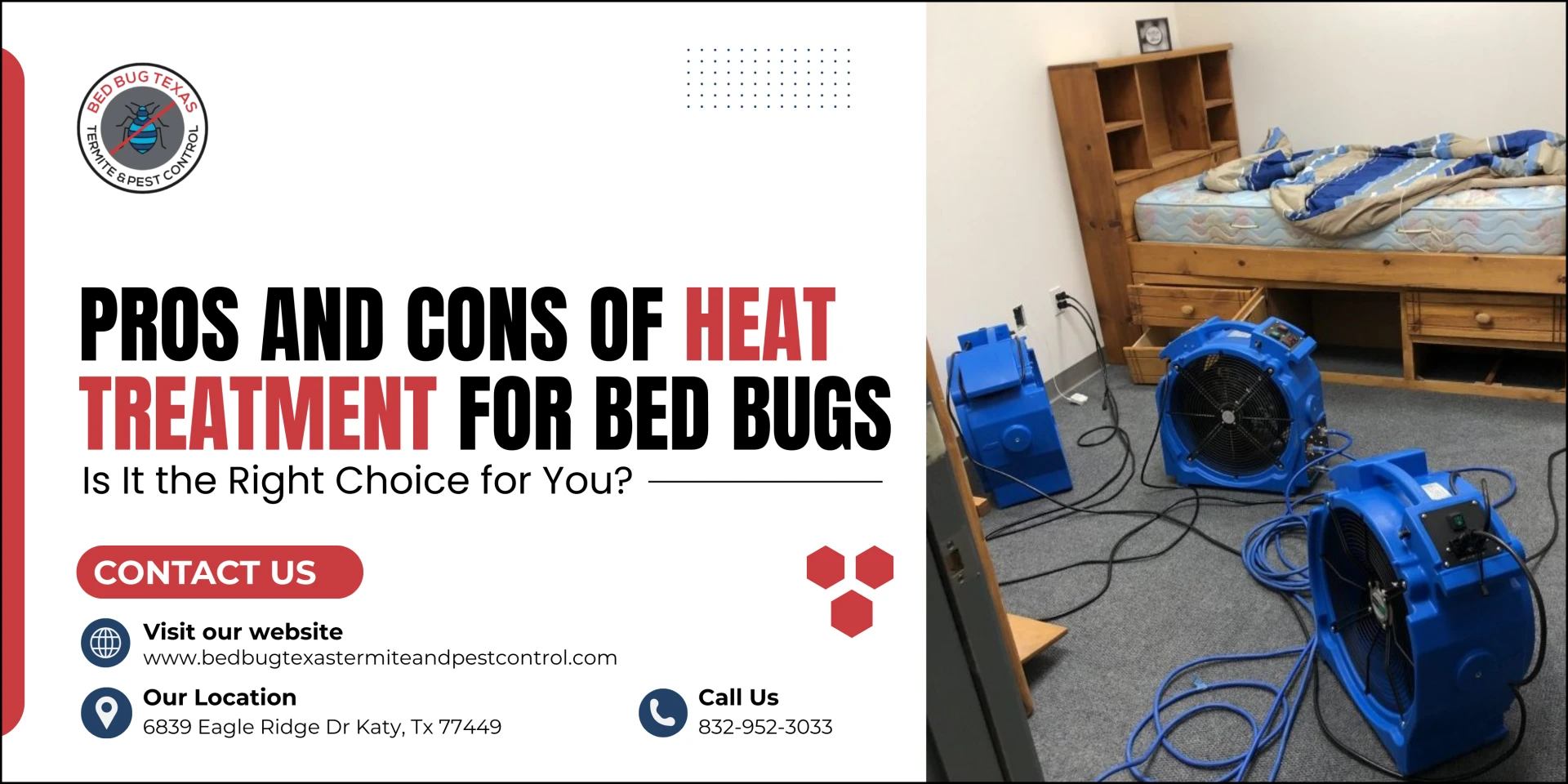

At Bed Bug Texas Termite & Pest Control, we believe in giving homeowners the facts so they can make the best decision. Let’s dive into the pros and cons of heat treatment for bed bugs and see whether it’s the right fit for your situation.
How Heat Treatment Works
Heat treatment uses specialized equipment to raise the temperature of a room or home to a level that bed bugs simply cannot survive. With the help of a bed bug heater, the temperature is increased to around 120-140°F. At this point, all bed bugs die, breaking the life cycle in one sweep.
This is why many bed bug exterminators recommend heat as a top choice for large or stubborn infestations.
Pros of Heat Treatment for Bed Bugs
- Chemical-free: Heat kills across the life-cycle without leaving pesticides around your home. That appeals if you have kids, pets, or chemical sensitivities. That appeals if you have kids, pets, or chemical sensitivities.
- Penetrates Hiding Spots (better reach than a spray): Heat can reach into mattresses, furniture, and wall voids. Sprays sometimes do not give a high immediate kill rate.
- Single-day Treatment is Possible: A thorough professional heat job often takes one day, which can not be said for chemical programs that require multiple visits.
Cons of Heat Treatment for Bed Bugs
- Bed Bug Heat Treatment Cost: The biggest drawback for many homeowners is the price. Professional heat treatments are more expensive than standard chemical options. However, the higher success rate often balances out the initial cost.
- Risk of Damage to Certain Items: Heat can warp or damage heat-sensitive belongings like electronics, candles, or delicate plastics. That’s why prep is essential.
- No Residual Protection: Heat kills bugs during treatment, but it doesn’t leave behind a protective barrier. That’s why ongoing monitoring and preventive strategies are key to keeping your home bed bug-free
DIY vs. Professional Heat Treatment
You may come across different ads for bed bug heater rentals. While they might seem budget-friendly, DIY heat treatment can be risky unless you know what you’re doing. Maintaining the correct temperature in every corner of a room is difficult without professional-grade equipment and monitoring tools. A professional bed bug exterminator not only brings the right equipment but also ensures safe handling, proper prep, and effective follow-up.
Is Heat Treatment the Right Choice for You?
Choose heat treatments for bed bugs when you want a chemical-free solution. They work best if you need fast results. Heat is ideal when the infestation is widespread, affecting whole rooms or the entire home. It’s also a good choice if you can afford a professional team to properly seal and monitor the space.
Avoid heat treatments if you’re on a tight budget. They may not be practical if you own many heat-sensitive valuables that can’t be moved. Heat also isn’t always necessary for small or localized infestations. In those cases, spot treatments or targeted insecticides may be cheaper and still effective.
Wrapping Up
The pros and cons of heat treatment for bed bugs show that while it may cost more upfront, the speed, effectiveness, and chemical-free nature make it a smart investment for many homeowners. Choosing an experienced professional makes all the difference.
If bed bugs are keeping you up at night, our expert team is here to help. Whether you’re curious about bed bug heat treatment cost, want to learn more about the process, or are ready to schedule a service, Bed Bug Texas Termite & Pest Control has you covered.










Sign in to leave a comment.