
Introduction:
In the contemporary interconnected business landscape, the prosperity of companies hinges significantly upon customer experience. Hence, it becomes imperative for enterprises to leverage cutting-edge technologies for efficient management of customer interactions. At the forefront of customer service and engagement stand call centers, pivotal in this endeavor. To optimize customer relationships and operational efficiency, businesses are progressively integrating open-source ICT technologies into their Customer Relationship Management (ICTCRM) software. This extensive piece will delve into how ICTCRM Call Center CRM software empowers businesses to enhance customer relationships through both inbound and outbound call center operations. We will dissect its features, advantages, and recommended tactics, underscoring its pivotal role in shaping the future of customer service.
I. Understanding the Call Center Landscape
Before we dive into the specifics of ICTCRM call center software, it\'s essential to grasp the call center landscape, particularly the distinction between inbound and outbound call center operations.
A. Inbound vs. Outbound Call Center Operations
Inbound Call Centers
The core function of inbound call centers revolves around managing incoming customer inquiries, service requests, and support issues. These queries arrive through diverse channels such as phone calls, emails, live chats, and social media platforms. The primary objective of inbound operations is to swiftly and efficiently address customer concerns while providing timely assistance. Typical scenarios include technical support, customer service interactions, and order processing tasks.
Outbound Call Centers
On the flip side, outbound call centers prioritize proactive outreach to customers for diverse objectives like sales, lead generation, surveys, and marketing initiatives. Outbound operations are geared towards initiating interactions with potential or current customers, with specific aims such as closing a sale or collecting market insights.
II. The Crucial Role of ICTCRM Call Center Software
In the dynamic world of customer service, ICTCRM call center software acts as a linchpin that enables businesses to manage both inbound and outbound call center operations effectively. Let\'s explore the features and functionality that make this software an invaluable asset for customer relationship management.
A. Features and Functionality
Multi-Channel Communication
ICTCRM call center software integrates various communication channels, including voice, email, chat, and social media, enabling customers to connect through their preferred method. This multi-channel approach ensures accessibility and convenience for customers.
Call Routing and Queuing
The software efficiently routes incoming calls to the most appropriate agent, based on skills, availability, or predefined criteria. This reduces wait times and ensures that customers are connected with agents who can address their specific needs.
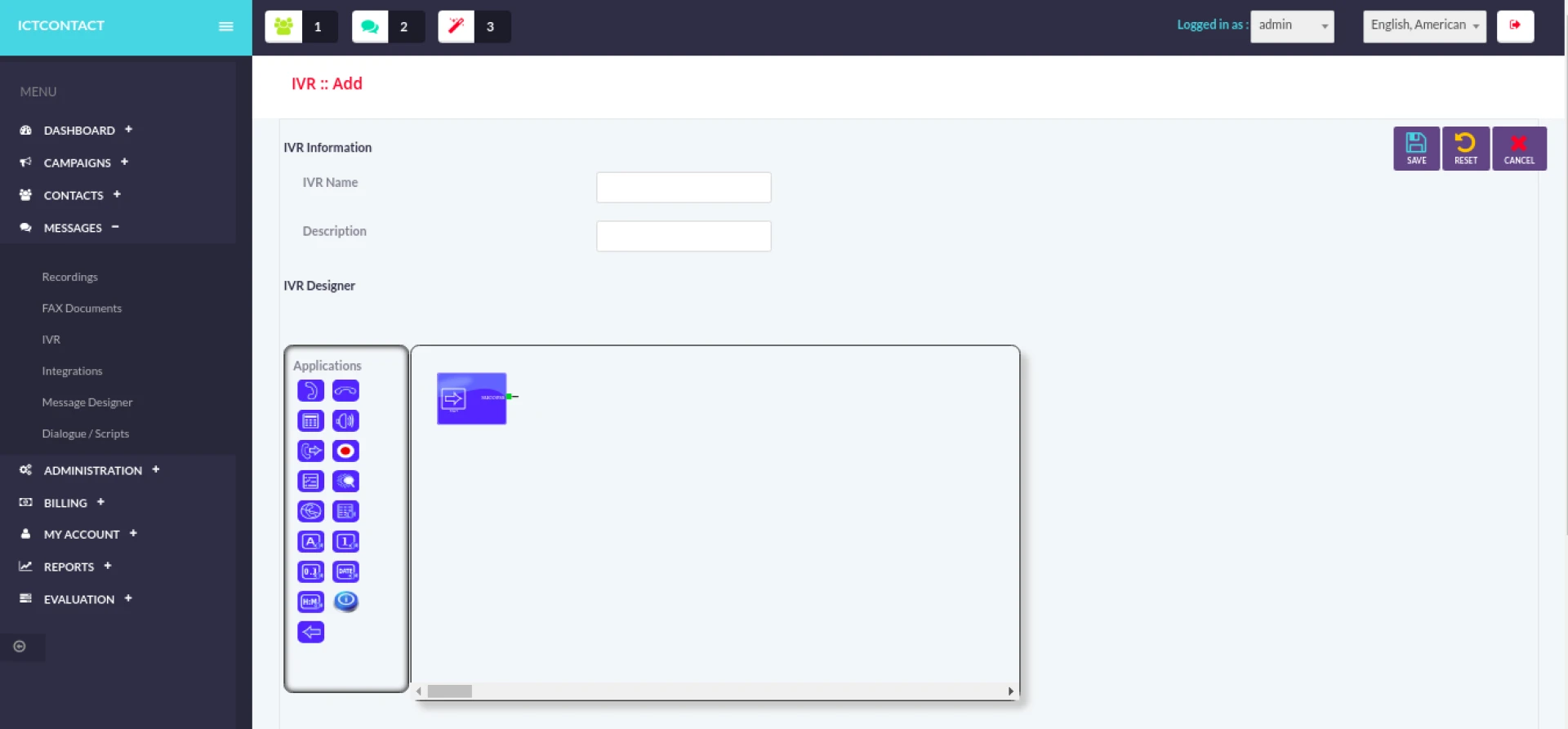
IVR (Interactive Voice Response)
Interactive Voice Response systems facilitate self-service by allowing customers to navigate through menus and access information or complete tasks without agent assistance. This can include balance inquiries, bill payments, or account updates.
Predictive Dialing
Outbound call center operations benefit from predictive dialing capabilities, which automatically call leads or customers based on predictive algorithms, increasing agent productivity by minimizing idle time.
Customer Information Integration
ICTCRM call center software centralizes customer information, providing agents with a 360-degree view of customer history, preferences, and previous interactions. This empowers agents to provide personalized and effective service.
Call Recording and Monitoring
Call recording and monitoring features enable supervisors to review and assess agent interactions with customers. This is valuable for training, quality assurance, and compliance purposes.
III. Benefits of ICTCRM Call Center Software
The adoption of ICTCRM call center software brings a multitude of benefits to businesses. Let\'s delve into these advantages and explore how they contribute to enhancing customer relationships.
A. Improved Customer Experience
Personalized Service
_With access to a comprehensive customer database, agents can offer highly personalized service. Customers appreciate being recognized and having their needs anticipated, resulting in increased satisfaction and loyalty.
Reduced Waiting Times
Effi_cient call routing and queuing reduce waiting times, which is a major factor in customer frustration. A shorter wait time enhances the overall customer experience and reflects positively on the brand.
Consistency Across Channels
Multi-channel integration ensures a consistent customer experience regardless of the communication channel used. Whether a customer contacts the business via phone, email, or chat, they should receive the same level of service and information.
B. Enhanced Agent Productivity
Skill-Based Routing
Agents are assigned calls and tasks based on their skills and expertise. This results in faster issue resolution and a more efficient allocation of resources.
Predictive Dialing
Outbound call centers benefit from predictive dialing, which minimizes agent idle time by ensuring they are constantly engaged with calls. This leads to a higher volume of calls and improved sales and lead generation.
Automation
Automation of routine tasks, such as sending follow-up emails or scheduling appointments, reduces the administrative burden on agents, allowing them to focus on more value-added activities.
C. Data-Driven Insights
Real-Time Analytics
The software\'s real-time analytics and reporting tools provide valuable insights into call center operations. This data can be used to make informed decisions, optimize workflows, and identify areas for improvement.
Agent Performance Evaluation
Call recording and monitoring features enable managers to assess agent performance and identify training needs. Constructive feedback and training opportunities lead to more capable and confident agents.
IV. Best Practices for Implementing ICTCRM Call Center Software
To maximize the benefits of ICTCRM call center software, businesses should follow best practices during implementation and operation. Here are some key recommendations:
A. Integration with Existing Systems
CRM Integration
Ensure seamless integration with your existing Customer Relationship Management (CRM) system to maintain a comprehensive customer database and consistent data across all touchpoints.
Data Migration
Migrate existing customer data and historical interactions to the new ICTCRM system to maintain a complete view of customer relationships.
Cross-Department Collaboration
Involve IT, customer service, and marketing departments in the implementation process to ensure all relevant teams benefit from the software\'s capabilities.
B. Training and Support
Agent Training
Comprehensive training is crucial for agents to harness the full potential of ICTCRM call center software. Equip them with the knowledge and skills to navigate the system, access customer data, and handle various types of interactions.
Continuous Learning
Encourage agents to continuously learn and adapt to new features and capabilities offered by the software. Regular training sessions and access to educational resources help agents stay up-to-date.
Technical Support
Establish a reliable support system to address technical issues and agent concerns promptly. A responsive support team ensures uninterrupted call center operations.
V. The Future of Customer Service with ICTCRM Call Center Software
As technology evolves and customer expectations change, the role of ICTCRM call center software in shaping the future of customer service becomes increasingly pivotal. Here are some key trends and developments to watch for:
AI and Chatbots
_Artificial Intelligence (AI) and chatbots are becoming integral to customer service. ICTCRM call center software is incorporating AI-driven features for automated responses, predictive analytics, and more efficient issue resolution.
Cloud-Based Solutions
Cloud-based call center software offers scalability, flexibility, and cos_t-efficiency. More businesses are expected to shift to cloud-based solutions to adapt to changing work environments and customer service demands.
Enhanced Personalization
Customer expectations for personalized interactions are growing. ICTCRM software will need to leverage data and AI to deliver hyper-personalized customer experiences.
Omni-Channel Engagement
The integration of communication channels into a single platform is essential for providing seamless, omni-channel experiences. Customers should be able to switch between channels without losing context.
Compliance and Security
Data security and regulatory compliance are becoming paramount. ICTCRM software must continually update to ensure the protection of customer data and adherence to evolving regulations.
Conclusion
In conclusion, ICTCRM call center software is a transformative technology that plays a central role in enhancing customer relationships through both inbound and outbound call center operations. Its feature-rich capabilities empower businesses to provide exceptional customer experiences, boost agent productivity, and make data-driven decisions.
As the customer service landscape continues to evolve, businesses that invest in ICTCRM call center software and adhere to best practices will be better equipped to meet customer expectations and stay competitive. With the ongoing development of AI, cloud-based solutions, and a focus on data security and compliance, the future of customer service with ICTCRM call center software looks promising, offering endless opportunities for improved customer relationships and operational efficiency.










Sign in to leave a comment.