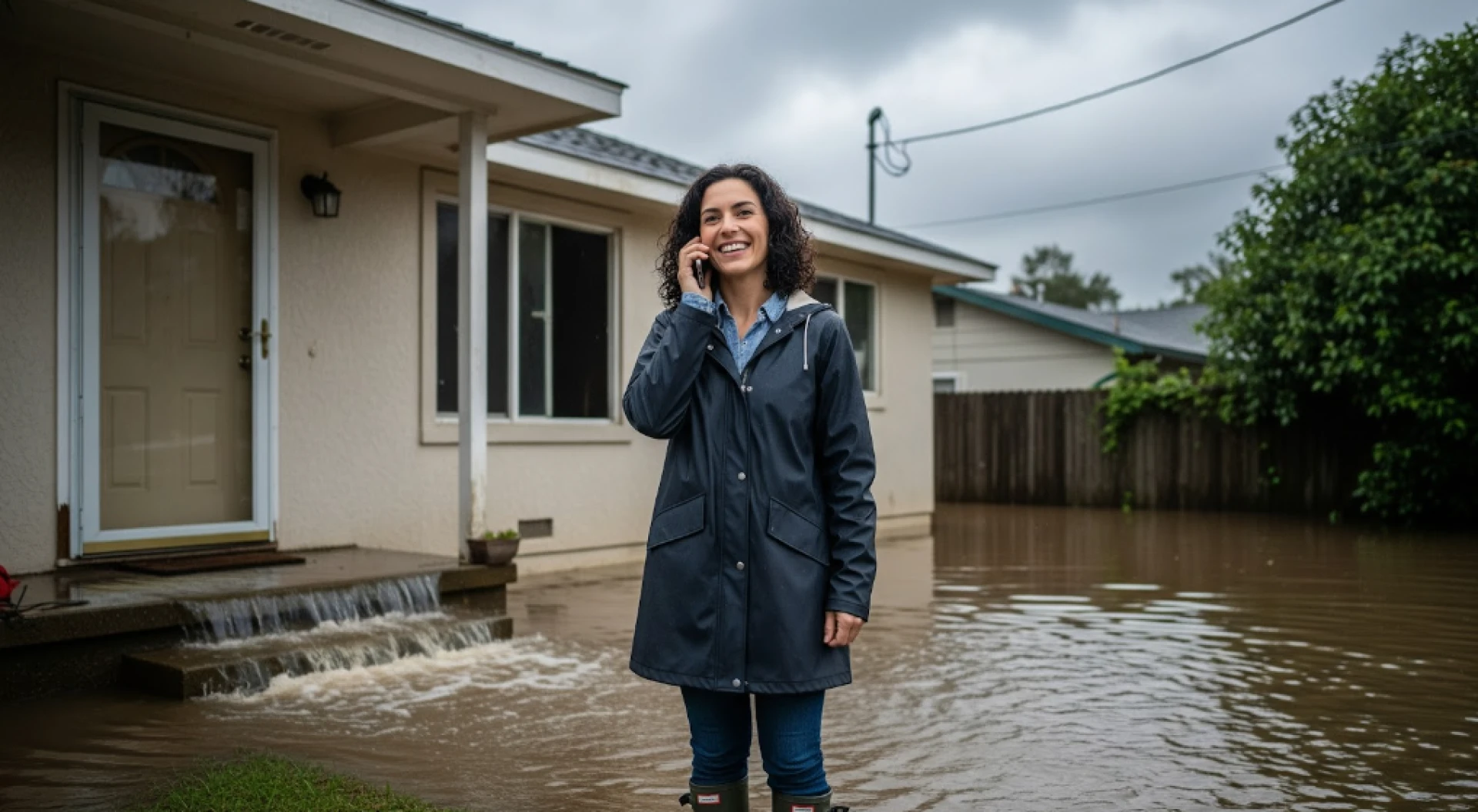

When a pipe bursts at midnight or smoke triggers the alarm at 6 a.m., your future client isn’t calmly comparing service providers. They’re panicked. Googling from the hallway. Phone in one hand, chaos in the other.
And in that moment, the first brand that looks like help, sounds like help, and promises to arrive fast... wins.
Restoration companies compete on how fast they can earn trust. And trust doesn’t build over weeks—it builds in minutes. Sometimes seconds.
That’s why rapid response messaging is the #1 marketing priority. Because your client’s first impression is the first headline they see in a Google ad. The first sentence on your homepage. The first “we’ve got you” that makes them believe it. Let’s take a look.
8 Reasons Rapid Messaging Wins Restoration Clients
1. It meets panic with clarity
Rapid response messaging means having clear, ready-to-deploy content that speaks directly to a customer's crisis moment — right when they’re experiencing it. It's the headline on your homepage, the copy in your Google ad, the auto-response in your DMs. It's not something you draft later—it’s baked in, live, and built for speed.
So what does this look like in restoration?
Think: “Flood damage? Call now—our team is 24/7 and en route in under 60 minutes.”
When your messaging is fast and crystal-clear, it does three critical things:
- Replaces uncertainty with direction: “Call this number, we’re on standby.”
- Signals operational readiness: “We’ve done this before, and we’ve got you.”
- Builds trust before the first call: “They knew exactly what I was dealing with.”
2. It makes you the obvious choice
In high-stakes moments, people make fast decisions. They scan for cues that help them eliminate uncertainty and justify their choice.
When your messaging instantly answers:
- What exactly do you handle?
- How fast can you get here?
- What should I do next?
You’re positioning yourself as the clearest, safest, and smartest option. This is especially important in restoration, where multiple companies may offer similar services — but only one makes it easy to choose.
Rapid messaging reduces cognitive load. It cuts the mental work a potential client has to do to trust you. That mental shortcut often means you get the call — not the company with better reviews, or even lower prices.
3. It mirrors how people search in emergencies
When disaster strikes, no one’s Googling “award-winning restoration company with decades of experience.” They’re typing:
- “Basement flooding help now”
- “24/7 fire damage cleanup near me”
- “Emergency water extraction tonight”
These are raw, urgent, real-world queries—and if your messaging doesn’t reflect that language, you’re out of sync with how people actually search. When your Google ad, meta description, or homepage headline echoes the exact phrases people are frantically typing, you resonate.
This does two things:
- Improves visibility: You’re more likely to match high-intent search queries and appear in local emergency results.
- Increases click-through: You sound like the exact solution to their exact problem, which makes your link the one they trust.
5. Provides compliance-friendly crisis communication
Not all emergencies are the same. Some restoration jobs—like those tied to insurance claims, disaster relief, or government-funded repairs — come with extra scrutiny. There may be specific language you can or can’t use when talking to customers.
For example:
- You can’t promise results that the insurance company hasn’t approved yet.
- You may need to avoid terms like “guaranteed coverage” if coverage isn’t confirmed.
- Certain services must be described in neutral, factual language (e.g. “mold remediation” vs “mold removal”)
6. It increases ad performance under pressure
When there's a flood or fire, lots of companies run ads at the same time. That makes ads more expensive and harder to win. Rapid messaging helps your ads perform better because it’s built around:
- Urgent language that matches what people are typing (e.g., “flood cleanup now”)
- Clear next steps (“Call now, we’ll be there in 45 minutes”)
- Relevance to the crisis (local weather events, timing, specific damage types)
All of this leads to higher click-through rates, lower costs, and more booked jobs. And when paired with strong marketing ideas for restoration services — like geo-targeted storm alerts or after-hours ad extensions — you’re outpacing the competition in real time.
7. It multiplies post-crisis referrals
Referrals don’t happen by luck. They happen when a customer:
- Remembers your name
- Can describe what made you great
- Feels confident recommending you to someone else
Rapid messaging makes all three easier. When your communication is clear, fast, and consistent, from the first ad to the final invoice, you make it simple for people to recall, retell, and refer.
8. Reinforces your position in local map packs and Google Business
Google uses your GBP content to match urgent local searches. If your business description, service listings, or Q&A section includes phrases like “same-day sewage cleanup,” “24/7 emergency board-up service,” or “fire damage help in Tulsa,”— Google connects those directly to search queries.
That’s semantic matching in action. And it only works if you’ve used fast, relevant, location-aware messaging in your profile. Businesses that update their GBP with timely posts — especially during major weather events — get engagement boosts.
Something like:
“We’re currently serving homes affected by this week’s Dallas storms—call now for emergency drying and extraction.”
That’s a local signal. Google sees it. Your visibility improves. And your messaging just bought you more map-pack real estate.
Your Message Is Your First Responder
Rapid response messaging is how you show up before you physically arrive. It tells people: we see you, we’ve done this before, and we’re ready now. From ad performance to more referrals and better local visibility, fast, clear messaging drives decisions.












Sign in to leave a comment.