
Introduction: Why Robotic Grinding Matters More Than Ever
In today’s fast-paced manufacturing world, precision, efficiency, and consistency are no longer optional—they are essential. This is where Robotic Grinding is rapidly becoming a game-changing solution. As industries push for higher quality standards while reducing production costs and human error, robotic systems are stepping in to redefine how grinding operations are performed.
From aerospace components to automotive parts and heavy industrial machinery, grinding is a critical finishing process. However, traditional manual grinding is often labor-intensive, inconsistent, and hazardous. Robotic Grinding addresses these challenges by combining automation, artificial intelligence, and advanced sensor technologies to deliver superior results with remarkable precision.
The underlying intent of this transformation is clear: to make manufacturing safer, smarter, and more efficient while achieving unmatched surface quality and consistency.
Understanding Robotic Grinding: A New Era of Automation
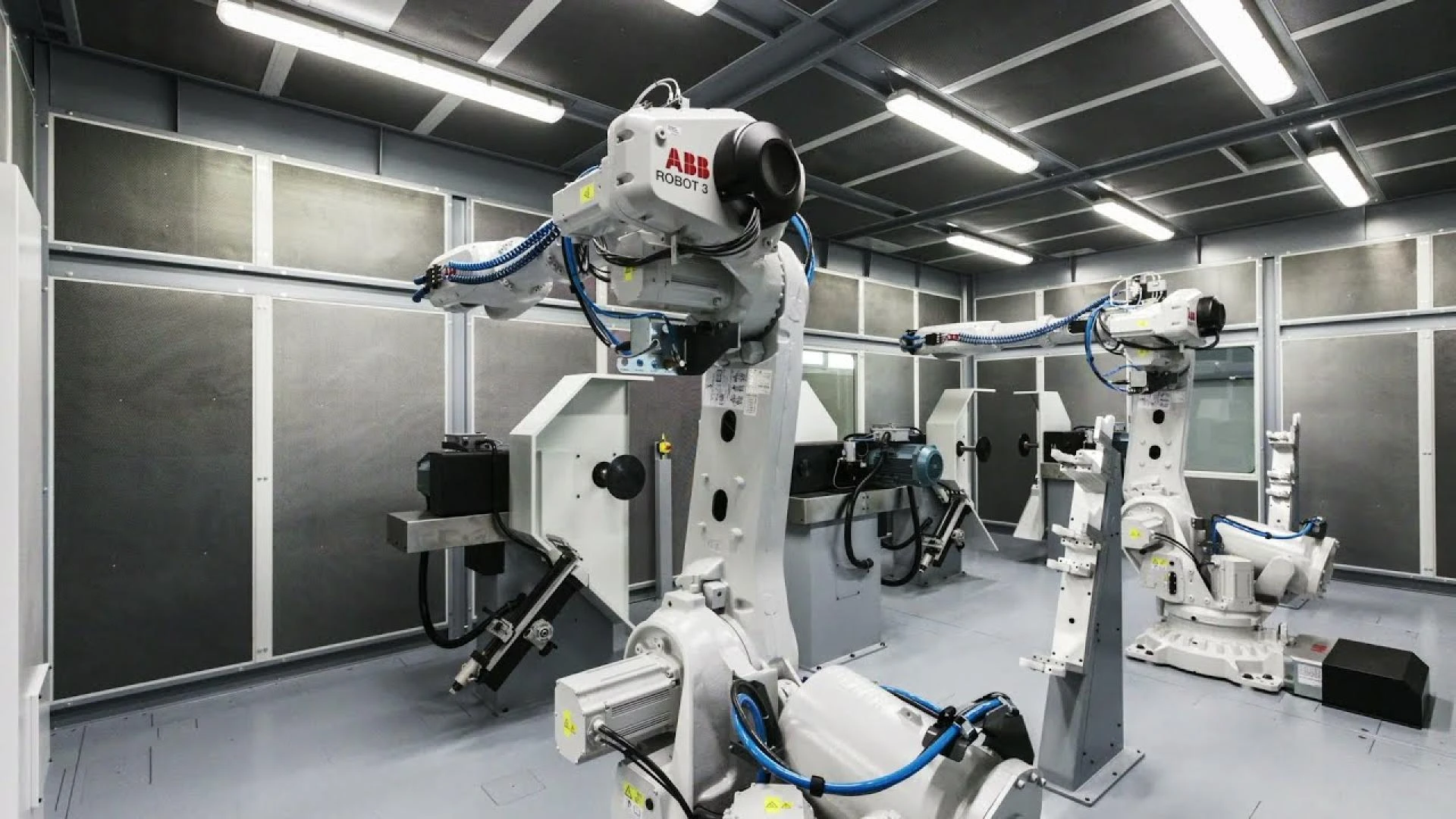
Robotic Grinding refers to the use of programmable robotic systems equipped with grinding tools to remove excess material, smooth surfaces, and refine components with high accuracy. Unlike manual processes, these robots operate with consistent force, speed, and positioning, ensuring uniform results across large production batches.
These systems typically include:
- Industrial robotic arms
- Grinding or sanding end-effectors
- Force sensors and torque control systems
- Vision systems for part recognition
- AI-driven control software
By integrating these technologies, Robotic Grinding systems can adapt to complex geometries, varying materials, and tight tolerances—tasks that are extremely difficult for human operators to maintain consistently.
The Growing Demand for Robotic Grinding in Modern Industry
Manufacturing industries are under constant pressure to increase productivity while maintaining high quality standards. This dual demand has fueled the rapid adoption of Robotic Grinding systems.
Several key factors drive this growth:
1. Rising Quality Expectations
Modern consumers and industries demand flawless finishes, especially in sectors like aerospace, medical devices, and automotive engineering. Even minor surface defects can lead to performance failures or safety risks.
2. Skilled Labor Shortage
Grinding is a physically demanding and repetitive task. Many industries face difficulties in finding skilled workers willing to perform such labor-intensive jobs consistently.
3. Workplace Safety Concerns
Grinding operations expose workers to dust, vibrations, and hazardous particles. Robotic systems significantly reduce human exposure to these risks.
4. Need for Production Efficiency
Automation enables manufacturers to operate 24/7 with minimal downtime, increasing throughput without compromising quality.
Key Benefits of Robotic Grinding Systems
The adoption of Robotic Grinding is not just a technological upgrade—it is a strategic transformation. Its benefits extend across productivity, safety, and product quality.
1. Unmatched Precision and Consistency
Robots execute grinding tasks with exact force and motion control. This eliminates variations caused by human fatigue or error, ensuring consistent surface finishes across all parts.
2. Increased Productivity
Robotic systems can operate continuously without breaks, significantly increasing production rates. This is especially valuable in high-volume manufacturing environments.
3. Enhanced Workplace Safety
By automating hazardous grinding tasks, companies reduce worker exposure to noise, dust, and mechanical risks, leading to a safer work environment.
4. Reduced Material Waste
Precision control minimizes over-grinding and material loss, improving cost efficiency and sustainability.
5. Lower Long-Term Operational Costs
Although initial investment in robotic systems can be high, long-term savings from reduced labor costs, fewer defects, and improved efficiency make it highly cost-effective.
Applications of Robotic Grinding Across Industries
Robotic Grinding is not limited to one sector—it is transforming multiple industries worldwide.
Automotive Industry
In automotive manufacturing, robotic systems are used for finishing engine components, transmission parts, and body panels. They ensure smooth surfaces that enhance both performance and aesthetics.
Aerospace Industry
Aerospace components require extremely tight tolerances. Robotic Grinding ensures turbine blades, structural parts, and engine components meet strict quality standards.
Metal Fabrication
From welding seams to castings, robotic systems efficiently remove excess material and smooth rough edges, improving structural integrity and appearance.
Medical Device Manufacturing
Precision is critical in medical tools and implants. Robotic Grinding ensures biocompatible surfaces with perfect finishing, reducing risks in surgical applications.
Heavy Machinery and Construction Equipment
Large industrial parts benefit from robotic systems that can handle heavy-duty grinding tasks with consistent force and stability.
The Technology Behind Robotic Grinding
The effectiveness of Robotic Grinding lies in the integration of advanced technologies that allow machines to “feel” and “adapt” like human operators—but with far greater precision.
Force Control Systems
These systems regulate the pressure applied during grinding, ensuring that delicate parts are not damaged while still achieving the desired finish.
Machine Vision and AI
Cameras and AI algorithms help robots identify surfaces, detect imperfections, and adjust their grinding paths in real time.
Adaptive Path Planning
Robots can dynamically modify their movements based on the shape and condition of the workpiece, allowing them to handle complex geometries.
IoT Integration
Modern systems are often connected to industrial networks, enabling real-time monitoring, predictive maintenance, and performance optimization.
Challenges in Robotic Grinding Adoption
Despite its advantages, Robotic Grinding is not without challenges.
High Initial Investment
The cost of robotic systems, sensors, and integration can be significant, making it difficult for small manufacturers to adopt.
Complex Programming Requirements
Setting up robotic grinding processes requires skilled engineers and precise programming to ensure optimal performance.
Material Variability
Different materials behave differently under grinding forces, requiring advanced calibration and adaptive control systems.
Maintenance and Calibration
Regular maintenance is essential to ensure consistent performance, which adds to operational complexity.
The Future of Robotic Grinding: Where Innovation is Heading
The future of Robotic Grinding is closely tied to advancements in artificial intelligence, machine learning, and smart manufacturing systems.
AI-Driven Self-Learning Systems
Future robots will learn from past operations, continuously improving their grinding accuracy and efficiency without human intervention.
Greater Human-Robot Collaboration
Instead of replacing humans entirely, collaborative robots (cobots) will work alongside operators, combining human judgment with robotic precision.
Fully Autonomous Smart Factories
Robotic Grinding will become part of fully automated production lines where machines communicate, adapt, and optimize processes in real time.
Sustainability-Focused Manufacturing
Energy-efficient grinding systems and reduced material waste will contribute to greener, more sustainable industrial practices.
Conclusion: A New Industrial Standard in the Making
Robotic Grinding is no longer just an advanced manufacturing option—it is becoming a new global standard for precision engineering. As industries continue to evolve, the demand for higher accuracy, improved safety, and greater efficiency will only increase.
What once required skilled human hands and years of experience can now be achieved with consistent perfection through intelligent automation. Yet, this transformation also raises an important question: how will industries balance human expertise with robotic precision in the years ahead?
As we move toward smarter factories and fully integrated automation ecosystems, Robotic Grinding stands at the center of this evolution. It is not just reshaping how we manufacture products—it is redefining what is possible in modern industry.














Sign in to leave a comment.