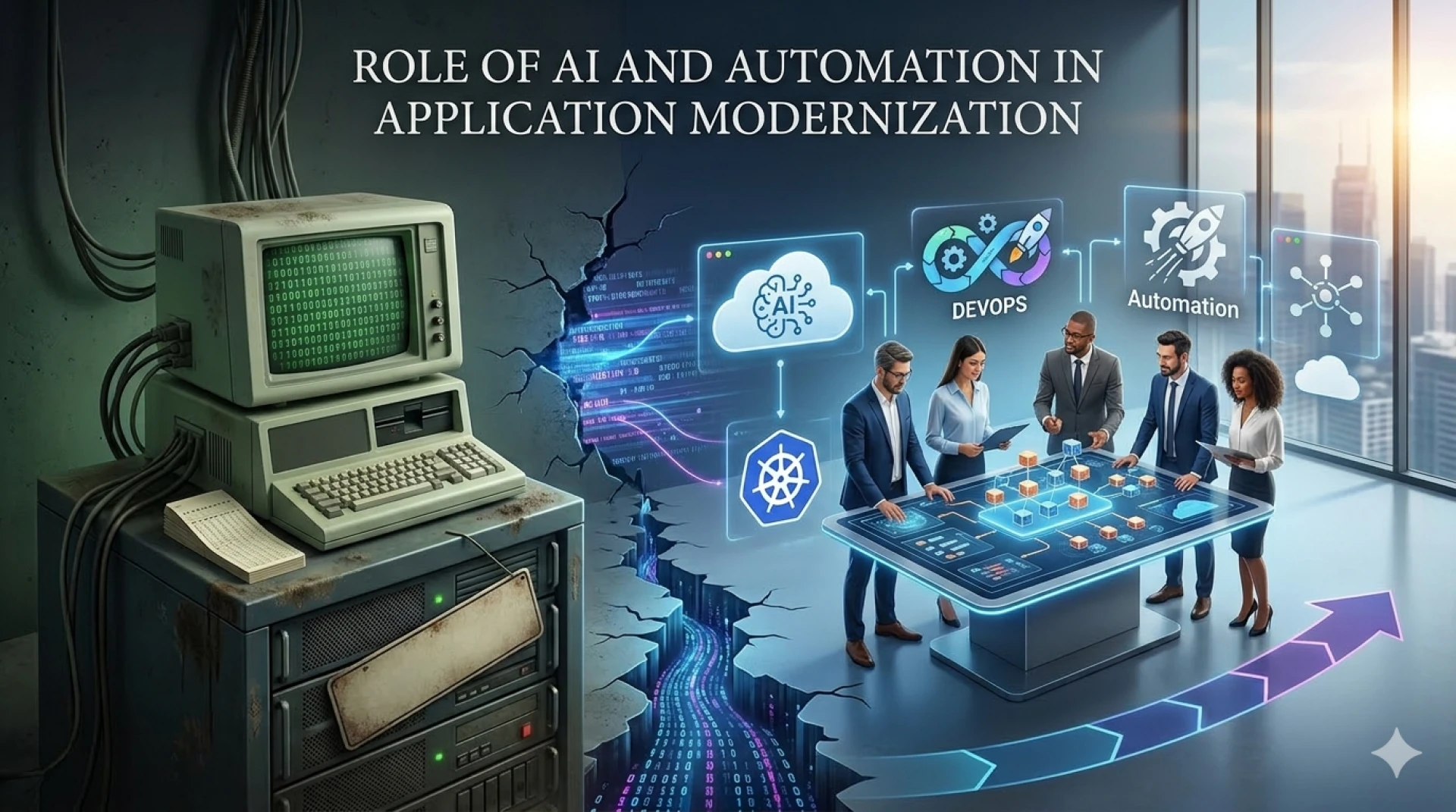

There is a noticeable shift in the way organizations talk about technology transformation today. Conversations are no longer limited to maintaining existing systems. They are increasingly focused on making them intelligent, adaptive, and capable of supporting long term innovation. I often observe that modernization is no longer seen as a purely technical upgrade. It has become a strategic initiative that directly influences business resilience and competitive advantage.
Within these evolving priorities, the relevance of application modernization consulting becomes evident once leaders begin evaluating how artificial intelligence and automation can reshape their transformation timelines. These technologies are changing the economics of modernization by reducing manual effort, improving accuracy, and enabling faster decision making. According to industry insights, artificial intelligence can accelerate technology modernization timelines by nearly 40 to 50 percent when applied effectively in structured transformation programs.
AI Driven Discovery and Intelligent Assessment
One of the earliest stages of modernization involves understanding complex application landscapes. Traditional discovery methods often required months of manual documentation and dependency mapping. Artificial intelligence is transforming this phase by automating system analysis and generating insights at scale.
Modern AI powered tools can scan thousands of code repositories and identify modernization priorities based on business value. This intelligent assessment enables organizations to plan targeted initiatives rather than undertaking risky large scale migrations. Research also indicates that over 70 percent of modernization projects are expected to adopt AI assisted tools for code analysis and automated refactoring in the coming years.
Such capabilities allow enterprises to modernize legacy applications with greater confidence. Teams can make informed architectural decisions while reducing uncertainty in complex transformation programs.
Automation as the Engine of Speed and Consistency
Automation plays a defining role in increasing the pace of modernization initiatives. Repetitive engineering tasks such as code testing, deployment configuration, and infrastructure provisioning can now be handled through automated pipelines. This shift not only improves productivity but also ensures consistency across development environments.
I often notice how automated workflows help teams focus on innovation rather than maintenance. Continuous integration and delivery practices supported by automation enable faster release cycles and more reliable application performance. Organizations that integrate automation early in modernization strategies are better positioned to achieve operational efficiency and scalability.
Market research also suggests that the global legacy modernization market is projected to grow significantly, reflecting increasing investment in automated transformation approaches. The market is expected to expand from around 24 billion dollars in 2024 to more than 60 billion dollars by 2033, driven largely by intelligent modernization frameworks.
Overcoming Application Modernization Challenges with Intelligence
Despite technological advancements, modernization initiatives still encounter structural and organizational barriers. Common application modernization challenges include integration complexity, resource constraints, and difficulty aligning modernization outcomes with measurable business value.
Studies indicate that nearly half of organizations struggle to integrate legacy platforms with modern tools, while over 40 percent face limitations in adopting automation and artificial intelligence effectively.
Artificial intelligence helps address these barriers by enhancing visibility into system dependencies and simplifying migration planning. Automation further reduces the risk of human error during critical transformation stages. Together, these technologies provide a more predictable modernization journey that aligns technical execution with strategic objectives.
Enhancing Security and Compliance Through Smart Modernization
Security considerations have become central to modernization strategies. Legacy systems often lack the adaptive protection mechanisms required in today’s digital environment. AI powered monitoring and automated compliance validation tools help organizations strengthen their risk posture while transitioning to modern architectures.
I believe this integrated approach to modernization ensures that transformation does not compromise operational continuity. Intelligent threat detection systems can identify anomalies in real time, allowing teams to respond proactively rather than reactively. This proactive security model builds confidence among stakeholders and accelerates decision making during modernization programs.
The Strategic Value of Legacy Application Modernization Services
Another trend gaining traction is the adoption of structured legacy application modernization services that combine domain expertise with intelligent automation capabilities. These service models provide predefined frameworks for cloud migration, microservices adoption, and platform optimization.
By leveraging these structured approaches, enterprises can reduce technical debt while improving system agility. AI driven automation also supports continuous optimization by analyzing usage patterns and recommending performance enhancements. This ensures that modernization efforts deliver sustainable business value rather than short term improvements.
The Future Outlook of Intelligent Modernization
Looking ahead, the intersection of artificial intelligence, automation, and modernization will continue to redefine enterprise technology landscapes. Organizations that invest in intelligent transformation strategies today are likely to build resilient digital ecosystems capable of adapting to evolving market conditions.
Modernization is no longer about replacing outdated systems alone. It is about creating technology environments that enable innovation, enhance customer experiences, and support long term growth. I see artificial intelligence and automation not just as tools but as strategic enablers that make modernization faster, smarter, and more aligned with business outcomes.
References:
https://www.mckinsey.com/capabilities/quantumblack/our-insights/ai-for-it-modernization-faster-cheaper-and-better?utm_source=chatgpt.com
https://datahorizzonresearch.com/legacy-application-modernization-market-48298?utm_source=chatgpt.com










Sign in to leave a comment.