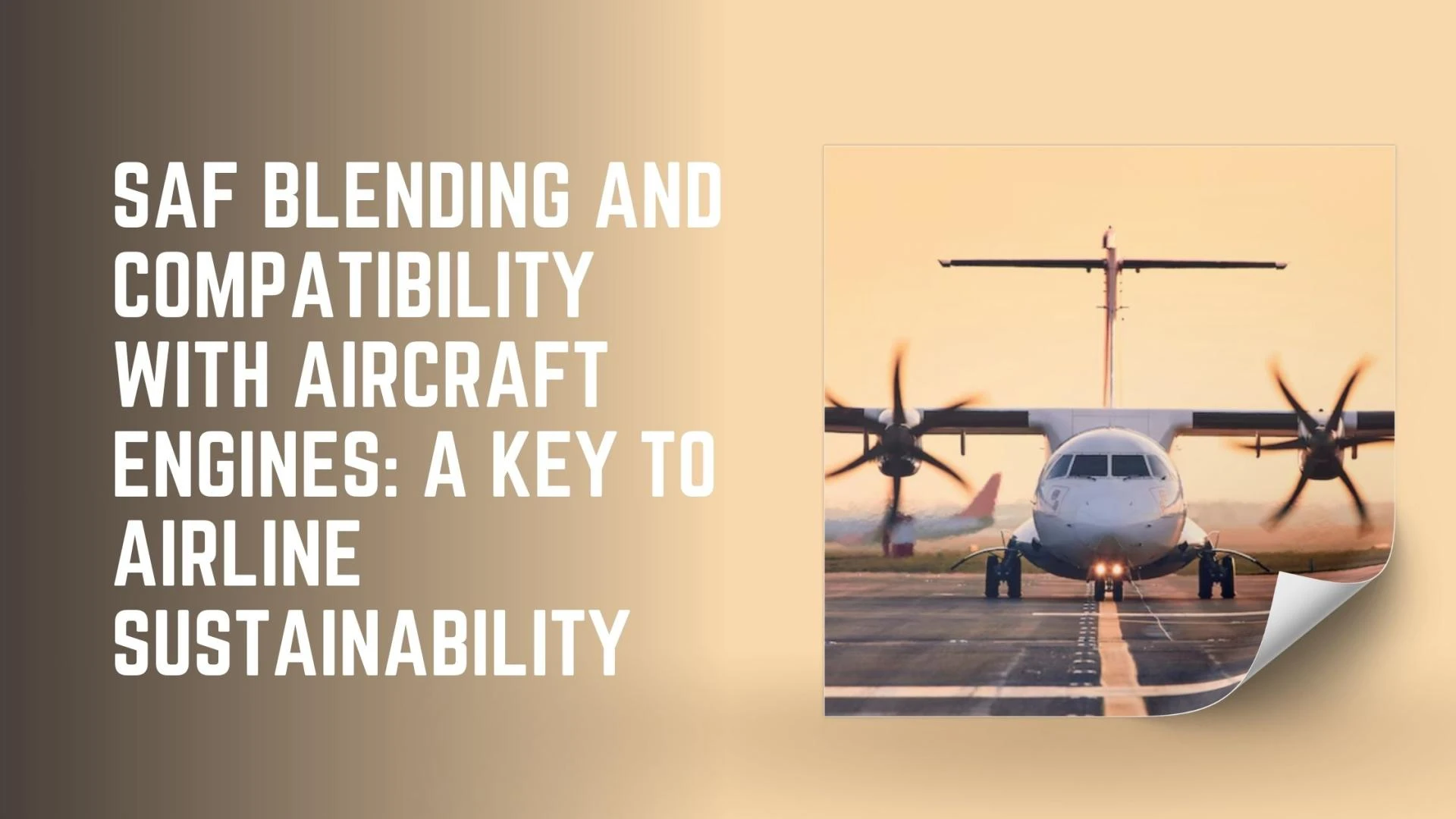

The aviation industry is at a turning point, with a strong focus on airline sustainability and reducing carbon emissions. A leading approach to achieving this goal is Sustainable Aviation Fuel (SAF). But how well does SAF blend with conventional jet fuel, and is it fully compatible with existing aircraft engines? Let's dive deep into these crucial questions and explore the future of SAF in modern aviation.
Understanding SAF Blending and Its Importance
SAF is a biofuel produced from sustainable sources such as waste oils, agricultural residues, and even CO2 captured from the atmosphere. It is designed to work seamlessly with conventional Jet A and Jet A-1 fuels, making it a drop-in solution for existing aircraft. Here’s why SAF blending is critical:
- Reduces Carbon Emissions: Blending SAF with fossil-based jet fuel can cut lifecycle CO2 emissions by up to 80%.
- Compatible with Current Infrastructure: No modifications are needed for existing aircraft engines or fueling infrastructure.
- Enhances Fuel Security: Diversifying fuel sources reduces dependency on fossil fuels and stabilizes supply chains.
Compatibility of SAF with Aircraft Engines
One of the biggest concerns in airline sustainability is whether SAF can be used in existing aircraft engines without compromising performance. The good news? SAF meets the same stringent quality and performance standards as conventional jet fuel. Here’s how it ensures seamless compatibility:
- Drop-In Fuel: SAF can be blended with traditional jet fuel up to 50% and used without any engine modifications.
- Rigorous Testing: Engine manufacturers like Rolls-Royce, General Electric, and Pratt & Whitney have tested SAF extensively to confirm compatibility.
- No Safety Risks: Studies show no significant impact on engine performance, fuel efficiency, or maintenance cycles.
Case Study: United Airlines' SAF Initiative
United Airlines has been a pioneer in adopting SAF blending. In 2023, the airline completed the first-ever passenger flight using 100% SAF in one engine, proving that full compatibility is achievable. This initiative aligns with its goal of reaching net-zero emissions by 2050. The results showed:
- 75% reduction in carbon footprint for the flight
- No operational issues compared to conventional fuel
- Positive feedback from industry experts and regulators
Statistical Insights on SAF Adoption
- According to IATA, global SAF blending is expected to reach 10% of total aviation fuel by 2030.
- SAF production increased by 400% from 2021 to 2024, yet it still accounts for less than 1% of total aviation fuel use.
- The aviation industry requires 450 billion liters of SAF annually to meet net-zero targets by 2050.
The Role of Aviation Events in Advancing SAF Adoption
Industry events play a crucial role in pushing airline sustainability forward. The World Sustainable Aviation Fuel Forum 2025 is one such event where stakeholders, airlines, and fuel producers gather to discuss the latest advancements in SAF technology.
Key Highlights of the 2025 Event
The event, organized by Leadvent Group, will focus on:
- New SAF Technologies: Breakthroughs in synthetic fuels, algae-based SAF, and waste-to-fuel conversion.
- Regulatory Developments: Updates on government policies, tax incentives, and carbon credit programs.
- Industry Collaboration: Airlines, aircraft manufacturers, and fuel suppliers will share insights on scaling up SAF blending.
Case Study: Emirates’ SAF Partnership Announcement
During the 2024 aviation events, Emirates announced a strategic partnership with biofuel producers to develop SAF at scale. This collaboration has resulted in:
- The first SAF-powered Airbus A380 test flight
- Commitment to using at least 10% SAF by 2030
- Investment in new SAF production plants in the Middle East
Why Attending Such Events Matters
For airlines, fuel suppliers, and policymakers, participating in aviation events like this is essential to:
- Gain first-hand knowledge of SAF advancements
- Network with key industry leaders and innovators
- Stay updated on policy changes impacting airline sustainability
FAQs on SAF Blending and Airline Sustainability
Q1: Can existing aircraft use 100% SAF?
Currently, SAF is approved for up to 50% blending. However, engine manufacturers and fuel suppliers are working towards full certification for 100% SAF use.
Q2: Is SAF more expensive than traditional jet fuel?
Yes, SAF costs 2-5 times more than conventional jet fuel. However, increased production and government incentives are expected to lower costs over time.
Q3: How does SAF impact airline ticket prices?
Widespread SAF adoption may lead to slight ticket price increases in the short term. However, as production scales up, prices are expected to stabilize.
Q4: What role do aviation events play in SAF development?
Aviation events bring together industry experts, policymakers, and investors to discuss SAF innovations, regulations, and funding opportunities, accelerating its adoption.
Final Thoughts
The future of airline sustainability depends heavily on SAF blending and its seamless integration into existing aircraft engines. As more airlines commit to SAF usage and aviation events like the World Sustainable Aviation Fuel Forum 2025 drive industry collaboration, the path to a greener aviation industry becomes clearer. While challenges remain—such as cost and production scalability—the ongoing advancements in SAF technology make it a crucial solution for reducing aviation emissions.
Would you like to explore more about the latest SAF innovations? Stay tuned for insights from the upcoming aviation events and real-world case studies shaping the future of sustainable air travel!


Sign in to leave a comment.