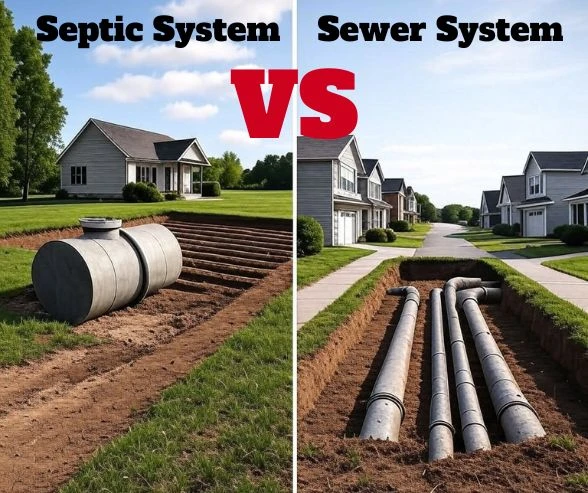

In wastewater management, the choice between a septic system and a sewer system can significantly impact homeowners—especially when buying property in rural, suburban, or urban areas. Both handle human waste, gray water, and household effluent, but they operate on entirely different scales and principles. This guide breaks down their mechanics, pros, cons, costs, and ideal use cases to help you decide.
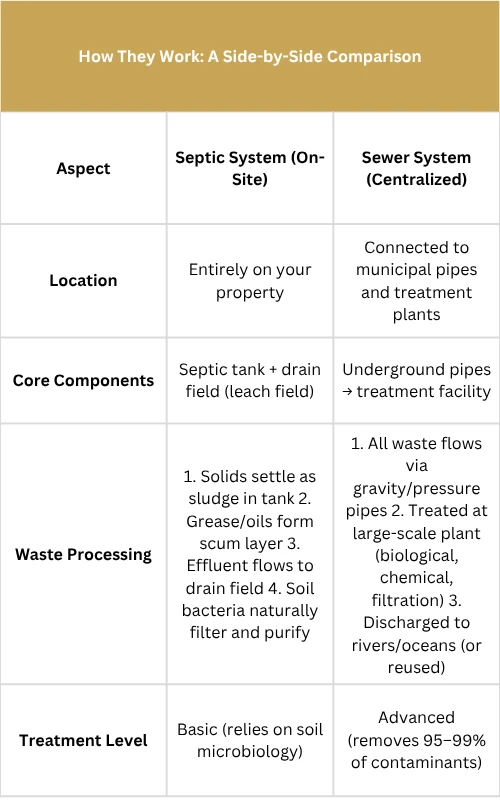
How They Work: A Side-by-Side Comparison
Septic Systems: Pros, Cons & Realities
✅ Advantages
· Eco-Friendly: Natural soil filtration recharges groundwater and minimizes chemical use.
· No Monthly Bills: After installation, you avoid sewer fees (save $30–$100/month in many areas).
· Independence: Ideal for remote properties without municipal lines.
· Long Lifespan: 25–40 years with proper care.
❌ Drawbacks
· High Upfront Cost: $5,000–$20,000+ (depending on soil, size, and local codes).
· Maintenance Required:
· Pump every 3–5 years ($300–$600).
· Avoid flushing non-biodegradables (wipes, grease, chemicals).
· Failure Risk: Clogged drain fields = backups, contamination, or $10,000+ repairs.
· Space Needs: Requires ½–1 acre of suitable soil (no clay, high water table).
Pro Tip: Get a soil percolation test before buying rural land—poor drainage = septic nightmare.
Sewer Systems: Pros, Cons & Trade-Offs
✅ Advantages
· Zero Homeowner Maintenance: City handles everything.
· Reliable in Cities: Built for high volume; rare backups.
· No Space Constraints: Perfect for small lots or dense neighborhoods.
· Advanced Treatment: Safer for public health and environment.
❌ Drawbacks
· Monthly Fees: $40–$150/month (varies by city; can rise with inflation).
· No Control Over Issues: Sewer main breaks or plant overloads = your problem too.
· Connection Costs: $3,000–$15,000 if your street isn’t serviced.
· Overloaded in Storms: Combined sewer overflows (CSOs) in older cities pollute waterways.
Did You Know? In cities like Chicago or Boston, heavy rain can trigger raw sewage dumps into rivers due to outdated combined systems.
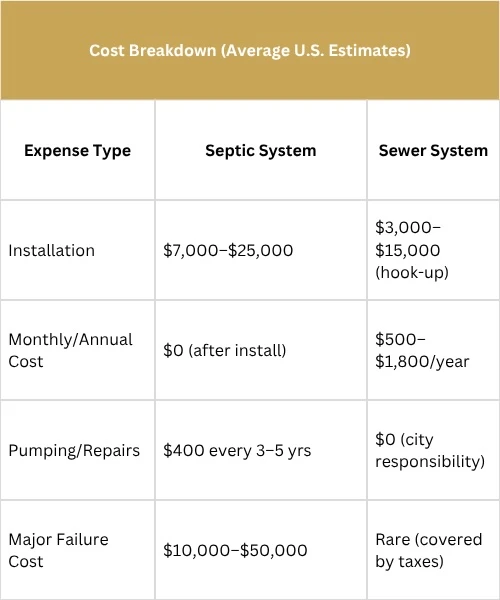
Cost Breakdown (Average U.S. Estimates)
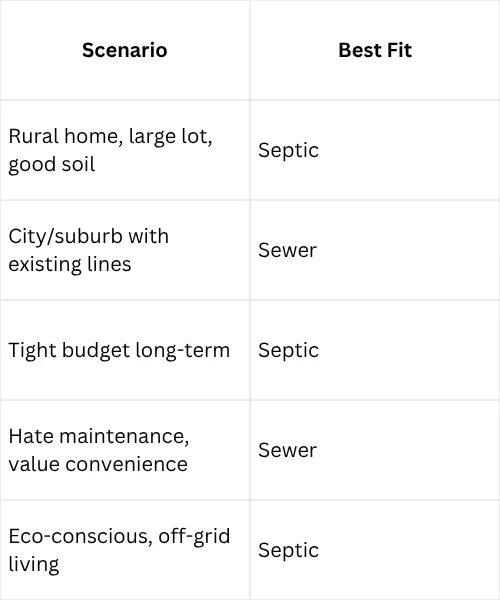
Which Should You Choose?
Final Verdict
Septic = Self-Reliance: Lower long-term costs and environmental harmony—but only if you commit to maintenance.
Sewer = Set-It-and-Forget-It: Higher ongoing fees, but zero hassle and superior treatment.
Before buying property, always:
· Check county records for system type.
· Get a septic inspection (or verify sewer connection).
· Review 3 years of pumping receipts (for septic).
· Understanding these systems empowers smarter homeownership—whether you're flushing in the countryside or the city.
For expert guidance on new construction homes, from site selection and permitting to final walkthroughs, contact Team Romines at Keller Williams Realty today. Whether you're building your dream home, buying a newly built property, or selling to upgrade, our dedicated team is here to streamline every step and safeguard your investment. Call Rochelle Romines at 941.773.4542 or Andrew Romines at 931.922.6711 or visit us at www.RochelleRomines.com to schedule your free consultation. Your perfect new home begins with the right partner.





Sign in to leave a comment.