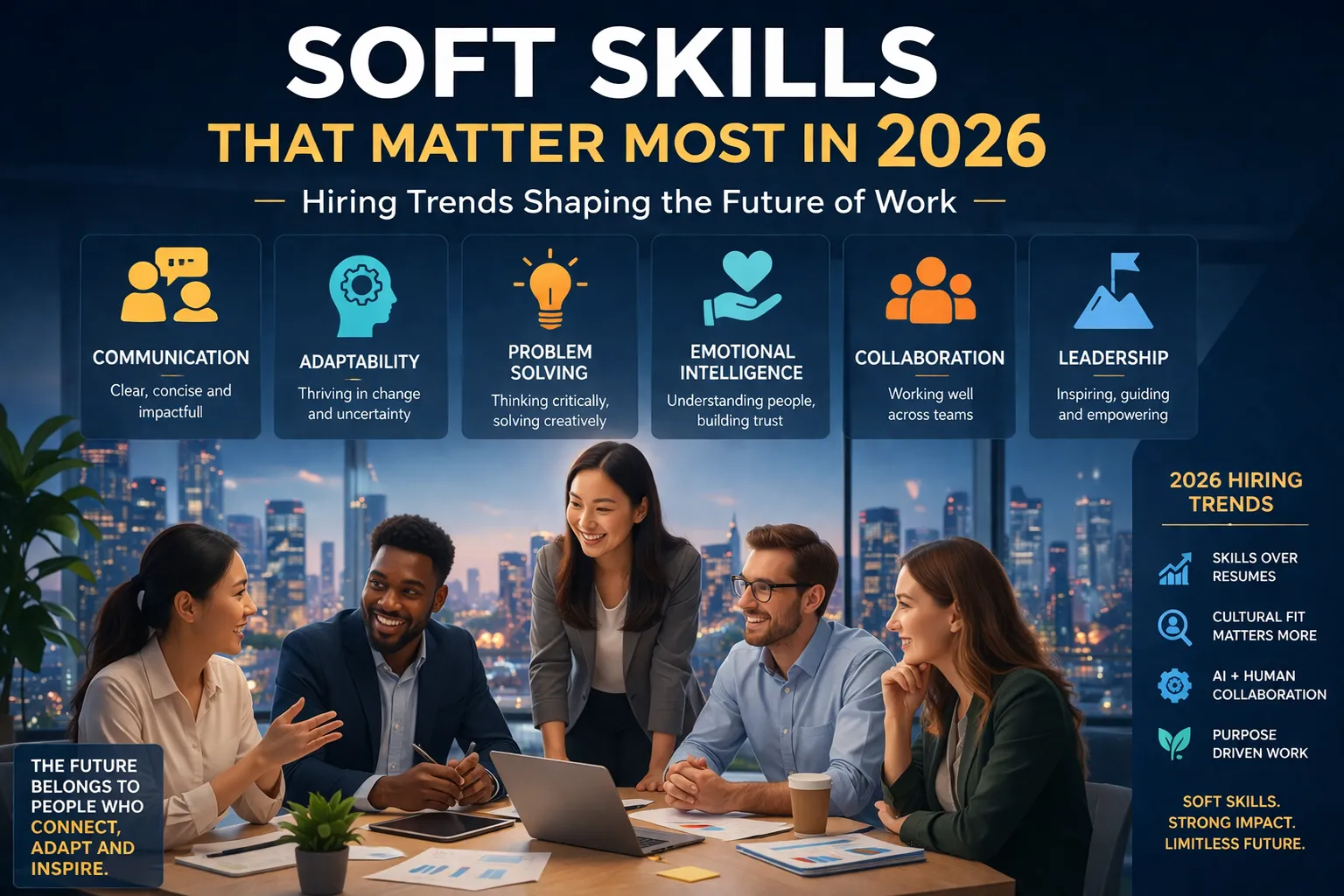

Hiring isn’t what it used to be.
A decade ago, recruiters scanned resumes for technical expertise, certifications, and years of experience. Today, those still matter—but they’re no longer the deciding factor. The rise of automation, AI tools, and digital workflows has shifted the spotlight onto something far more human.
Soft skills.
From communication to adaptability, these abilities are shaping how organizations hire, retain, and grow talent in 2026. And for HR leaders, recruiters, and job seekers alike, understanding this shift is no longer optional—it’s the difference between staying relevant and falling behind.
Let’s break it down.
The Shift in Hiring: From Technical Skills to Human Strengths
Technology is handling more routine tasks than ever before. AI tools can analyze data, generate content, and even assist in decision-making. So what’s left for humans?
Everything that requires judgment, empathy, creativity, and collaboration.
According to the World Economic Forum’s Future of Jobs Report 2023, 44% of workers’ core skills will change by 2027. That’s nearly half the workforce needing to adapt in just a few years.
At the same time, hiring priorities are evolving:
- 92% of talent professionals say soft skills are just as important—or more important—than hard skills, based on LinkedIn’s Global Talent Trends
- 89% of hiring failures are tied to a lack of soft skills, not technical ability
- Organizations that prioritize these skills see 12% higher retention rates
That’s not a small shift. It’s a hiring reset.
Even industries traditionally focused on technical roles—like IT or engineering—are now emphasizing communication, teamwork, and adaptability.
Why?
Because technology can assist. But it can’t connect.
Top In-Demand Soft Skills for 2026
So, which soft skills are employers actually looking for?
Let’s look at the ones rising to the top.
1. Analytical Thinking
Still leading the pack.
The World Economic Forum reports that 69% of companies identify analytical thinking as a core skill. It’s not just about crunching numbers—it’s about interpreting information, asking better questions, and making informed decisions.
2. Creative Thinking
Second on the list globally, with 56% of employers prioritizing it.
Why? Because AI can generate ideas—but humans refine them. Creativity helps teams approach problems from new angles and build solutions that stand out.
3. Adaptability
Change is constant.
Workers with strong socio-emotional skills are 30% more likely to adapt to workplace changes, according to the OECD Skills Outlook 2023.
Adaptability isn’t just about reacting—it’s about staying steady while everything shifts.
4. Emotional Intelligence
Understanding people. Managing relationships. Reading the room.
Demand for social and emotional skills is expected to grow by 26% in the U.S. and 22% in Europe by 2030, based on McKinsey research.
This is what keeps teams functioning—even under pressure.
5. Communication
Simple? Yes.
Easy? Not always.
Time spent on advanced communication and negotiation skills could rise by 20%, according to McKinsey. Whether it’s writing, presenting, or listening, communication is at the core of collaboration.
6. Collaboration
Teamwork isn’t a buzzword—it’s a business driver.
- 73% of executives say collaboration is vital to future success
- Companies focusing on human skills are 1.8 times more likely to achieve their goals
(Source: Deloitte Human Capital Trends)
7. Resilience
Setbacks happen.
Deadlines slip. Projects fail. Markets shift.
Resilience helps individuals recover, adjust, and keep moving forward without losing momentum.
Why Soft Skills Matter More in AI-Driven Workplaces
Let’s get practical.
If AI is doing more of the technical heavy lifting, then human workers need to bring something different to the table.
Here’s what that looks like:
Automation Is Replacing Routine Tasks
Repetitive, rule-based work? Machines are taking over.
This means:
- Less demand for basic cognitive tasks (expected to decline by 15%)
- Higher demand for complex thinking and interpersonal skills
(McKinsey)
Human Skills Drive Business Results
Organizations investing in communication, leadership, and adaptability are seeing better outcomes.
According to Deloitte:
- They’re 1.8 times more likely to succeed
- They report stronger team performance and engagement
Work Is Becoming More Collaborative
Over 50% of jobs in OECD countries require strong social interaction skills.
That’s a big deal.
Even roles that used to be independent now involve cross-functional teams, remote collaboration, and global communication.
The Definition of a “Strong Candidate” Has Changed
It’s no longer just:
- Degrees
- Certifications
- Years of experience
Now it includes:
- How well you work with others
- How you handle feedback
- How you respond to change
This is especially visible in areas like the benefits of hiring veterans, where employers value discipline, teamwork, and leadership developed through real-life experience.
How to Assess Soft Skills in Hiring
Here’s the challenge.
Soft skills are harder to measure than technical ones.
But not impossible.
Behavioral Interview Questions
Instead of asking “Can you work in a team?” ask:
- “Tell me about a time you handled conflict at work.”
- “Describe a situation where you had to adapt quickly.”
Real examples reveal real behavior.
Situational Assessments
Give candidates scenarios:
- A missed deadline
- A difficult client
- A team disagreement
Ask how they’d respond.
Peer Interviews
Team members can often spot communication and collaboration strengths better than hiring managers alone.
Work Simulations
Let candidates demonstrate:
- How they present ideas
- How they respond to feedback
- How they collaborate in real-time
How Job Seekers Can Develop These Skills
Not born with strong soft skills?
That’s fine.
They can be learned.
1. Practice Active Listening
Instead of waiting to speak, focus on understanding.
Ask follow-up questions. Reflect back what you heard.
2. Seek Feedback
From peers. Managers. Mentors.
Growth starts with awareness.
3. Work in Teams
Even outside of work:
- Volunteer projects
- Group courses
- Community initiatives
The more you collaborate, the better you get.
4. Build Emotional Awareness
Pay attention to:
- Your reactions
- Others’ responses
- Team dynamics
Small observations lead to big improvements.
5. Improve Communication
Write more. Speak more. Present more.
Clarity comes with practice.
What This Means for the Workplace Moving Forward
The idea of a “modern workplace” is evolving—and not just because of technology.
It’s evolving because of people.
Organizations are starting to realize that productivity isn’t only about tools or systems. It’s about how people interact, solve problems, and support each other.
If you’re curious about how this shift ties into broader workplace efficiency, this guide on the modern workplace explores how human and operational improvements go hand in hand.
Here’s what’s changing:
- Hiring processes now include soft skill evaluations
- Leadership development focuses more on emotional intelligence
- Performance reviews consider collaboration and communication
- Training programs emphasize adaptability and problem-solving
It’s not a trend.
It’s a shift in how work gets done.
Actionable Tips for HR Leaders and Recruiters
Want to stay ahead?
Start here.
- Redesign job descriptions to include soft skill expectations
- Train hiring managers to assess behavioral traits
- Incorporate structured interviews with consistent evaluation criteria
- Use assessment tools that measure communication and teamwork
- Invest in employee development programs focused on human skills
Small changes. Big impact.
Conclusion
Hiring in 2026 isn’t just about what candidates know—it’s about how they think, interact, and adapt.
The rise of AI hasn’t reduced the need for people. It’s changed what people need to bring.
- Analytical thinking helps interpret complex data
- Creativity drives innovation
- Adaptability keeps teams moving through change
- Emotional intelligence strengthens relationships
- Communication and collaboration power teamwork
And the data backs it up—soft skills are no longer secondary. They’re central to hiring decisions, employee retention, and business performance.
For job seekers, this means focusing beyond technical expertise.
For HR leaders and recruiters, it means rethinking how talent is evaluated and developed.
Because in a world where machines handle the routine, human skills are what set people apart.
Simple.
And powerful.











Sign in to leave a comment.