
Jaisalmer, often called the "Golden City," transforms into a canvas of celestial wonder as the sun dips below the horizon. Known for its expansive sandy plains and historic fortifications, Jaisalmer also offers a pristine view of the night sky, making it a paradise for astrophotographers and stargazers alike. Away from the light pollution of large cities, the clear desert skies reveal constellations, planets, and the Milky Way in all their glory.
Night sky photography in Jaisalmer isn\'t just about capturing stars. It\'s an adventure that begins with the setting sun. The changing colors of the sky, from golden hues to deep blues, followed by a spectacular burst of stars, provide myriad opportunities for dynamic photography. Photographers can capture the juxtaposition of ancient sandstone architecture against the backdrop of the cosmos.
Preparing for a night of shooting stars involves selecting the right gear. A sturdy tripod and a camera capable of long exposures are essential. Wide-angle lenses with wide apertures are preferable, as they capture more light and a broader swath of the sky. Settings may vary, but a good starting point is an ISO between 1600 and 3200, an aperture as wide as f/2.8, and shutter speeds ranging from 15 to 30 seconds to adequately capture star trails and the Milky Way’s finer details.
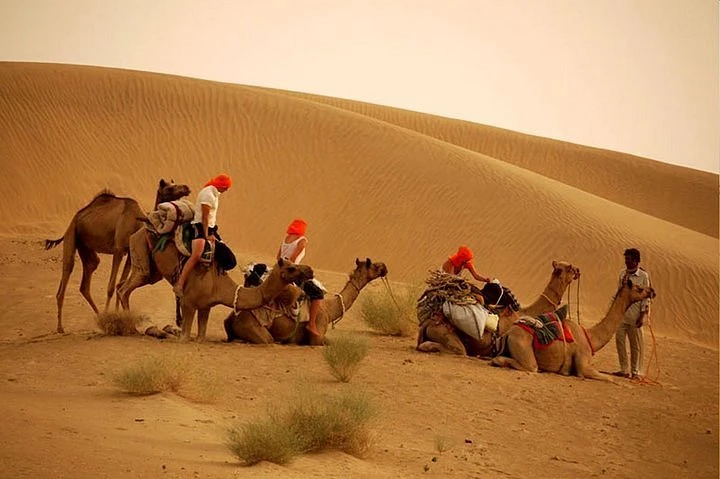
One of the best ways to experience this photogenic setting is by staying at a desert camp, which leads us directly to Rajwada Desert Camp, renowned for being one of the best camp in Jaisalmer. Situated comfortably away from the city’s hustle, Rajwada Desert Camp offers a serene base from which to explore and photograph the nocturnal beauty of the desert. Guests can immerse themselves in the tranquility of the desert night under the protection of luxury accommodations. Their Luxury tent in Jaisalmer not only provides comfort but also a touch of elegance to the rugged desert experience, making it an ideal choice for those looking to blend adventure with comfort.
Photographing the night sky in Jaisalmer also includes understanding the best times to shoot. Post-monsoon months, particularly October through March, are ideal due to the minimal cloud cover and cooler temperatures. Planning your shots is also crucial. Using apps that track lunar phases and star locations can help photographers plan their compositions around celestial events.
The experience of shooting the night sky in Jaisalmer can be both humbling and exhilarating. As the night deepens and the stars brighten, time seems to slow down, allowing photographers to connect more deeply with the environment. The experience is not just about capturing photos; it’s about capturing moments of introspection and awe in the vast, starlit desert of Jaisalmer.









Sign in to leave a comment.