
There's a fundamental truth about human connection: we remember stories, not facts. A statistic might be forgotten within minutes, but a story—one you experienced, one that moved you—stays with you. This is why the most powerful brand experiences don't just inform. They narrate.
At WAVES 2025, Jio Star had a complex story to tell. They needed to communicate the scale and reach of their media empire across multiple channels. They needed to celebrate Indian culture's role in shaping Indian media. They needed to demonstrate their innovation in a global marketplace. All to an audience of 100,000 diverse visitors ranging from industry leaders to creative professionals to casual attendees.
Telling that story through traditional presentations or static displays would have meant losing most of the room. Instead, they chose interactive wall installations designed around narrative. The result showed something critical: technology becomes truly powerful when it serves storytelling, not the reverse.
The Journey Through Visuals
The ten-year narrative of Pro Kabaddi League didn't fit neatly into slides or posters. It required space. Movement. Time. The curved anamorphic LED wall created precisely that—a visual narrative that unfolded through 3D motion illusions, allowing visitors to witness the league's evolution not as a list of facts but as a living journey.
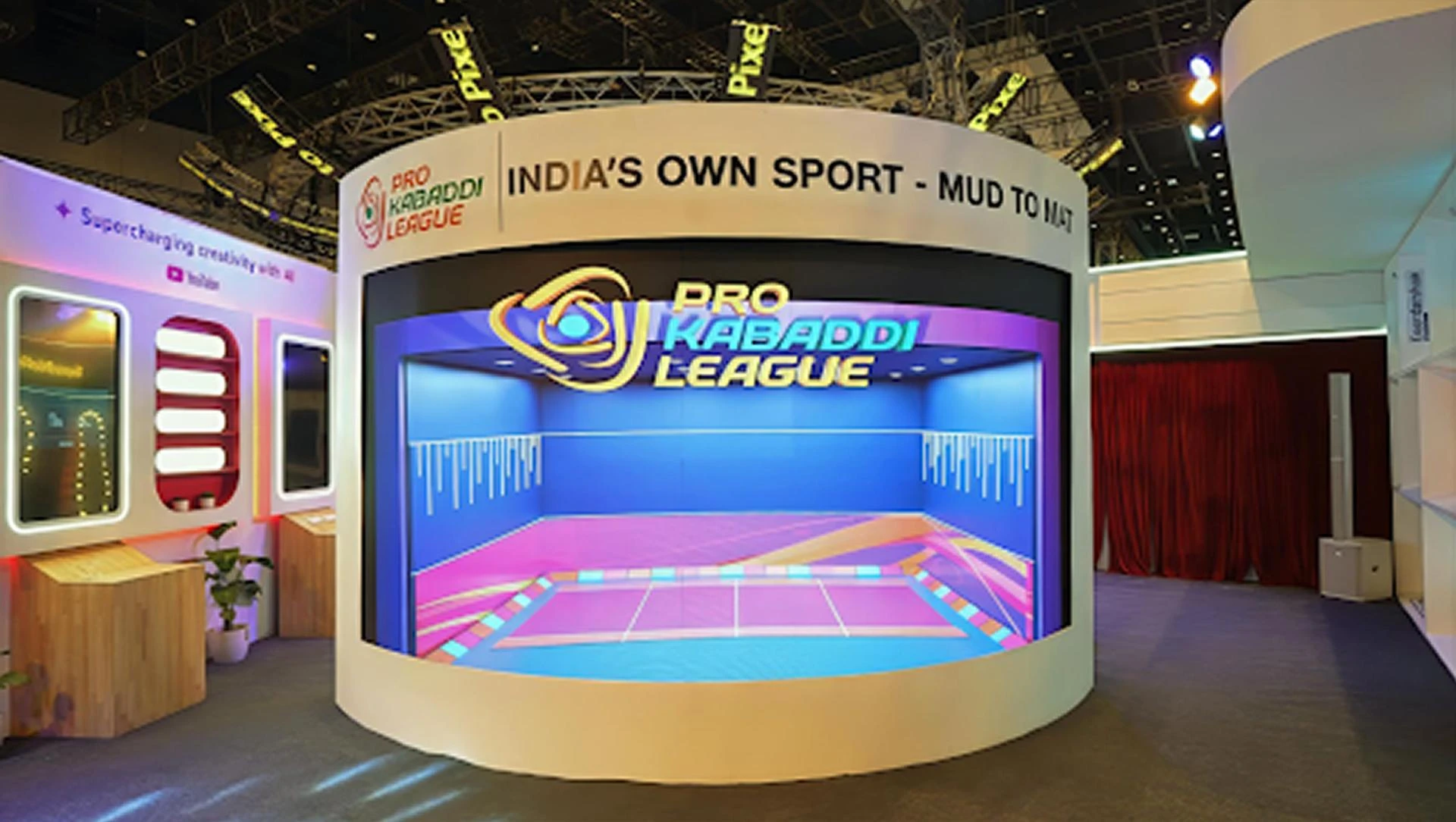
This approach works because it honors how humans actually process stories. We don't absorb narratives through reading. We absorb them through experience. When the anamorphic wall displayed Pro Kabaddi's growth, visitors weren't reading about milestones. They were watching a transformation unfold in front of them. The twelve-minute average dwell time reflected this shift—people stayed because the story was unfolding in real time.
An experiential marketing agency that understands narrative design recognizes this distinction. The goal isn't impressive technology. The goal is using technology as the medium for a story that matters to your audience.
When Culture Becomes Experience
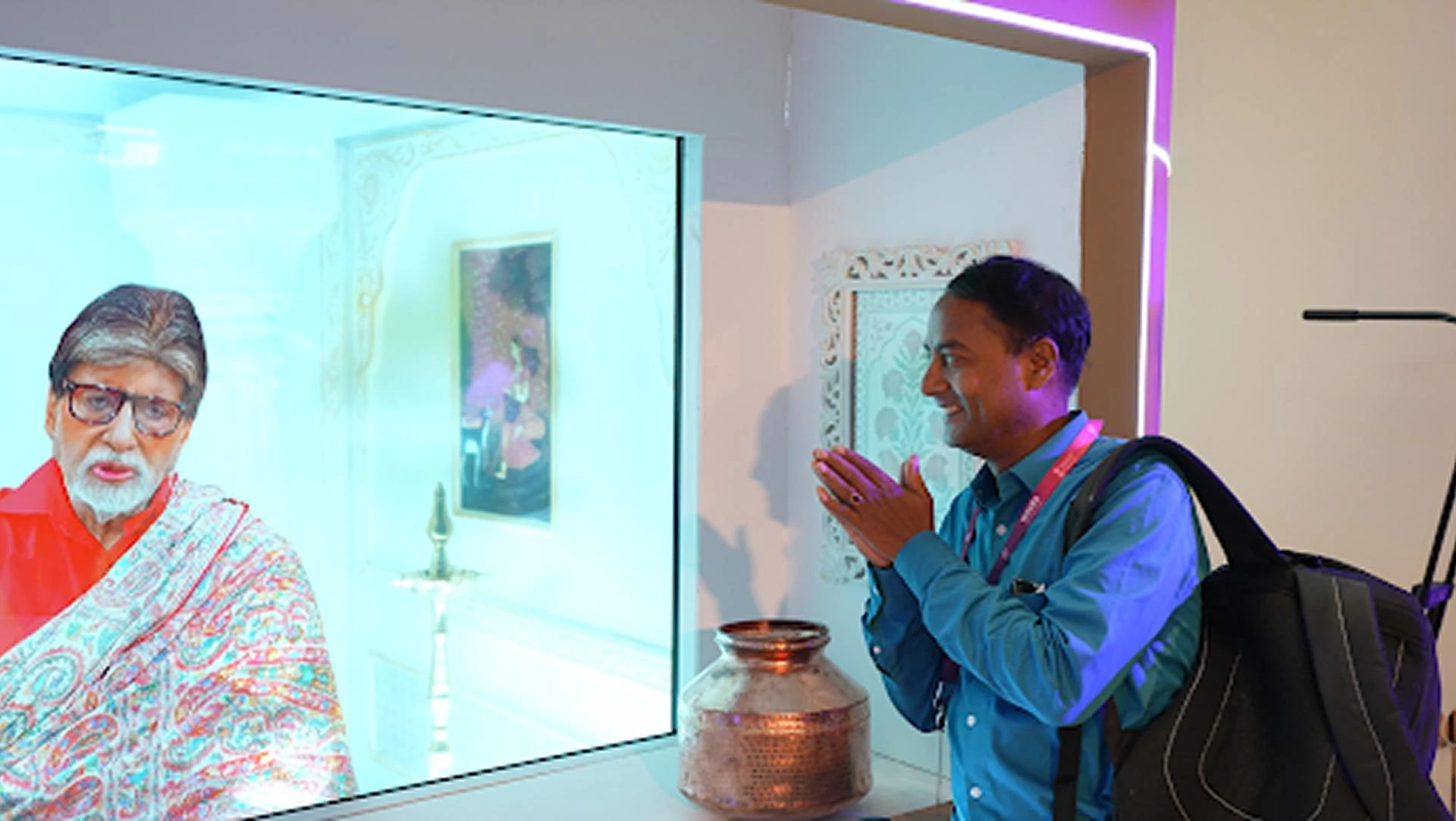
The Bharat Pavilion's theme of "Kala to Code"—where ancient Indian artistic traditions meet modern digital innovation—required more than clever wordplay. It needed to be felt. A hologram featuring Amitabh Bachchan narrating Ram Katha stories directly from Jio Hotstar's Ram Navami broadcast created exactly that fusion. Visitors weren't learning about cultural heritage.
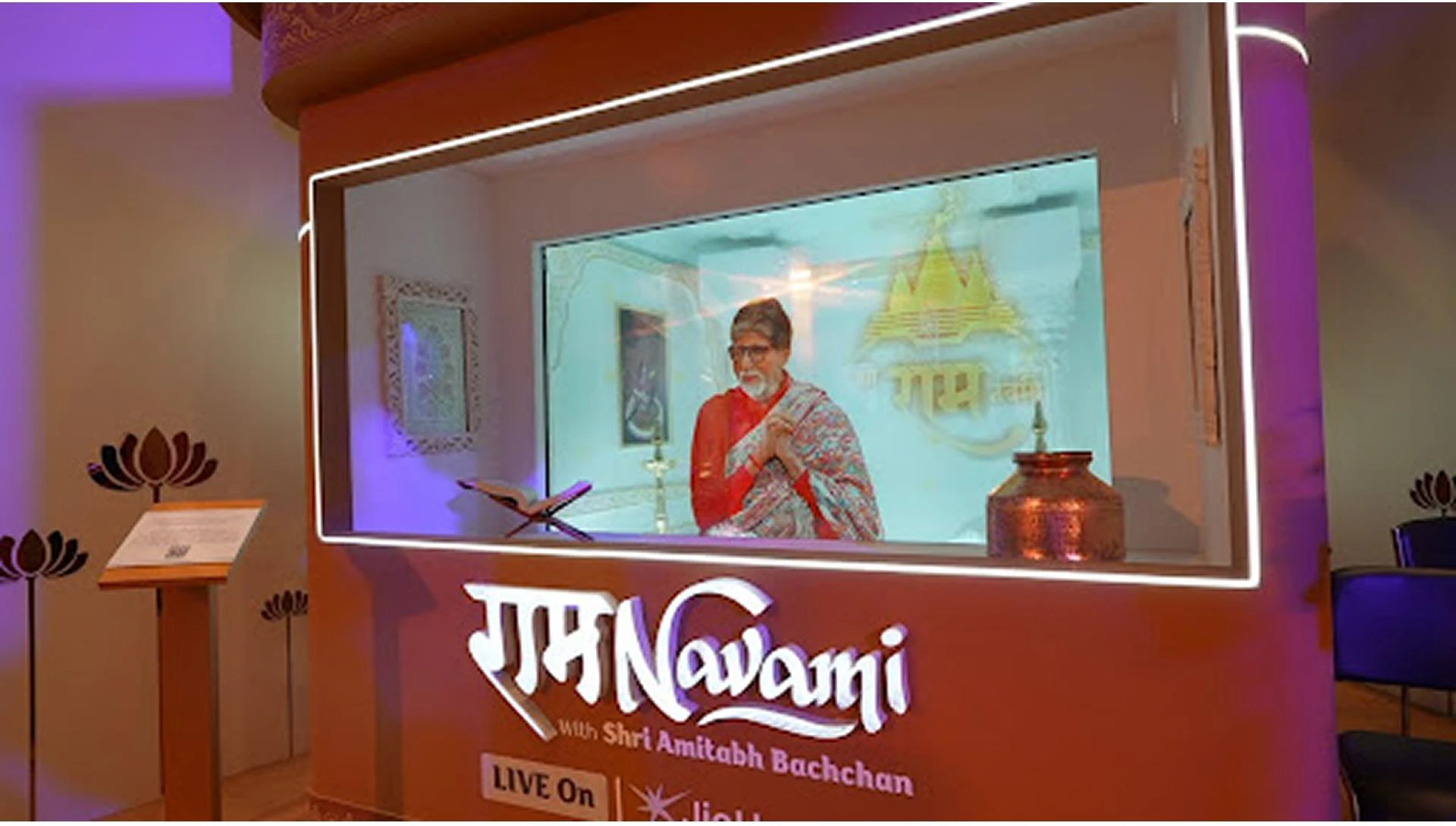
They were experiencing the intersection of tradition and technology in a single moment.
This installation drew extended attention from PM Narendra Modi and other prominent dignitaries. Why? Because the experience communicated something authentic. It didn't try to explain Indian culture through digital technology. It showed how technology could honor and celebrate cultural narratives. The hologram became a bridge between past and present, between tradition and innovation.
The beauty of this approach is that it works regardless of your audience's technical sophistication. A visitor unfamiliar with hologram technology is still moved by the storytelling. A technology enthusiast appreciates both the narrative and the execution. The story transcends the medium.
Building Narrative Through Interaction
The gesture-based interactive table explored Star Sports' journey through the visitor's own movement. There was no passive viewing here. Your hands became part of the story. You weren't reading about Star Sports' expansion into regional markets—you were physically navigating through that expansion. The narrative became embodied.
This creates memory in a different way. When your body is part of the experience, it doesn't just stay in your mind. It creates muscle memory, emotional resonance, a fuller kind of remembering. Visitors left not just informed but marked by the experience. They had participated in the story rather than observed it.
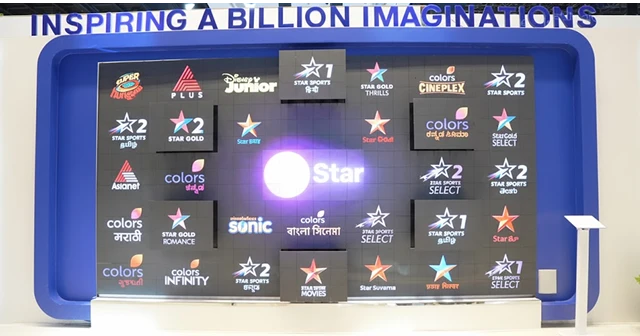
Similarly, the kinetic LED wall representing Jio Star's constellation of companies created a narrative of interconnection and scale. The independently animated tiles weren't simply showing corporate structure. They were visually narrating how diverse channels and companies came together into a unified media force. The movement itself told the story.
The Role of Specificity in Immersive Design
One critical lesson from WAVES 2025: vague stories don't benefit from immersive technology. Specific, purposeful narratives do. The installations worked because each one had a clear story to tell. Pro Kabaddi League's ten-year journey. Indian culture meeting digital innovation. Star Sports' regional dominance. The Mahashivratri celebration. Each narrative was distinct, and each installation's design served that specific story.
When brands try to tell too many stories at once through interactive screen wall experiences, something gets lost. The confusion dilutes the impact. The most effective approaches identify the one or two narratives that matter most to your audience, then commit fully to bringing those to life.
This specificity is why an experienced experiential marketing agency matters. The difference between a mediocre immersive installation and a transformative one often comes down to narrative clarity and design restraint. Knowing what story NOT to tell is as important as choosing the right one.
Emotional Connection as the End Goal
At its core, storytelling through interactive wall displays achieves something simple but profound: it creates emotional connection. The Mahashivratri narrative on the C-shaped LED wall worked because it touched cultural and spiritual resonance for many visitors. The Pro Kabaddi journey created pride in Indian sports innovation. The hologram created wonder at the intersection of technology and tradition.
These emotional connections are what turn experiences into memories. They're what transform visitors into brand advocates. They're what extend the reach of your message far beyond the physical space and time of the event.
When someone spends twelve minutes with your story rather than twelve seconds, the difference isn't just quantitative. It's qualitative. They've moved from passive observation to active engagement. From receiving information to processing meaning. From being a visitor to becoming part of the narrative.
Creating Experiences That Resonate
For brand leaders evaluating immersive experiences, the right question isn't "what technology should we deploy?" It's "what story must our audience understand, and how can we make them experience it rather than simply hear it?"
Interactive wall installations become powerful exactly when they're designed backward—starting with the story you need to tell, then choosing the technology and design that brings that story to life most compellingly. When you work in that order, visitors don't notice the technology. They experience the narrative.
The 100,000 visitors at WAVES 2025 weren't moved by curved LED walls or gesture recognition as abstract concepts. They were moved by stories told through technology. That distinction is where great immersive experiences begin.
If you're ready to transform your brand's narrative into an experience your audience won't forget, it's time to think about how interactive digital walls can become the vehicle for your storytelling. Connect with Inkincaps to explore designing immersive experiences that make your story unforgettable.











Sign in to leave a comment.