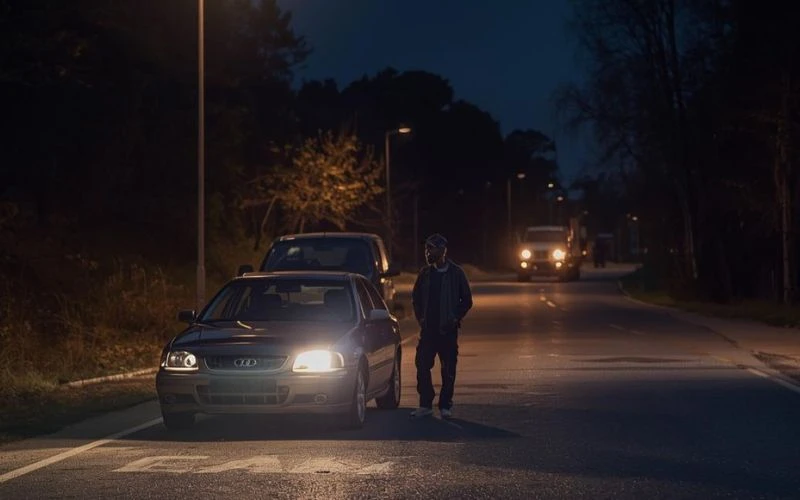

Breaking down at night hits differently. Fewer cars around, darker roads, and that uneasy feeling of “What now?” Most vehicle breakdowns in Melbourne happen in the evening, often while drivers are heading home. In areas like Laverton and Laverton North, industrial traffic and freeway connections make visibility and safety even more important after dark.
The good news? A calm, step-by-step approach can protect you, your passengers, and your vehicle while you wait for help. Think of it like a mini nighttime roadside survival plan.
What Should You Do Immediately After Your Car Breaks Down at Night?
First things first: get visible and get safe.
If the car is still moving, gently steer it to the left shoulder or into a nearby safe space—away from flowing traffic. Meanwhile, switch on your hazard lights immediately. Hazard lights serve as your initial warning to nearby drivers.
An easy way to think about it: your goal is to become predictable and visible.
Once stopped:
- Engage the handbrake.
- Turn your wheels slightly away from traffic if parked on a slope.
- Keep seatbelts on until you’re sure it’s safe.
Should You Stay Inside the Vehicle or Step Out?
It depends on the environment. On busy roads around Laverton North, staying inside with doors locked is often safest. Vehicles passing at speed can make standing outside risky.
However, if you smell fuel, see smoke, or feel unsafe, exit carefully and stand well away from traffic—ideally behind a barrier.
Interestingly, many roadside injuries happen not during the breakdown itself, but while drivers are walking around the vehicle. So limit movement unless necessary.
How Do You Make It Easy for a Tow Truck to Find You Quickly?
Clear communication saves time. When calling a tow truck in Laverton North that locals rely on, provide more than just a street name.
Give:
- Nearest intersection
- Direction you’re facing
- Nearby landmarks (factory entrances, freeway exits, petrol stations)
- Your vehicle’s colour and model
If using maps on your phone, share a pinned location. Small detail, big difference.
What Safety Steps Improve Night-Time Visibility?
Darkness reduces reaction time for other drivers. So increase your visibility deliberately.
- Leave hazard lights on.
- Use reflective triangles if you have them (place one about 20–30 metres behind your vehicle).
- Turn on interior lights briefly if you need to be seen.
Think of it like adding layers of visibility. The more cues you give, the safer you are.
Should You Attempt Quick Fixes While Waiting?
It’s tempting. Maybe it’s just a flat tyre. Maybe restarting the engine will fix it.
Pause.
Repeatedly trying to start a damaged engine can make things worse. A small overheating issue, for example, can escalate into serious engine trouble. Meanwhile, working on the roadside at night reduces your awareness of approaching traffic.
If the issue isn’t clearly minor and safe to fix, waiting for a tow truck service in Laverton is often the smarter move.
How Can You Stay Calm and Comfortable During the Wait?
Night-time waits feel longer than they are. A 30-minute delay can feel like an hour.
To stay steady:
- Reach out to someone you trust and share exactly where you are.
- Keep your phone battery conserved—lower screen brightness.
- Use a blanket if it’s cold; Melbourne nights can drop quickly in temperature.
- Sip water and breathe slowly to stay focused.
Interestingly, staying calm improves decision-making. Panic clouds judgment; patience protects it.
What Documents Should You Prepare Before the Tow Arrives?
Use the waiting time productively.
Have ready:
- Driver’s licence
- Vehicle registration
- Insurance details
- Notes about what happened
Also, remove valuables from visible areas. It’s a small step, but it reduces risk and speeds up the handover process.
Conclusion: What’s the Smartest Way to Handle a Night-Time Breakdown?
Being stranded at night isn’t just inconvenient—it can be intimidating. But preparation changes everything. By prioritising visibility, limiting unnecessary movement, communicating clearly, and resisting risky roadside repairs, you dramatically lower both safety and financial risks.
Whether you’re near an industrial stretch in Laverton North or a residential pocket in Laverton, the principle stays the same: protect yourself first, then protect the vehicle. Professional towing exists for a reason—it prevents small issues from becoming expensive ones.
Quick Night-Time Breakdown Checklist
Before your tow arrives, make sure you’ve:
- Moved safely off the road
- Turned on hazard lights
- Locked doors and stayed visible
- Shared precise location details
- Avoided repeated engine restarts
- Prepared licence and registration
- Informed someone you trust of your location
If you can tick these off, you’re handling the situation exactly right.
Because at night, smart decisions matter more than fast ones.





Sign in to leave a comment.